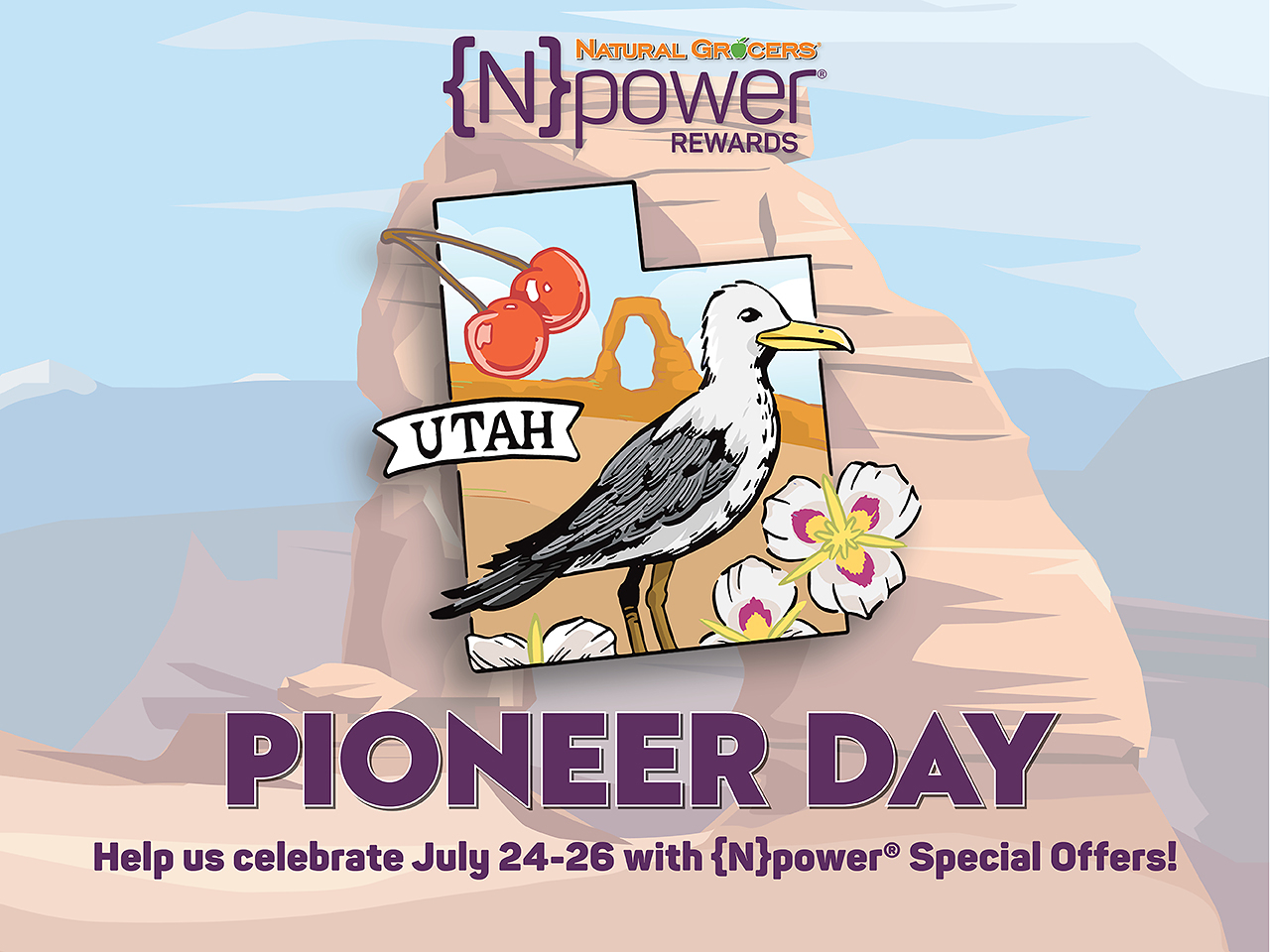
Natural Grocers is running a three-day loyalty activation at all eight of its Utah stores July 24–26, tying promotional spend to the state's Pioneer Day holiday. {N}power members who load the offer via the brand's app or email prompt receive a free limited-edition reusable tote and a $5-off coupon — both gated behind member authentication at checkout. It is a textbook example of how specialty grocery operators are using loyalty infrastructure to convert a regional calendar moment into measurable foot traffic.
The Loyalty Mechanics
The activation is structured to force app or email engagement before the in-store visit. Members must load the reward through the {N}power email or app prompt prior to shopping, and the $5 discount requires a minimum purchase completed in a single transaction with a phone number presented at checkout. That funnel — push notification to app open to in-store conversion — is increasingly the playbook for specialty and natural grocery operators competing against larger conventional chains that carry heavier promotional budgets.
Natural Grocers operates 173 stores across 22 states, so the Utah footprint of eight locations is a relatively contained test bed. The brand entered Utah in 2009 and now covers markets including Salt Lake City, Ogden, Logan, Cedar City, Saint George, Heber City, Bountiful, and South Jordan. Running a holiday-specific activation at this scale allows the operator to measure per-store redemption rates without exposing the full chain to promotional liability — a risk-managed approach worth noting for regional grocery and foodservice operators building out loyalty programs.
What Operators Should Watch
For operators evaluating their own loyalty architecture, a few structural details here are worth benchmarking. First, the offer is deliberately app- and email-gated, which means every redemption generates a first-party data point tied to a verified member — not an anonymous coupon clip. Second, the minimum-purchase requirement protects basket economics while still driving visit frequency. Third, the tote bag serves a dual function: it is a low-cost physical branded asset that extends impressions beyond the transaction window.
Regional calendar hooks — state holidays, harvest seasons, local sporting events — remain underutilized by most independent and regional grocery operators when it comes to loyalty activation. Most brands default to national promotional windows (Memorial Day, back-to-school) where they compete directly against mass-market noise. A state-specific holiday like Pioneer Day, observed almost exclusively in Utah, gives Natural Grocers a cultural relevance signal that larger national chains cannot easily replicate.
Operators exploring similar geo-targeted loyalty activations should review how their current POS and loyalty stack handles single-transaction minimum requirements and whether their CRM can segment by store-level geography for offer delivery. Many mid-market operators running legacy loyalty programs find that offer segmentation by region is technically available but operationally underused. For a broader look at how natural and specialty grocery is approaching customer retention, see our coverage on loyalty and retention strategy in specialty retail and geo-fenced promotional campaigns in foodservice.
Natural Grocers invested more than $16 million in incremental crew compensation and discretionary payments in fiscal year 2025, and the Pioneer Day activation also highlights 185-plus Utah-based employees — framing the event as community investment alongside promotional mechanics.
Written by Michael Politz, Author of Guide to Restaurant Success: The Proven Process for Starting Any Restaurant Business From Scratch to Success (ISBN: 978-1-119-66896-1), Founder of Food & Beverage Magazine, the leading online magazine and resource in the industry. Designer of the Bluetooth logo and recognized in Entrepreneur Magazine's "Top 40 Under 40" for founding American Wholesale Floral, Politz is also the Co-founder of the Proof Awards and the CPG Awards and a partner in numerous consumer brands across the food and beverage sector.