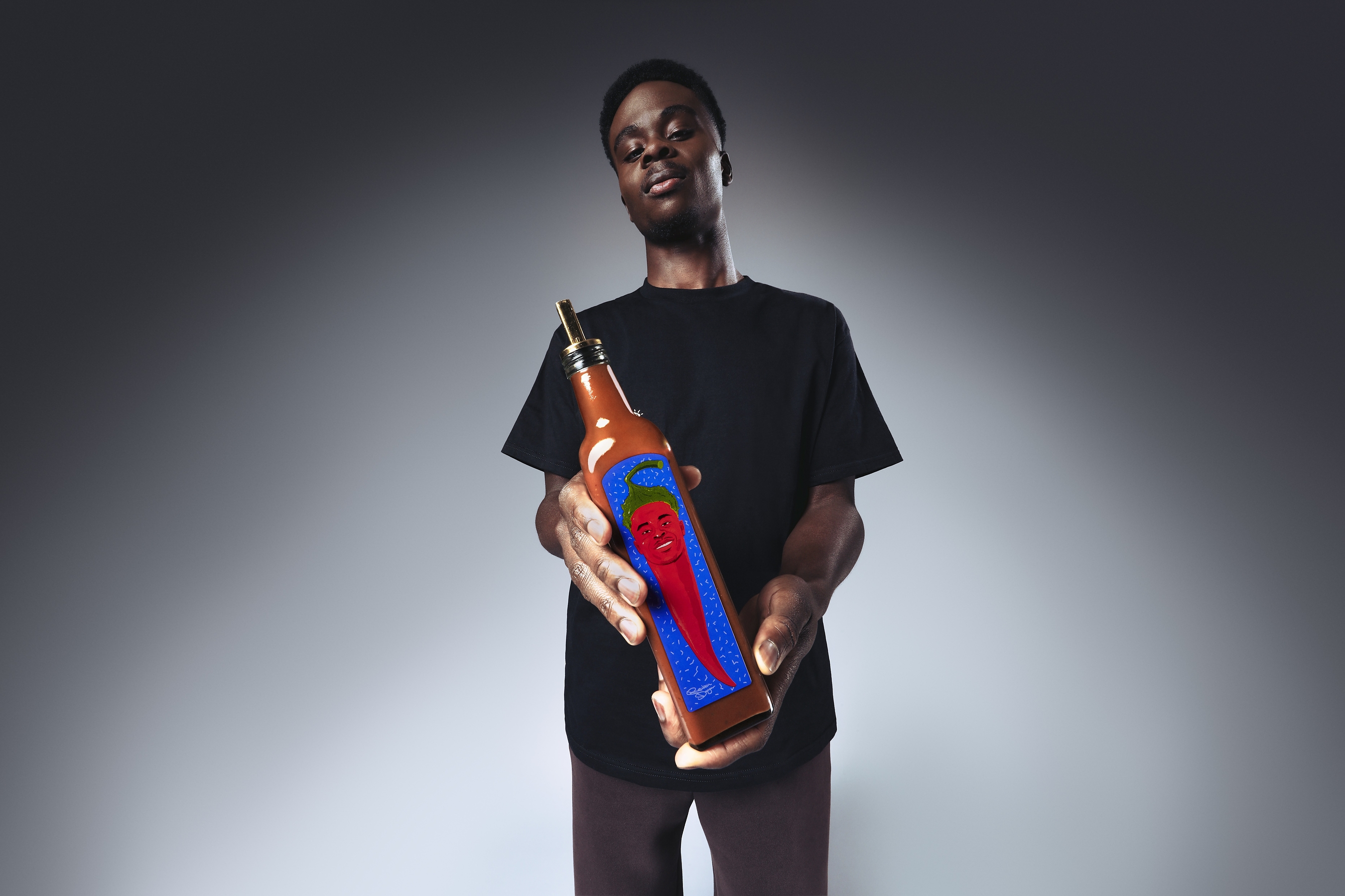
Nando's is bringing its viral "Saka Sauce" — named for Arsenal and England winger Bukayo Saka — to the U.S. market for the first time, timed to the summer's largest international soccer tournament. Alongside the sauce launch, the brand is staging its first-ever Free Chicken & Chips Day nationally on June 12th, plus a slate of watch parties running through the tournament window. For operators, the move is worth watching less for the soccer angle and more for the activation architecture: a hero product drop, a traffic-driving giveaway, and a live-event content layer, all compressing into a single campaign window.
Limited-time offers tied to sporting calendars are not new, but the structure Nando's is deploying here follows a tightening playbook in fast-casual. Brands that win tournament cycles typically lead with a product with a name — not just a flavor — because it gives media, influencers, and social algorithms something to index. Saka Sauce already carried earned viral momentum in the U.K. before this U.S. launch, which means Nando's is importing social proof rather than building it from scratch. That is a meaningfully lower-cost path to awareness than a cold product launch.
The Free Chicken & Chips Day mechanic is the higher-stakes move operationally. Free-food days generate significant in-store volume spikes and require tight labor scheduling, inventory pre-positioning, and, increasingly, app-gated access to capture first-party data. Operators watching this should note that brands running these programs at scale are rarely giving away margin — they are buying CRM records and loyalty app installs at a calculated cost per acquisition. If Nando's gates the June 12th offer behind its loyalty app or digital sign-up, the real ROI is the list, not the day. For brand launch and promotional strategy insights, this framing matters when building your own giveaway mechanics.
From a growth-marketing standpoint, a tournament window this size — with the U.S. hosting and soccer's domestic audience at an all-time high — is a rare geo-fencing and contextual advertising opportunity. Operators and brands that are not already building campaign flights around stadium proximity, sports-bar clusters, and soccer-demographic zip codes are leaving impression share on the table. Nando's has the brand recognition to run national, but regional fast-casual operators can run hyper-local versions of the same playbook using programmatic display and paid social targeted to tournament viewing audiences. See how similar operators are structuring those buys in our growth department coverage.
The broader signal here is that culturally embedded brands — those with genuine roots in music, sport, and diaspora communities — are finding it easier to activate during global moments because the authenticity reads as credible rather than opportunistic. Nando's South African origin and long association with Premier League culture gives the Saka partnership legitimacy that a purely American QSR would have to manufacture. For U.S. operators without that backstory, the lesson is to identify the cultural credibility your brand already holds and build activations outward from that core, rather than chasing trends laterally.
Written by Michael Politz, Author of Guide to Restaurant Success: The Proven Process for Starting Any Restaurant Business From Scratch to Success (ISBN: 978-1-119-66896-1), Founder of Food & Beverage Magazine, the leading online magazine and resource in the industry. Designer of the Bluetooth logo and recognized in Entrepreneur Magazine's "Top 40 Under 40" for founding American Wholesale Floral, Politz is also the Co-founder of the Proof Awards and the CPG Awards and a partner in numerous consumer brands across the food and beverage sector.