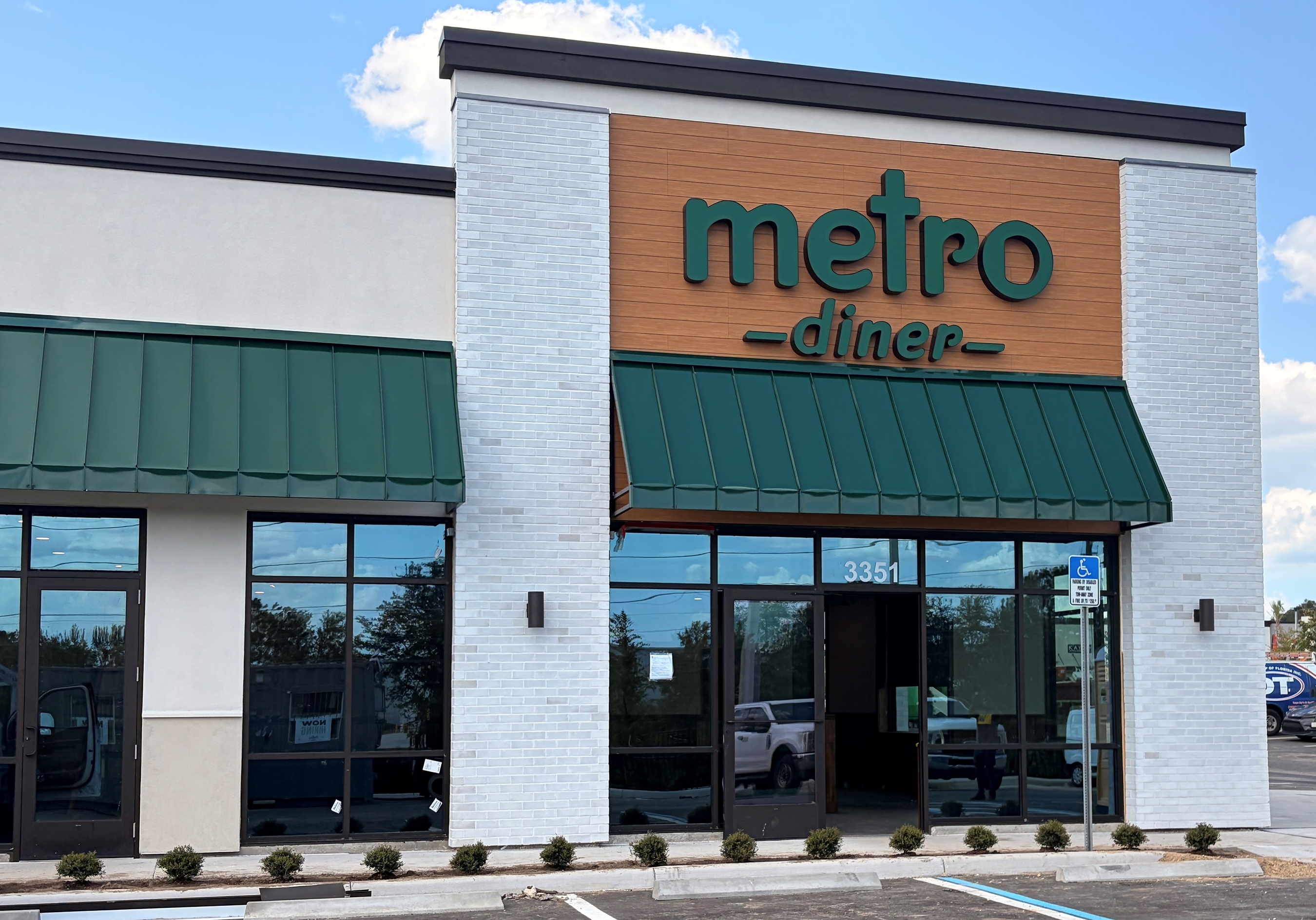
Metro Diner has opened its first Lecanto, Florida location at 3351 W. Norvell Bryant Hwy., adding a 3,710-square-foot unit to a chain that now operates more than 60 locations east of the Mississippi. The move extends Metro Diner's footprint into Citrus County's Summit View at Corta Commons corridor, a fast-developing retail strip that has attracted growing consumer traffic. For operators benchmarking family-dining expansion in secondary Florida markets, this opening is worth a close read.
The Unit Economics
The Lecanto restaurant seats 134 guests inside with an additional 24-seat outdoor patio — a configuration that balances throughput with the approachable scale typical of Metro Diner's locally operated franchise model. Managing Partner Melissa Deskins, who holds both a Culinary Arts and a Baking & Pastry degree, brings more than 20 years of restaurant experience to the unit. That operator profile — culinary-trained, community-embedded, multi-decade industry veteran — reflects a franchisee selection strategy that leans heavily on hospitality competency over pure capital weight. Initial hours run 7 a.m. to 3 p.m. daily, with dinner service and extended hours to 8 p.m. planned as a second phase once the unit stabilizes.
Menu and Market Positioning
Metro Diner's menu anchors on scratch-made comfort food served in large portions across breakfast, lunch, and dinner dayparts — an all-day format that insulates revenue against single-daypart softness, a risk that has pressured pure breakfast concepts in recent years. Signature items like the Fried Chicken & Waffle (Belgian waffle, strawberry butter, sweet-and-spicy sauce) and the Iron City Meatloaf — which earned a feature on Food Network's Diners, Drive-Ins and Dives — provide proven menu proof points that reduce new-market trial friction. For operators evaluating concept differentiation, earned media placement on national television remains a durable trust signal with family-dining guests that paid advertising rarely replicates.
What This Signals for Operators
Secondary Florida markets — mid-size counties outside the Tampa–Orlando–Miami triangle — are drawing increased franchisee attention as prime urban corridors face higher occupancy costs and saturated competition. Metro Diner's Lecanto unit fits a broader pattern of established regional chains using franchise partners with deep local ties to penetrate these corridors efficiently. The community engagement strategy Deskins outlined — local schools, family organizations, Citrus County Chamber membership — mirrors what brand launch playbooks increasingly recommend for family-dining concepts entering markets where word-of-mouth still outperforms digital spend in early months.
For vendors and suppliers tracking foodservice procurement shifts in Florida's secondary markets, a new full-service unit of this scale represents meaningful volume across proteins, produce, and paper goods. Metro Diner's 100% Angus beef burger program and from-scratch kitchen model suggest a supply chain that skews toward quality-tier ingredients rather than broad broadliner commodity specs. Operators benchmarking their own menu development and daypart strategy against family-dining peers should note how Metro Diner's all-day breakfast positioning has held up as a traffic driver even as broader breakfast category growth has moderated nationally.
Written by Michael Politz, Author of Guide to Restaurant Success: The Proven Process for Starting Any Restaurant Business From Scratch to Success (ISBN: 978-1-119-66896-1), Founder of Food & Beverage Magazine, the leading online magazine and resource in the industry. Designer of the Bluetooth logo and recognized in Entrepreneur Magazine's "Top 40 Under 40" for founding American Wholesale Floral, Politz is also the Co-founder of the Proof Awards and the CPG Awards and a partner in numerous consumer brands across the food and beverage sector.