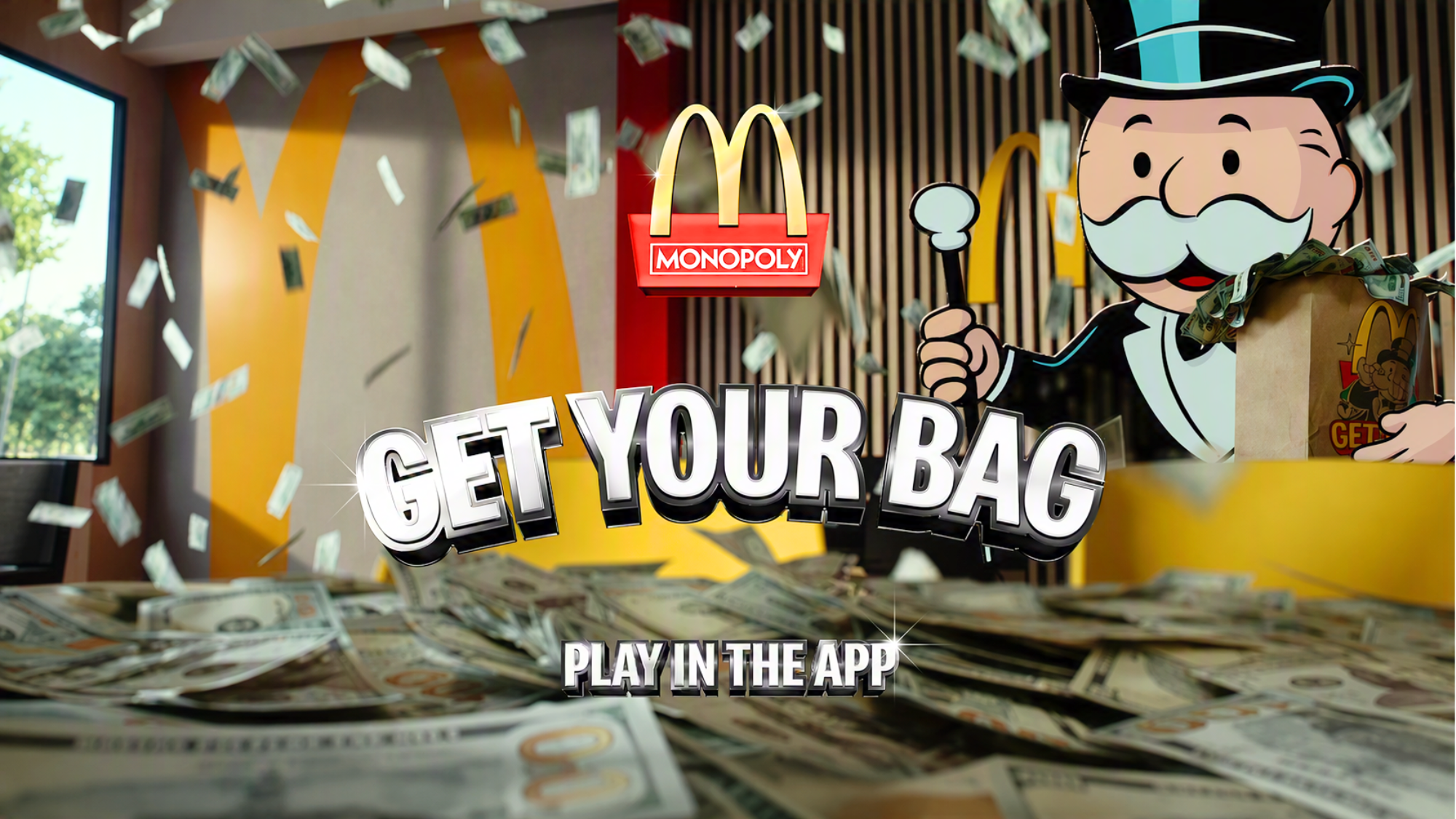
McDonald's USA is bringing back its Monopoly promotion on October 6, 2026, but this year's iteration is meaningfully different from its predecessors: every game piece must be scanned inside the McDonald's app to redeem prizes, collect property sets, or enter the Chance Card sweepstakes. The physical peel remains, but the downstream action is entirely digital — and that distinction matters for operators watching how QSR chains are engineering loyalty enrollment at scale.
The move is a direct response to a structural challenge every large chain faces: how do you convert transactional foot traffic into a durable loyalty database? By requiring app registration before any prize can be claimed — and tying bonus Chance Card plays to app-based ordering — McDonald's is using one of its highest-engagement promotional events as a loyalty onboarding funnel. Franchisees operating across the approximately 13,500 U.S. locations share in that upside; a stronger loyalty database at the brand level typically translates to more targeted promotional spend and better ROI on marketing dollars allocated through co-op structures.
Prize Architecture
The 2026 prize stack is structured across four mechanics: instant-win food items (McChicken, shakes, small fries, Snack Wraps), instant-win MyMcDonald's Rewards Points ranging from 1,500 to 7,000, Collect to Win property sets tied to prizes including 50 Carnival Cruise Line vacation packages and five 2027 Jeep Cherokee vehicles, and a Chance Card Game offering cash from $25 to $1 million, Grubhub and Uber Eats gift codes, Ulta Beauty rewards, $50,000 toward college debt paydown, and $50,000 toward a home down payment. The $1 million grand prize is payable at $50,000 annually over 20 years. Eligible menu items span breakfast, lunch, and dinner — a deliberate design choice that pushes participation across all dayparts rather than concentrating traffic in a single window.
What This Signals for Operators
For independent operators and emerging chains watching the QSR competitive landscape, this promotion is a case study in loyalty mechanics done at infrastructure scale. McDonald's is effectively paying for loyalty enrollment in food cost — every instant-win food prize is a subsidized acquisition cost for a registered app user. That calculus is worth running at any concept level: what is a loyalty registration worth in lifetime visit frequency, and what food-cost offset is defensible to acquire it?
The Chance Card partners — Grubhub, Uber Eats, Ulta Beauty — also signal something about how McDonald's is structuring third-party brand relationships. Co-promotional integrations at this scale function as paid media placements for partner brands and as perceived prize value amplification for McDonald's, without adding hard cash to the prize pool. Operators building loyalty programs or running their own promotional events can apply the same logic: partner gift cards and experiences elevate perceived prize value at a fraction of the cash-equivalent cost.
The app-first infrastructure also positions McDonald's to capture daypart and menu-item data at the individual transaction level during the promotional window — intelligence that feeds menu pricing decisions, daypart promotional targeting, and digital ad retargeting. For operators evaluating their own POS and loyalty stack, that data capture capability is the real competitive asset being built here, not the game itself. See how operators are evaluating loyalty and POS integrations and what QSR digital marketing trends look like heading into 2027.
Written by Michael Politz, Author of Guide to Restaurant Success: The Proven Process for Starting Any Restaurant Business From Scratch to Success (ISBN: 978-1-119-66896-1), Founder of Food & Beverage Magazine, the leading online magazine and resource in the industry. Designer of the Bluetooth logo and recognized in Entrepreneur Magazine's "Top 40 Under 40" for founding American Wholesale Floral, Politz is also the Co-founder of the Proof Awards and the CPG Awards and a partner in numerous consumer brands across the food and beverage sector.