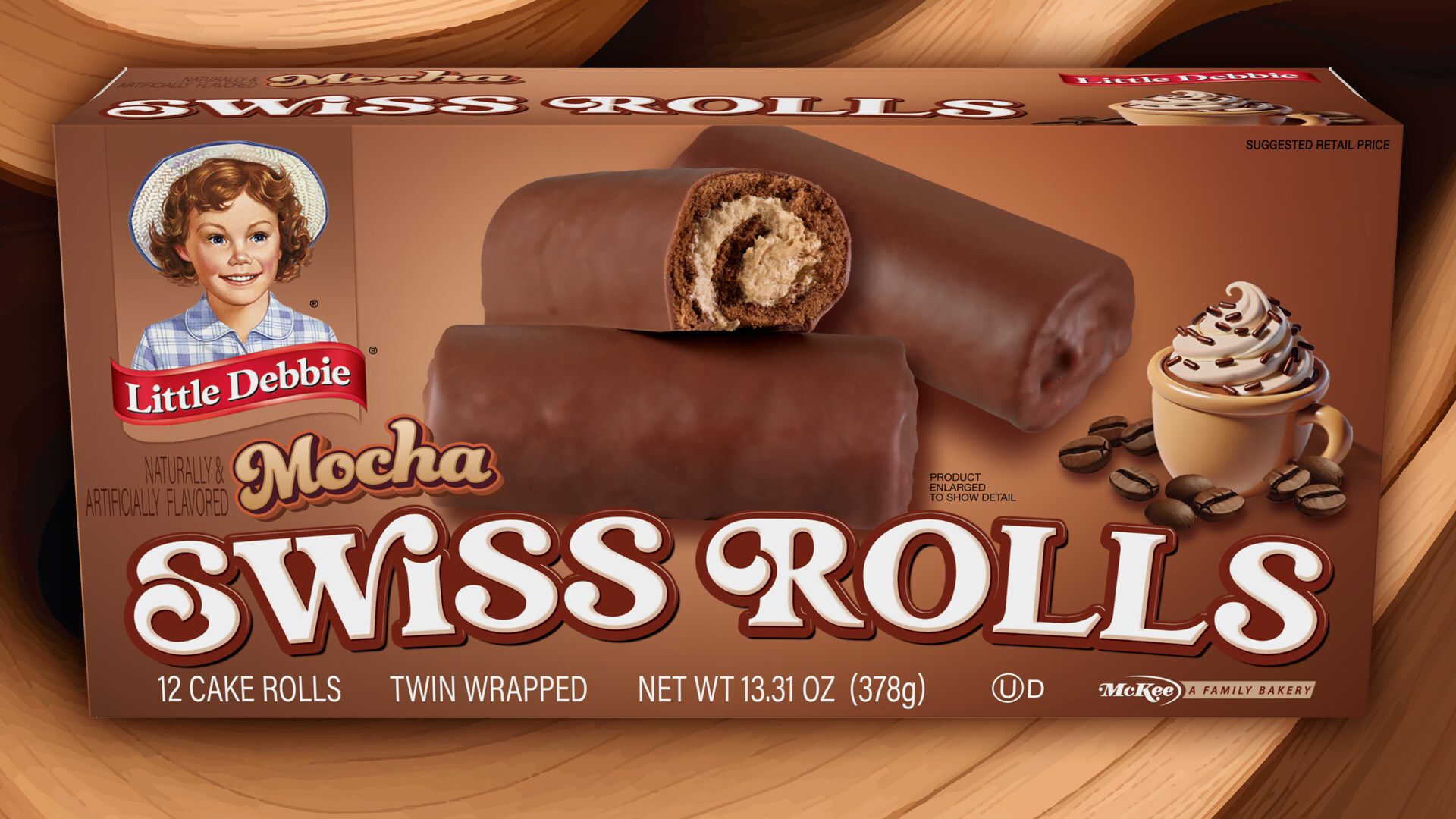
McKee Foods is rolling out Little Debbie Mocha Swiss Rolls, a coffee-and-chocolate riff on one of the best-selling snack cakes in the country. The launch is timed for mid-2026 shelves and targets the overlap between chocolate loyalists and the growing cohort of everyday coffee consumers who want that flavor profile at snack time — not just in a cup. For operators running c-store programs, grab-and-go counters, or hotel pantry retail, this is a SKU worth evaluating before a competitor locks up the facing.
The Swiss Roll is not a struggling product in need of rescue — it has decades of household penetration and reliable velocity. That makes this a confidence extension rather than a defensive pivot. McKee is essentially betting that mocha as a flavor modifier carries enough consumer pull to justify a permanent slot rather than a limited run. Peer brands have made similar moves: coffee-forward snack launches across the broader baked-goods category have outperformed vanilla and fruit flavors in c-store scan data over the past two years, and the trend shows no sign of plateauing. For category managers already watching beverage-influenced flavor crossovers, this is confirmation that the pattern is durable enough to commit shelf space to.
From a procurement and buyer-deck standpoint, the Mocha Swiss Roll signals that McKee is willing to extend a flagship rather than launch a net-new sub-brand — a lower-risk strategy that keeps trade marketing dollars concentrated and makes the pitch to retail buyers cleaner. Foodservice distributors should expect McKee to push this into multipack and club formats quickly if early velocity supports it. Operators sourcing impulse snacks for hotel gift shops, stadium concessions, or break-room programs should add it to their next bid sheet and benchmark unit cost against current chocolate-only Swiss Roll pricing to understand the premium, if any.
For operators thinking about their own brand launches or flavor-extension timing, the playbook here is instructive: anchor a new SKU to an existing hero product with strong name recognition, choose a flavor modifier with proven cross-category momentum (mocha, in this case, benefits from ambient coffee-culture saturation), and move before the flavor cycle peaks. If you are working on a brand launch or retail readiness package, this kind of adjacency strategy — rather than pure novelty — is increasingly what retail buyers want to see in a deck.
Written by Michael Politz, Author of Guide to Restaurant Success: The Proven Process for Starting Any Restaurant Business From Scratch to Success (ISBN: 978-1-119-66896-1), Founder of Food & Beverage Magazine, the leading online magazine and resource in the industry. Designer of the Bluetooth logo and recognized in Entrepreneur Magazine's "Top 40 Under 40" for founding American Wholesale Floral, Politz is also the Co-founder of the Proof Awards and the CPG Awards and a partner in numerous consumer brands across the food and beverage sector.