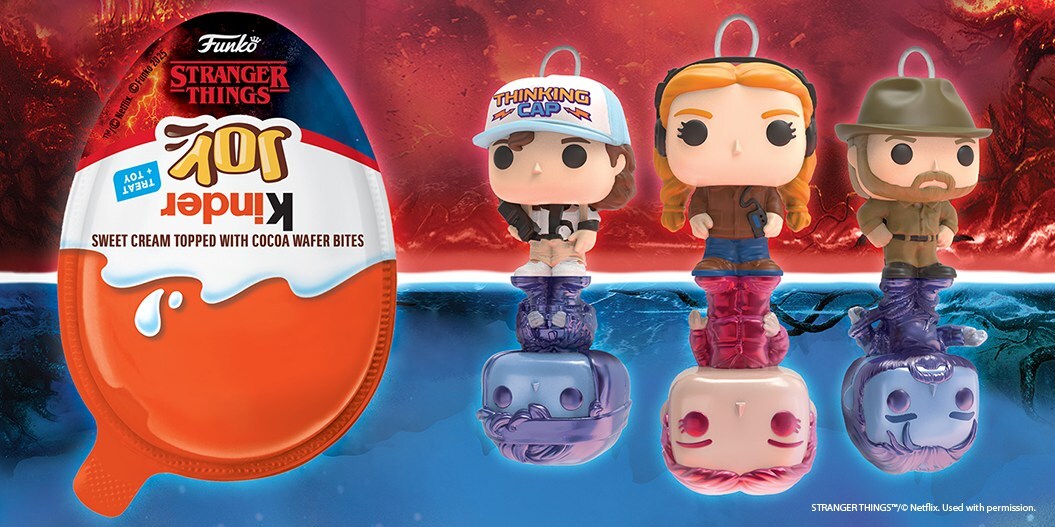
Ferrero North America is launching a limited-edition Kinder Joy x Stranger Things collaboration timed to the 10th anniversary of the Netflix series this July, bundling Funko Pop-style collectible figures inside its signature treat-plus-toy format and pushing the SKU into U.S. retail this spring. The move is a textbook entertainment-IP activation: short window, collectible mechanic, built-in fan demand, and a retail footprint that already indexes heavily in checkout and impulse lanes. Operators and buyers stocking confection sets should treat this as a signal, not a novelty.
The structural play here is worth unpacking. Kinder Joy's base format — two hazelnut cream halves plus a physical toy — already converts at impulse because the toy functions as a built-in reason-to-buy beyond the treat itself. Layering a high-recognition IP like Stranger Things, then adding the Funko collectible halo (which carries its own secondary-market and completionist behavior among fans), compounds velocity drivers. Peer confection brands have used similar mechanics — seasonal Pokémon tie-ins on gummy lines, licensed Marvel packaging on chocolate multipacks — but few do it with a three-party co-brand at this visibility level.
For grocery, convenience, and specialty retail buyers, the procurement intelligence here is about read-through on limited-edition velocity windows. A release timed to a franchise anniversary in July, with product hitting shelves in spring, gives roughly a 60-to-90-day sell-through runway before the cultural moment peaks. That compression is intentional: scarcity supports margin, and anniversary-driven IP activations typically spike search and social without paid media investment from the retailer. Vendors supplying display, secondary placement, or endcap solutions to confection categories should be positioning for summer 2026 promotional calendars now. The brand launch mechanics behind limited-edition retail drops increasingly depend on early placement commitments from buyers to capture the pre-anniversary search curve.
From an operator-intelligence standpoint, this collaboration also reflects a broader pattern in how CPG suppliers are using entertainment IP to reduce reliance on trade spend for velocity. Rather than discounting into the channel, Ferrero is essentially importing an existing fan community — Stranger Things has a demonstrably global and multi-generational audience — and converting that community into incremental purchase occasions. That is a materially different cost structure than a promotional price reduction, and it has implications for how food and beverage brands approach retail readiness and buyer deck strategy when negotiating placement.
The takeaway for operators and buyers is straightforward: limited-edition IP collaborations with collectible mechanics are compressing sell-through windows while improving margin optics, and the brands executing them are doing so with less trade spend dependency. If you carry confection categories or advise brands entering impulse retail, the Kinder Joy x Stranger Things structure is a useful benchmark for evaluating your next licensed-SKU conversation.
Written by Michael Politz, Author of Guide to Restaurant Success: The Proven Process for Starting Any Restaurant Business From Scratch to Success (ISBN: 978-1-119-66896-1), Founder of Food & Beverage Magazine, the leading online magazine and resource in the industry. Designer of the Bluetooth logo and recognized in Entrepreneur Magazine's "Top 40 Under 40" for founding American Wholesale Floral, Politz is also the Co-founder of the Proof Awards and the CPG Awards and a partner in numerous consumer brands across the food and beverage sector.