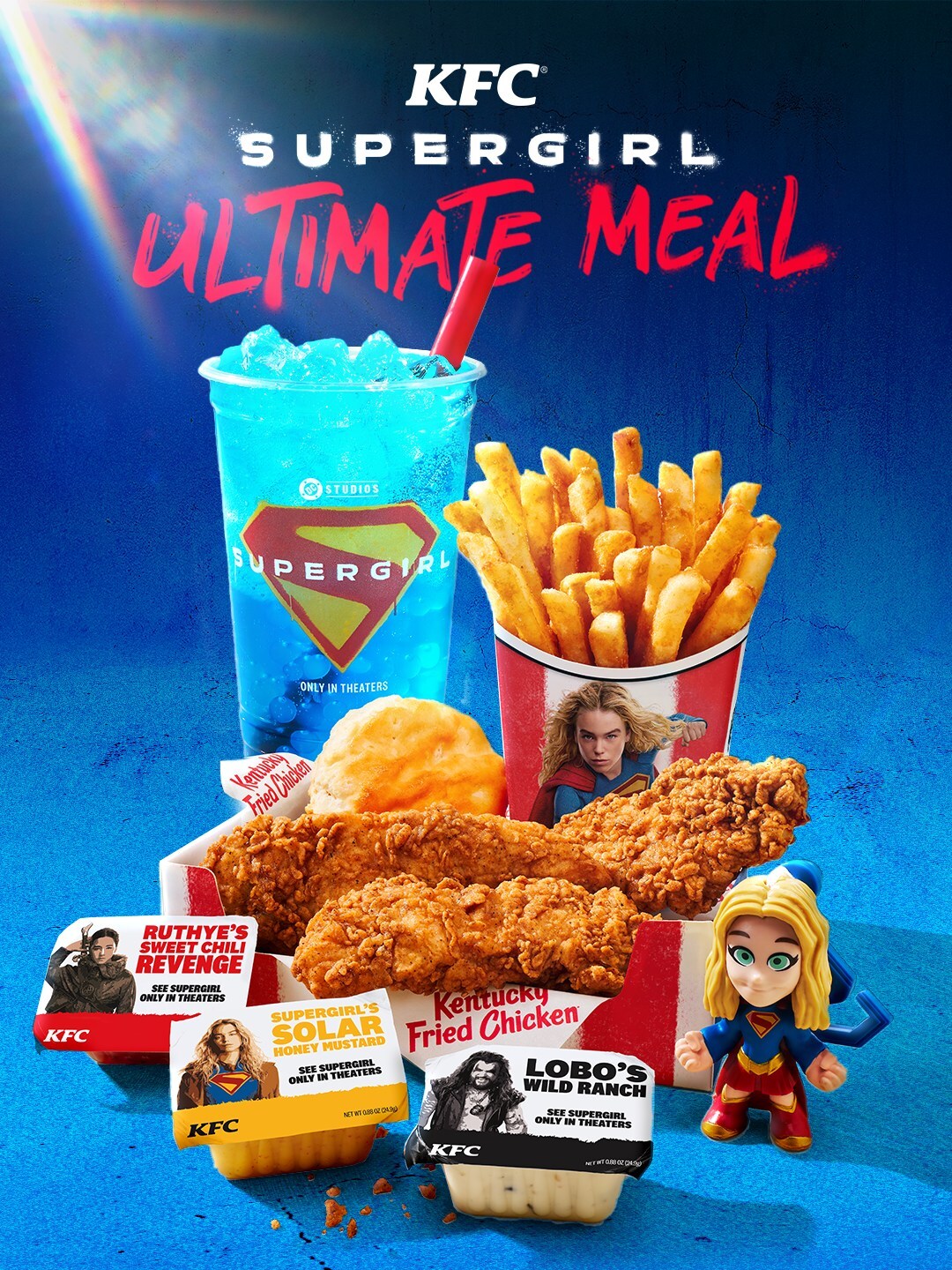
KFC is launching a full co-branded campaign around DC Studios' upcoming Supergirl film, rolling out a limited-time Ultimate Meal and Combo Meal on June 8, three character-inspired sauces, a branded Kryptonian Kooler beverage, and a lineup of blind-bag collectibles. The crown jewel — an ultra-limited Krypto Collectible Bucket — lands exclusively in-restaurant on June 10. This is KFC's first collectible merchandise activation in over two decades, which is the detail operators in any segment should pay attention to most.
Film tie-ins at the QSR level are not new, but the mechanics here are worth unpacking. KFC is layering three distinct traffic drivers — a new meal format, a seasonal beverage SKU, and in-restaurant-only physical collectibles — into a single campaign window. That last element is a deliberate footfall play. Blind-bag collectibles manufactured for in-restaurant pickup only create a reason to visit a physical location that a mobile order or drive-through transaction cannot replicate. At a moment when digital ordering continues to erode dine-in counts across the category, that distinction matters.
For operators and brand teams watching the QSR co-marketing landscape, the structural choice here signals something broader: experiential scarcity is being reintroduced as a traffic lever. The "in-restaurant only" restriction on the Krypto Bucket is not a supply-chain limitation — it is an intentional friction point designed to convert passive fans into incremental visits. Beverage LTOs tied to film IP follow a similar logic, giving cashiers an upsell script and giving the brand a social-media visual that press and influencers will amplify without paid placement.
From a brand-launch and procurement standpoint, executing a campaign this layered — new sauce formulations, a co-branded cup, collectible manufacturing, and retail-style blind-bag packaging — requires lead times measured in quarters, not weeks. Smaller operators and emerging brands watching this should treat it as a benchmark for how much runway a meaningful LTO campaign actually requires. The sauce trio alone represents three distinct SKU developments, each tied to character identity and presumably with packaging approvals from DC Studios built into the timeline.
The takeaway for operators is not to replicate a Hollywood studio deal — it is to identify which elements of this framework are accessible at their scale. A local restaurant can create a limited-run collectible cup, a seasonal sauce, or a "only available in-house" item without a nine-figure IP partner. The underlying mechanic — scarcity plus physical presence plus social shareability — transfers across formats and price points. KFC is running a masterclass in traffic engineering dressed as a movie promotion.
Written by Michael Politz, Author of Guide to Restaurant Success: The Proven Process for Starting Any Restaurant Business From Scratch to Success (ISBN: 978-1-119-66896-1), Founder of Food & Beverage Magazine, the leading online magazine and resource in the industry. Designer of the Bluetooth logo and recognized in Entrepreneur Magazine's "Top 40 Under 40" for founding American Wholesale Floral, Politz is also the Co-founder of the Proof Awards and the CPG Awards and a partner in numerous consumer brands across the food and beverage sector.