The Appointment
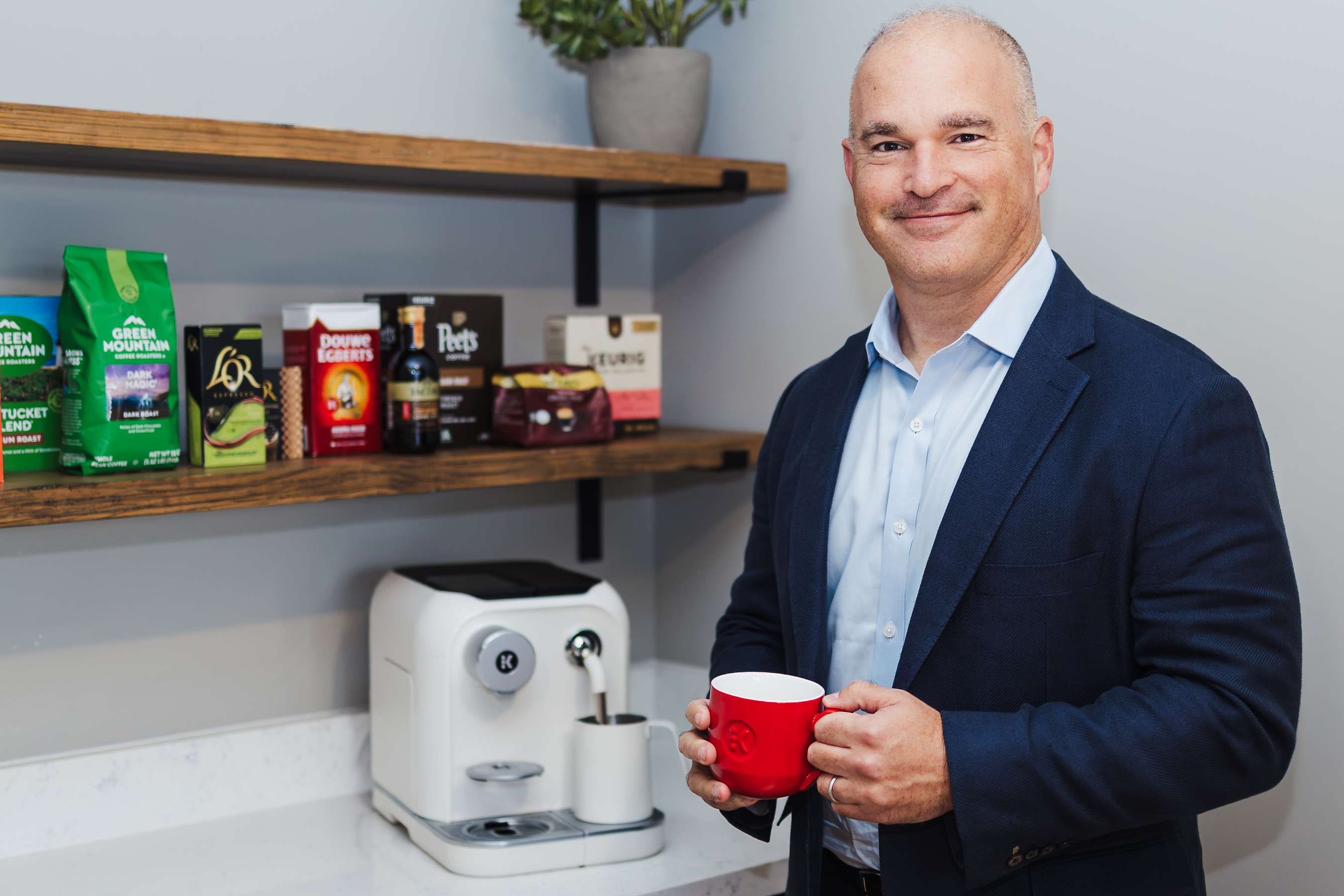
Keurig Dr Pepper has named Russ Torres as CEO of its forthcoming Global Coffee Co., the entity that will hold Keurig, Peet's, L'OR, Jacobs, and Green Mountain Coffee Roasters after the planned split from KDP's North American beverage portfolio. Torres joins November 3, 2026, from Kimberly-Clark, where he served as President and Chief Operating Officer overseeing operations across more than 30 countries. The separation is targeted for early 2027.
At separation, Global Coffee Co. is projected to generate approximately $16 billion in annual revenue, employ more than 25,000 people, and serve consumers in over 100 markets across single-serve systems, roast and ground, whole bean, soluble, ready-to-drink, and away-from-home formats. That scale would position it as the world's largest pure-play coffee company — a designation that carries significant weight in procurement conversations, away-from-home channel negotiations, and foodservice distribution.
Why Operators Should Watch This
For hospitality and foodservice operators, a standalone Global Coffee Co. changes the procurement dynamic. Today, KDP coffee relationships sit inside a broader beverage portfolio negotiation. Once separated, operators sourcing Keurig systems, Peet's whole bean, or L'OR single-serve for hotel rooms, restaurant programs, or office amenity spaces will be dealing with a dedicated coffee-first organization — one with its own P&L, its own sales structure, and its own growth mandates. Expect sharper category focus, more aggressive away-from-home push, and potentially restructured contract terms as the new entity establishes independent revenue targets.
Torres's background is instructive here. His career includes senior roles at Mondelēz International, Newell Brands, and Bain & Company — organizations that built large-scale commercial channel strategies and negotiated complex retail and foodservice distribution. KDP Chairman Pamela Patsley framed the hire explicitly around "complex change" and "consistent results," language that signals integration discipline matters as much as top-line ambition ahead of the JDE Peet's consolidation.
Procurement and Brand Intelligence
The JDE Peet's acquisition — and the integration Torres will now lead — reshapes the competitive coffee landscape for buyers across hospitality procurement and foodservice supply chains. Operators currently running dual-brand coffee programs, or evaluating away-from-home espresso and drip systems, should be tracking how Global Coffee Co. rationalizes its brand architecture post-separation. Portfolio consolidation often triggers SKU rationalization, pricing resets, and distribution realignments that affect everything from hotel room amenity specs to café program economics.
For agencies and brand partners working in beverage media and foodservice marketing strategy, a newly independent $16 billion coffee company entering the market as a standalone advertiser represents a meaningful shift in media spend allocation. Pure-play coffee companies historically concentrate investment in brand equity, trial-driving sampling, and away-from-home visibility — all categories where hospitality operators and their media partners intersect directly.
The early 2027 separation timeline gives procurement teams roughly two to three contract cycles to assess how their current KDP agreements will transfer, bifurcate, or require renegotiation. Start those conversations before Q4 2026 renewal windows close.
Written by Michael Politz, Author of Guide to Restaurant Success: The Proven Process for Starting Any Restaurant Business From Scratch to Success (ISBN: 978-1-119-66896-1), Founder of Food & Beverage Magazine, the leading online magazine and resource in the industry. Designer of the Bluetooth logo and recognized in Entrepreneur Magazine's "Top 40 Under 40" for founding American Wholesale Floral, Politz is also the Co-founder of the Proof Awards and the CPG Awards and a partner in numerous consumer brands across the food and beverage sector.