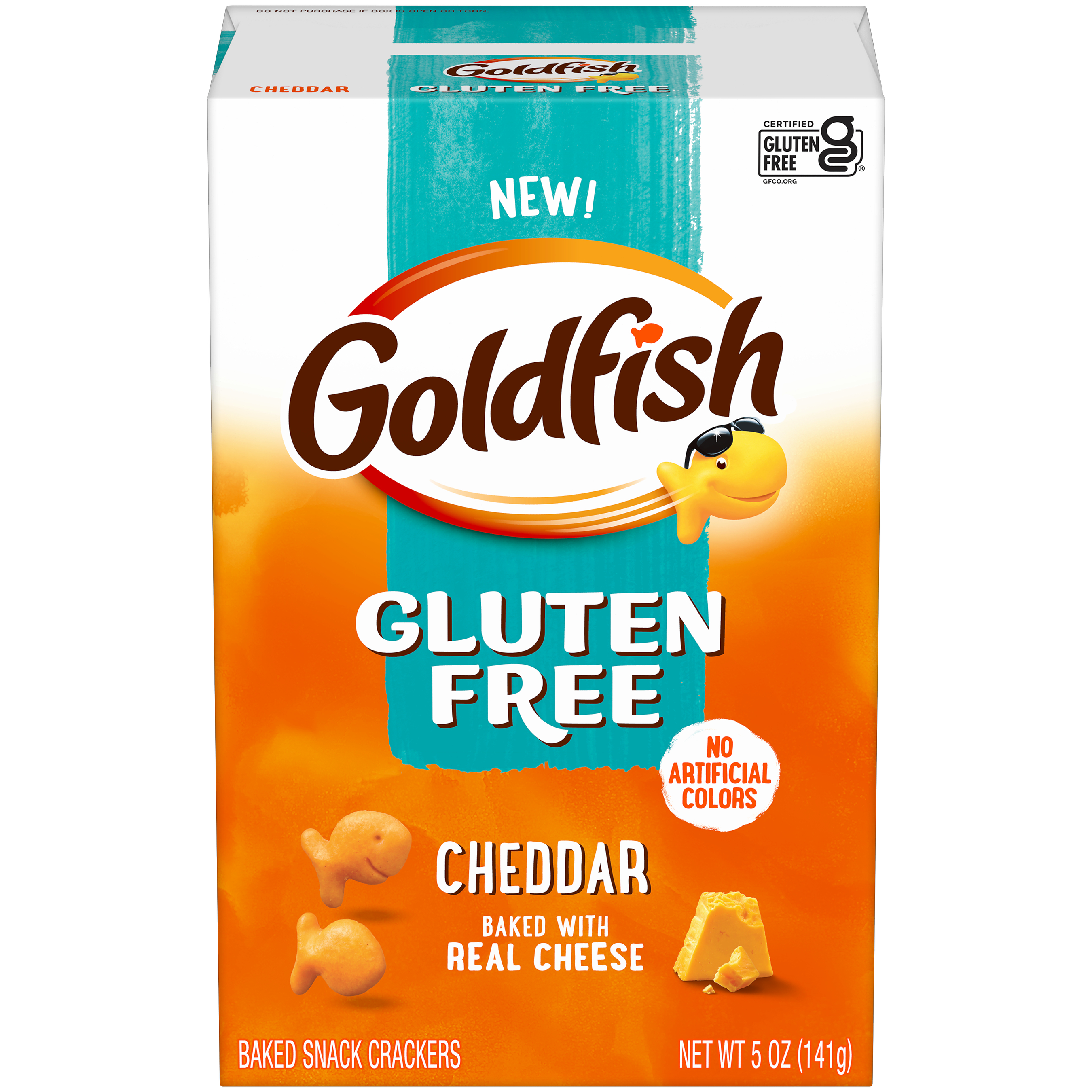
Pepperidge Farm's Goldfish brand is launching its first-ever Certified Gluten Free cheese crackers this November, a SKU that the company positions as one of the most requested innovations in brand history. The 5 oz. package carries a suggested retail price of $4.99 and will roll out to retailers nationwide — a mainstream free-from entry from one of snacking's highest-penetration brands.
The backstory matters for operators and buyers: the product was pulled forward by consumer pressure, including social media requests and handwritten letters, not a top-down innovation sprint. Tiphanie Maronta, SVP of Goldfish Crackers, noted that families who love the brand have not always been able to enjoy it together — a signal that the free-from gap was costing the brand household occasions, not just trial.
The Demand Signal
Approximately 30.0% of the U.S. population actively seeks gluten-free options, according to a 2025 Market Research Future report on the U.S. gluten-free products market. For foodservice operators and retail buyers, that figure has been stable long enough to shift from trend to permanent shelf consideration. What changes with a Goldfish entry is category legitimacy: when a brand present in roughly 75.0% of U.S. homes adds a certified free-from SKU, it normalizes the segment for adjacent buyers still sitting out.
The formulation holds to the brand's core standards — always baked, never fried, 100% real cheese, no artificial colors or preservatives — and carries Certified Gluten Free status, which is a distinct credential from a "gluten-free" label claim. That certification matters to healthcare-adjacent foodservice accounts (school nutrition programs, hospital cafeterias, senior dining) where documentation is required and self-reported label claims are insufficient.
What Buyers Should Watch
For retail and foodservice procurement teams, the Goldfish Gluten Free launch is a useful benchmark on free-from SKU economics. A $4.99 SRP on 5 oz. positions the product at a modest premium to the standard line, suggesting Pepperidge Farm is not treating this as a luxury or specialty play — it is priced for mainstream basket inclusion. Buyers negotiating free-from assortments can use this as a floor reference when evaluating certified competitors.
For brand launch and retail readiness teams, the Goldfish case demonstrates the compounding value of social listening as an innovation input. Handwritten letters became a certified SKU with national distribution — that pipeline is reproducible by smaller brands that systematically track and document consumer requests across channels. The lesson is operational: capture unmet demand signals before a competitor with more shelf presence acts on them first.
Operators running snack programs in lodging, airline catering, or institutional foodservice should flag the November rollout window as the earliest point to request samples and evaluate the SKU for menu or grab-and-go inclusion. Certified Gluten Free documentation will need to come from Pepperidge Farm directly for any program requiring allergen disclosure paperwork.
Written by Michael Politz, Author of Guide to Restaurant Success: The Proven Process for Starting Any Restaurant Business From Scratch to Success (ISBN: 978-1-119-66896-1), Founder of Food & Beverage Magazine, the leading online magazine and resource in the industry. Designer of the Bluetooth logo and recognized in Entrepreneur Magazine's "Top 40 Under 40" for founding American Wholesale Floral, Politz is also the Co-founder of the Proof Awards and the CPG Awards and a partner in numerous consumer brands across the food and beverage sector.