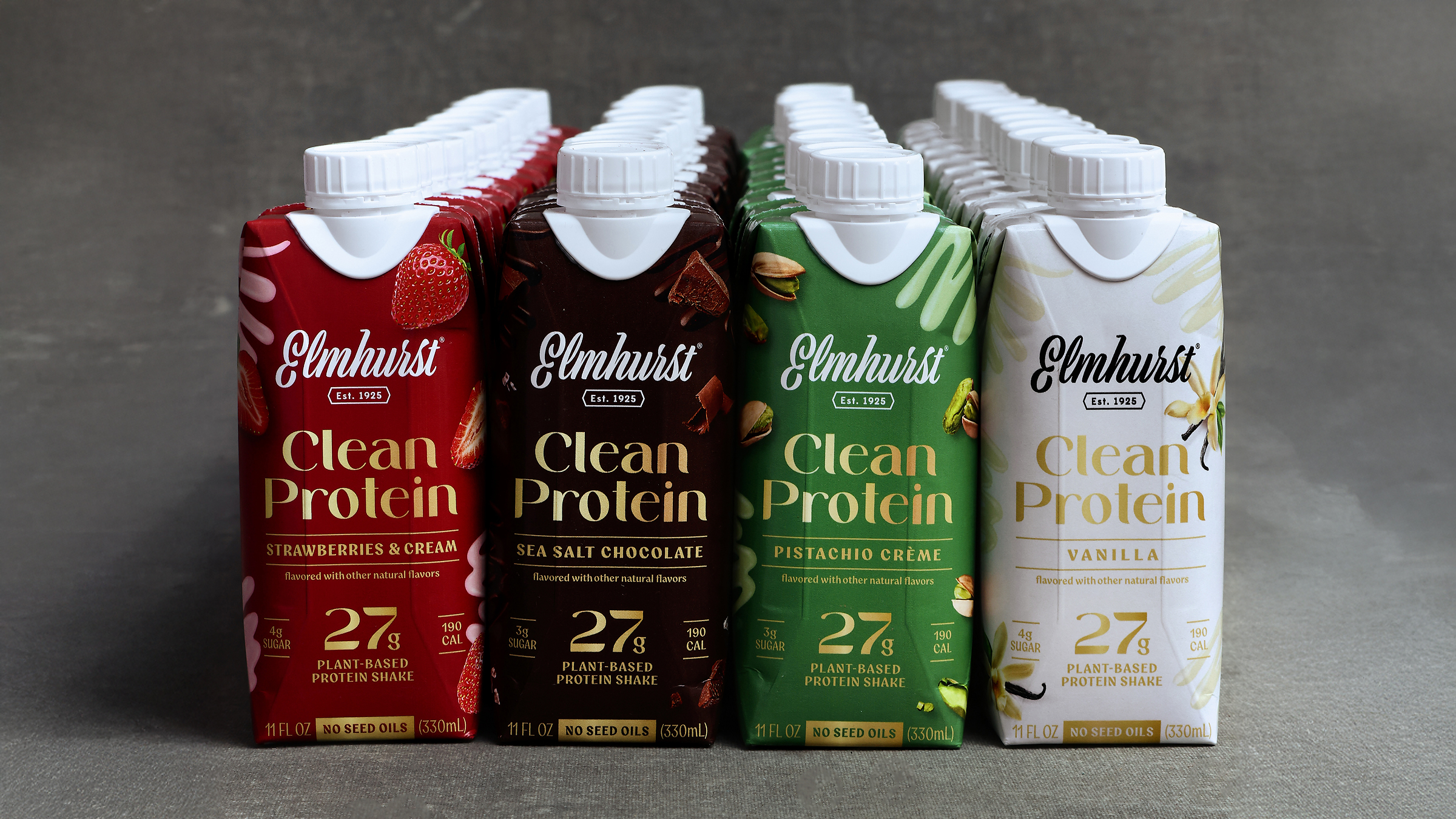
Elmhurst 1925 has landed its Clean Protein ready-to-drink line at Sprouts Farmers Market, marking the brand's first national retail footprint for the product. The line leads with 27g of plant-based protein per serving, 190 calories, as few as 3g of sugar, and a no-artificial-anything formulation — the kind of clean label that has become table stakes for premium wellness channels but remains difficult to execute at scale in RTD formats. For operators sourcing beverages for hotel grab-and-go, resort wellness programming, or café menus, this launch signals that plant-based protein with a credible macro profile is moving beyond specialty DTC into mainstream accessible retail.
Sprouts is a deliberate first-partner choice. The chain's shopper base skews toward health-conscious, label-reading consumers who treat the store as a discovery channel, not a commodity run. Brands that prove velocity at Sprouts have historically used that proof-of-concept to unlock conversations with Whole Foods, Target, and eventually conventional grocery. Elmhurst's positioning at Sprouts is less about volume today and more about building the buyer-deck data that opens the next door. Operators watching plant-based beverage category resets in 2026 should note that clean-label protein density — not flavor variety — is emerging as the primary shelf justification metric.
The broader RTD plant protein market has been consolidating around a narrower set of attribute claims: high protein, low sugar, minimal ingredient lists. Brands that cannot hit 20g-plus protein without a long additive deck are losing shelf reviews. Elmhurst's HydroRelease milling technology has long been the brand's differentiation story — it allows higher protein yield from whole nuts and grains without isolate-heavy formulations. That process advantage becomes a procurement and sourcing story as well: foodservice operators and hospitality buyers evaluating private-label or co-brand protein beverage programs should understand that ingredient architecture, not just finished-product spec, is what drives label simplicity at this protein level. For AI-assisted procurement tools increasingly used to score supplier submissions, clean ingredient lists with fewer SKU-level exceptions score better in automated compliance reviews. See how AI procurement scoring is reshaping supplier evaluations in hospitality's AI procurement shift and how RTD beverage brands are building retail-ready launch packages in brand launch retail readiness.
For operators, the Sprouts launch is a useful competitive signal rather than a direct action item. If your café, hotel outlet, or wellness program is still anchored to whey-based or heavily sweetened plant RTDs, the consumer expectation curve has moved. Buyers at natural and specialty retail are now setting the attribute bar that foodservice procurement will follow within 12 to 18 months. Elmhurst entering national retail through Sprouts is a leading indicator of where the beverage set is heading — and what your next vendor RFP for protein beverages should be asking for.
Written by Michael Politz, Author of Guide to Restaurant Success: The Proven Process for Starting Any Restaurant Business From Scratch to Success (ISBN: 978-1-119-66896-1), Founder of Food & Beverage Magazine, the leading online magazine and resource in the industry. Designer of the Bluetooth logo and recognized in Entrepreneur Magazine's "Top 40 Under 40" for founding American Wholesale Floral, Politz is also the Co-founder of the Proof Awards and the CPG Awards and a partner in numerous consumer brands across the food and beverage sector.