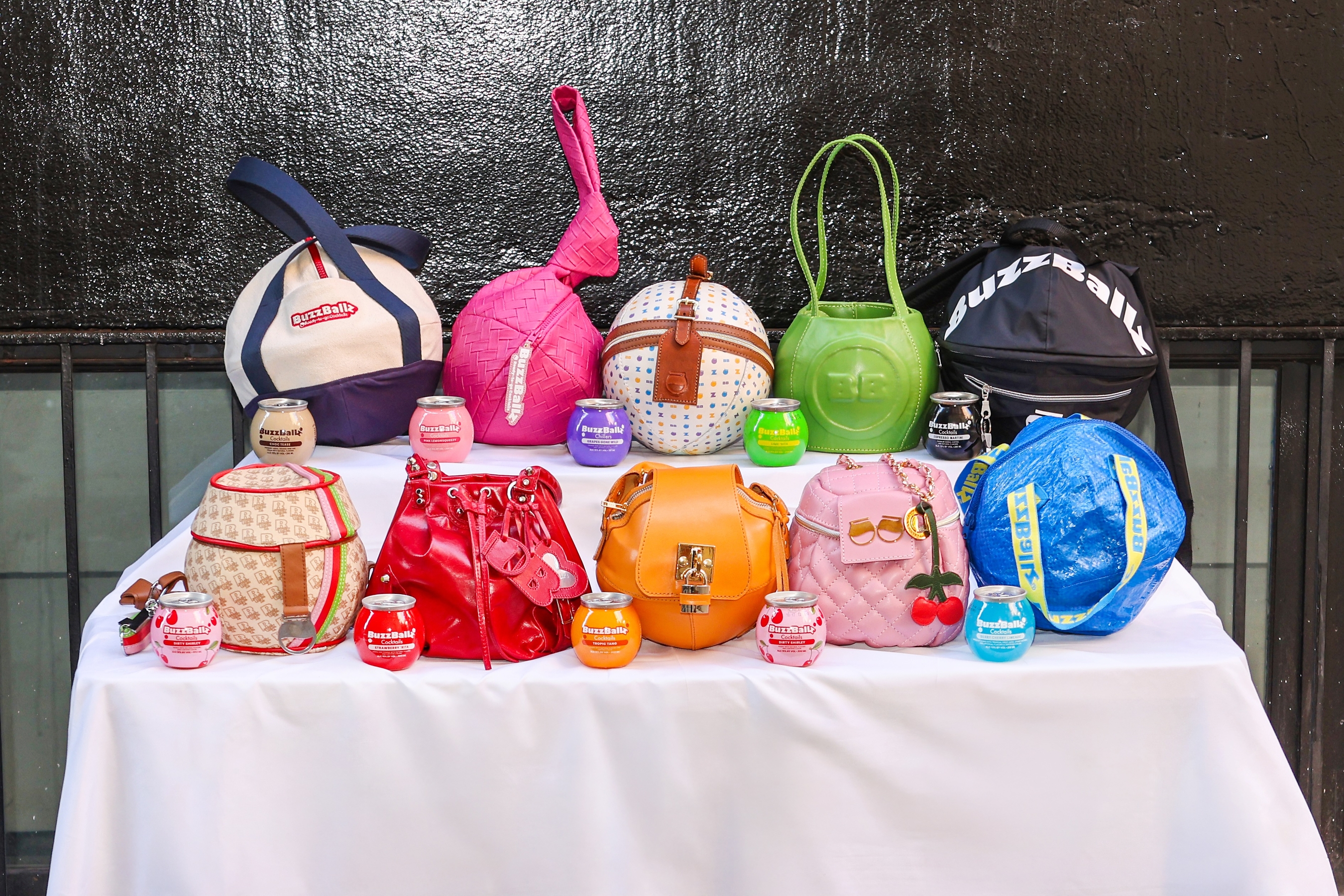
The #1 single-serve premixed cocktail brand in the U.S., BuzzBallz, is staging its most visible brand activation to date: a New York Fashion Week pop-up and limited merch drop built around the stateside debut of its BuzzBagz collection and the launch of a new limited-edition flavor, Dirty Shirley.
The BuzzBagz collection — 10 designs inspired by iconic handbag silhouettes across fashion history, priced at $100 each — first broke in the UK last winter and generated enough consumer interest to justify a full U.S. rollout. Two of the designs are U.S.-exclusive and tied directly to the Dirty Shirley flavor's cherry and lemon-lime visual identity. Fans 21 and older got first access at a pop-up near Canal Street in New York City on September 15, with a final full-collection drop scheduled for late September through the brand's official TikTok Shop.
The Channel Strategy
The sequencing here is deliberate and worth unpacking for operators and brand managers watching the RTD category. BuzzBallz is using a physical pop-up to generate earned media and social content during one of the highest-visibility fashion moments on the calendar, then converting that attention into a TikTok Shop transaction — a channel that increasingly functions as both discovery and fulfillment for the 21–35 demographic that drives single-serve cocktail volume. The $100 price point positions the bag as a collectible rather than impulse merchandise, which extends the brand's shelf life in the consumer's feed well past the activation date.
For on-premise and retail buyers, the Dirty Shirley flavor itself is the more immediately actionable development. The product is available nationwide in 200ml (suggested retail $3.99) and 1.75L Biggie sizes (suggested retail $19.99) at participating retailers for a limited time. The flavor — cherry, lemon-lime, no carbonation — is a riff on the Shirley Temple mocktail, a format that has shown consistent menu traction as operators look for nostalgic, lower-ABV-adjacent options that translate across dayparts.
What RTD Operators Should Watch
BuzzBallz's move reflects a broader pattern in the RTD segment: brands that built distribution through value and convenience are now investing in brand-equity plays — fashion collabs, merch, and experiential activations — to defend shelf space and justify premium positioning as the category gets more crowded. Competitors across the ready-to-drink landscape are running similar playbooks, and buyers at regional chains and independent accounts should expect more of these limited-edition flavor-plus-merch bundles as RTD brands compete for incremental display and feature placement.
The TikTok Shop component is also a signal for suppliers and distributors tracking digital commerce in beverage alcohol. As platform-native commerce matures, brands with strong social followings are beginning to treat their own channels as a viable direct-revenue layer — not just a marketing amplifier — which has downstream implications for how promotional budgets and distribution agreements get structured.
For operators considering BuzzBallz for back-bar, grab-and-go, or poolside programming, the Dirty Shirley addition broadens the brand's flavor repertoire in a direction that skews approachable and sessionable — attributes that remain in demand across hotel F&B, festival, and sports-venue accounts. The limited-edition designation also creates a natural conversation point with guests, which translates to staff upsell opportunities while the SKU is in market.
Brand teams running flavor launch campaigns or evaluating RTD placement and retail readiness should note how BuzzBallz is threading earned media, physical activation, and platform commerce into a single coordinated window — a model increasingly replicable at smaller scale with the right agency and channel partners.
Written by Michael Politz, Author of Guide to Restaurant Success: The Proven Process for Starting Any Restaurant Business From Scratch to Success (ISBN: 978-1-119-66896-1), Founder of Food & Beverage Magazine, the leading online magazine and resource in the industry. Designer of the Bluetooth logo and recognized in Entrepreneur Magazine's "Top 40 Under 40" for founding American Wholesale Floral, Politz is also the Co-founder of the Proof Awards and the CPG Awards and a partner in numerous consumer brands across the food and beverage sector.