The Product Move
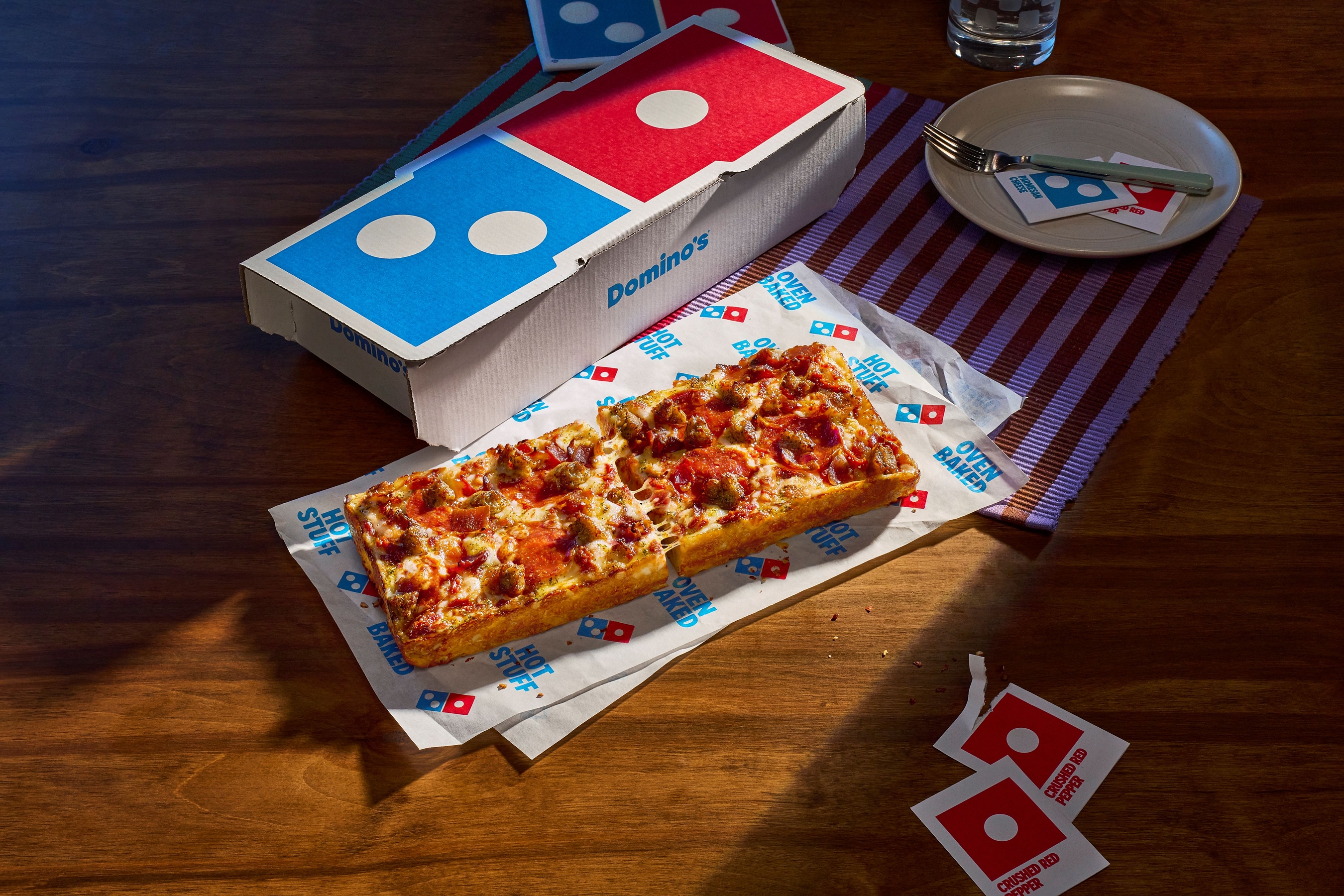
Domino's Pizza is adding a single-serve Detroit-style pizza to its national menu on Aug. 31, naming it the Domino — a rectangular, two-slice format shaped to mirror the brand's iconic logo. The build includes buttery-flavored pan dough encrusted with real Parmesan, two cheese layers, customer-selected sauce, up to three toppings, and a garlic seasoning finish. It enters the menu via Domino's existing Mix and Match Deal at $6.99 per item alongside any two or more menu selections.
For foodservice operators watching QSR portfolio strategy, the launch is worth noting less for the product itself and more for what problem it's designed to solve: the friction of shared-pizza customization at group occasions. Joe Jordan, chief operating officer, president of Domino's U.S., and incoming CEO, framed it plainly — "When everyone wants something different, traditional pizza falls short." That is a real operational pain point at family-dining and group-delivery occasions, and Domino's is addressing it with SKU expansion rather than a digital configurator or upsell mechanic.
Why Operators Should Care
The solo-portion trend has been compressing menu design across QSR and fast-casual for several years. Single-serve snack formats, personal-size entrées, and "just for me" daypart targeting have shown consistent attachment in lunch and late-night windows — two occasions Domino's explicitly calls out. Independent consumer testing, per the company, rated the Domino among the most positively received products in the brand's history, a signal that the format gap was real and not just a marketing angle.
For pizza operators and multi-unit franchisees, the calculus is straightforward: a $6.99 personal pizza that travels well and requires no table negotiation over toppings competes directly with fast-casual lunch entrées, convenience-store hot food, and grocery grab-and-go. Domino's reported global retail sales of over $20.6 billion in the trailing four quarters ended June 14, 2026, across more than 22,500 stores in over 90 markets — scale that means this format reaches critical test mass on day one. That's a competitive pressure point for regional pizza chains and independent operators who don't have the digital infrastructure to push a new SKU system-wide overnight.
What This Signals
The Domino's move also reflects a broader menu-engineering posture: when digital channels generate more than 85.0% of U.S. retail sales, launching a portable, individually customizable format is as much an app engagement strategy as a culinary one. A personal pizza with three topping choices and a sauce decision point is a higher-engagement digital order than a standard large with default toppings. Operators invested in loyalty program design and digital menu architecture should read this as evidence that SKU-level personalization is now a growth lever, not just a hospitality nicety.
For suppliers and packaging vendors, single-serve Detroit-style production at Domino's scale implies meaningful demand for rectangular pan formats, individual portioning materials, and carryout packaging engineered for two-slice personal pies. Vendors already in the QSR packaging and equipment supply chain have a short window to position ahead of potential category-wide imitation.
Regional chains and independent pizzerias should audit their own lunch and late-night daypart mix now. If a personal-size Detroit-style format tests as strongly as Domino's internal data suggests, category followers will move within two to three quarters.
Written by Michael Politz, Author of Guide to Restaurant Success: The Proven Process for Starting Any Restaurant Business From Scratch to Success (ISBN: 978-1-119-66896-1), Founder of Food & Beverage Magazine, the leading online magazine and resource in the industry. Designer of the Bluetooth logo and recognized in Entrepreneur Magazine's "Top 40 Under 40" for founding American Wholesale Floral, Politz is also the Co-founder of the Proof Awards and the CPG Awards and a partner in numerous consumer brands across the food and beverage sector.