The Launch Signal
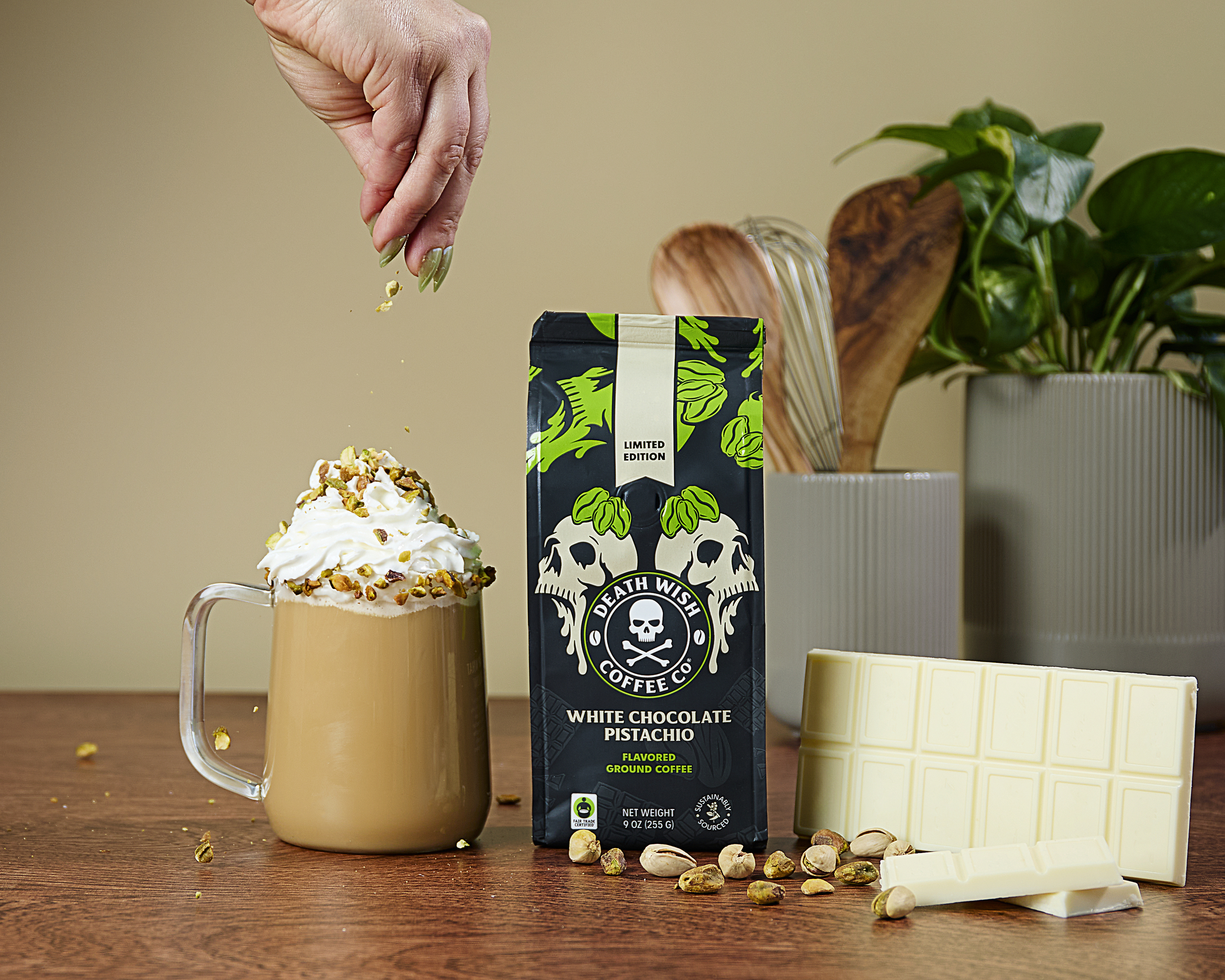
Death Wish Coffee Co., the top-ranked Fair Trade and Organic coffee brand in the United States by SPINS MULO scan data, is releasing its White Chocolate Pistachio medium roast exclusively through its own e-commerce site starting September 29, with broader retail and Amazon distribution slated for 2027. The 9-ounce ground bag is priced at $13.99. For specialty beverage operators and retail buyers, the sequencing here is the story — not the flavor.
DTC-first launches have become a legitimate demand-validation tool for consumer packaged goods brands at every tier. By staging the White Chocolate Pistachio SKU online before committing to shelf space, Death Wish can measure reorder rates, basket behavior, and search volume before pitching retail buyers on a slot. That is a meaningful shift from the traditional approach of launching simultaneously across all channels and hoping velocity data materializes fast enough to justify the placement.
Why Pistachio, Why Now
The timing tracks with a documented category inflection. The U.S. pistachio market was valued at $2.3 billion in 2025 and is projected to reach $3.2 billion by 2033, according to Grand View Research — growth driven by pistachio's crossover from snack aisle into dessert, beverage, and confectionery applications. Foodservice operators have already seen pistachio show up in espresso menus, seasonal lattes, and bakery programs. A branded coffee SKU leaning into that profile is a logical adjacency, and it gives retail buyers a familiar flavor story to tell category managers.
Sasha Auguste, Chief Marketing Officer of Death Wish Coffee, framed the brand's intent clearly: the goal was indulgence without compromising the company's Fair Trade and organic sourcing standards. The blend uses Certified Fair Trade arabica and robusta beans with no artificial flavors — a spec that matters to the specialty grocery buyer and the hotel amenity buyer equally. Death Wish is present in more than 25,000 retail doors, so the 2027 retail push for this SKU will have a wide distribution runway to work with.
What Operators Should Track
For foodservice and hospitality procurement teams, the White Chocolate Pistachio launch is worth monitoring as a proxy for where premium coffee flavor development is heading into the next planning cycle. Pistachio is following the same cross-category arc that drove oat milk and lavender from niche to mainstream — and the brands that seeded DTC demand early were consistently better positioned when retail conversations opened.
Retail buyers fielding new coffee SKU pitches should expect more phased submissions like this one, where brands arrive with six-to-twelve months of DTC velocity data in hand before requesting shelf placement. That dynamic shifts negotiating leverage and changes how buyer decks and retail readiness packages should be structured. Vendors and brokers advising emerging beverage brands on distribution strategy and trade-show amplification would do well to incorporate a DTC-validation phase into their standard launch sequencing.
Food & Beverage Magazine (fb101.com) has covered pistachio's rise across multiple beverage and foodservice categories — the Death Wish move adds a branded CPG data point to that trend line that buyers and operators can reference in their own planning.
Written by Michael Politz, Author of Guide to Restaurant Success: The Proven Process for Starting Any Restaurant Business From Scratch to Success (ISBN: 978-1-119-66896-1), Founder of Food & Beverage Magazine, the leading online magazine and resource in the industry. Designer of the Bluetooth logo and recognized in Entrepreneur Magazine's "Top 40 Under 40" for founding American Wholesale Floral, Politz is also the Co-founder of the Proof Awards and the CPG Awards and a partner in numerous consumer brands across the food and beverage sector.