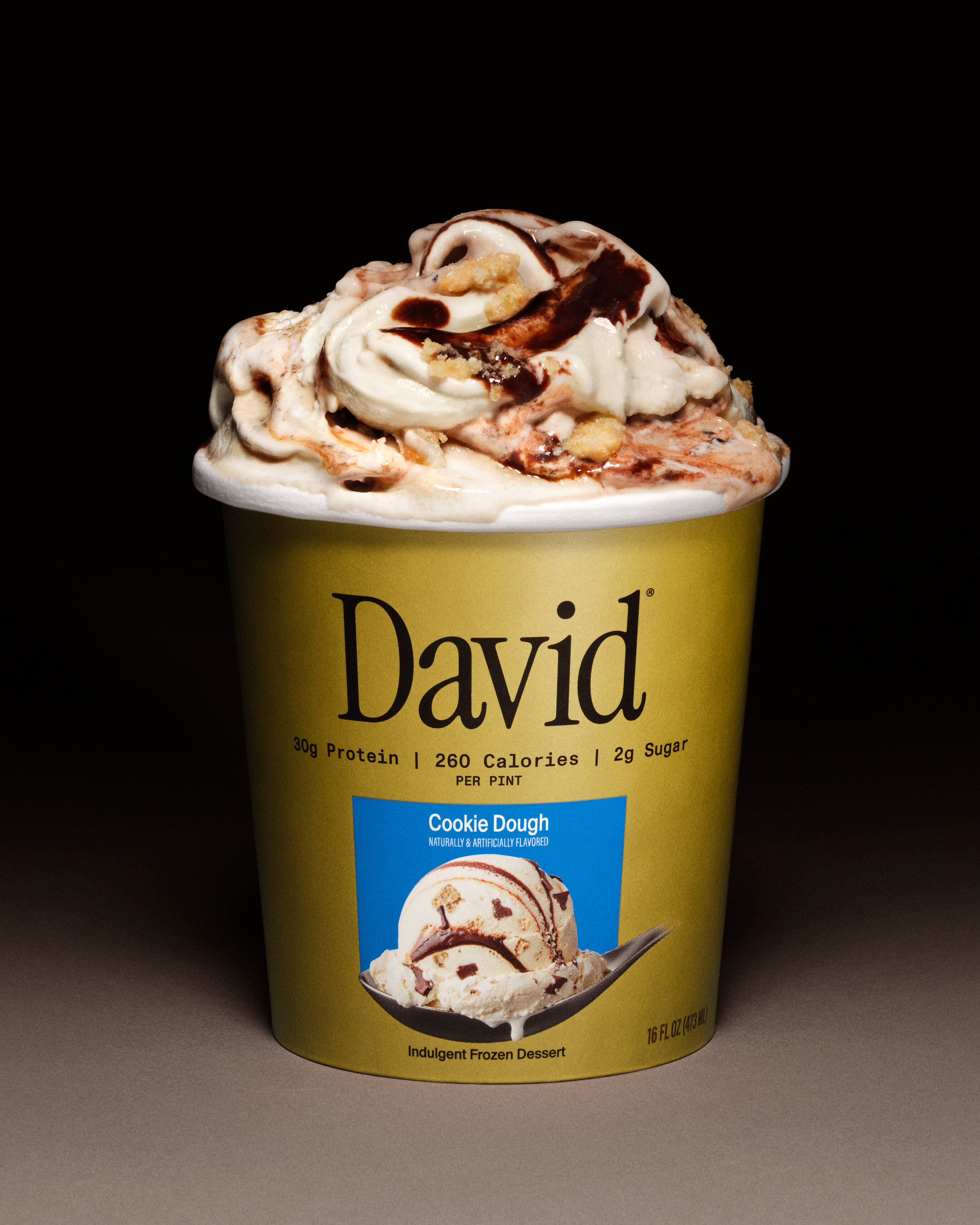
David Protein, best known for building what it claims is the highest protein-per-calorie bar on the market, moved into frozen dessert on June 1, 2026 — and the four-SKU pint line sold out online in 28 minutes. Two days later, the brand opened a summer ice cream shop in New York City. For operators and buyers tracking where high-protein consumer demand is heading next, that velocity number is the only metric that matters this week.
The sellout pace puts David in rare company for a CPG brand without a legacy frozen footprint. For context, direct-to-consumer frozen launches in the better-for-you segment typically rely on sustained paid social and email sequences to move initial inventory — not a 28-minute window. That kind of pull suggests David carried significant organic demand from its bar customer base into an entirely new category, which has direct implications for any retailer or foodservice buyer evaluating the brand for shelf or menu placement. Operators running high-protein daypart programs — particularly in fitness-adjacent hospitality, hotel F&B, and campus dining — should be tracking conversion data from this launch window. The brand launch signals worth noting here are the DTC-first sequencing and the physical activation layered immediately on top.
The pop-up ice cream shop opening in New York City on June 5 is not a marketing afterthought — it is a deliberate retail-readiness signal aimed at wholesale buyers and distributors. Brands that pair a DTC velocity story with an in-market experiential presence are compressing the traditional buyer-education timeline. This is the same playbook that has accelerated freezer-door placement for several better-for-you brands over the past 18 months. If David's shop generates the kind of earned media and foot-traffic data the brand is likely targeting, expect a formal retail pitch cycle to follow within 60 to 90 days. Procurement teams at grocery, club, and specialty retail should treat the pop-up as a pre-pitch signal, not a lifestyle moment. Vendors and brokers working the frozen better-for-you aisle should note that David's existing bar distribution relationships give it a credible warm-introduction path to many of the same buyers it will need for frozen.
For hospitality operators specifically, the protein-per-calorie positioning translates directly into amenity and menu applications — hotel minibars, spa programming, athletic club concessions, and wellness-forward room service builds. The category is not crowded at the operator level yet, which means early placement conversations carry real menu-differentiation value. Brands with this kind of launch velocity tend to move from DTC exclusivity to broadline availability faster than their category predecessors did. Operators interested in stocking or featuring the line should open the conversation now rather than waiting for a distributor to bring it to them. For more on how protein-forward brands are reshaping operator procurement decisions, the pattern here is consistent with what buyers across segments have been signaling for the past two quarters.
Written by Michael Politz, Author of Guide to Restaurant Success: The Proven Process for Starting Any Restaurant Business From Scratch to Success (ISBN: 978-1-119-66896-1), Founder of Food & Beverage Magazine, the leading online magazine and resource in the industry. Designer of the Bluetooth logo and recognized in Entrepreneur Magazine's "Top 40 Under 40" for founding American Wholesale Floral, Politz is also the Co-founder of the Proof Awards and the CPG Awards and a partner in numerous consumer brands across the food and beverage sector.