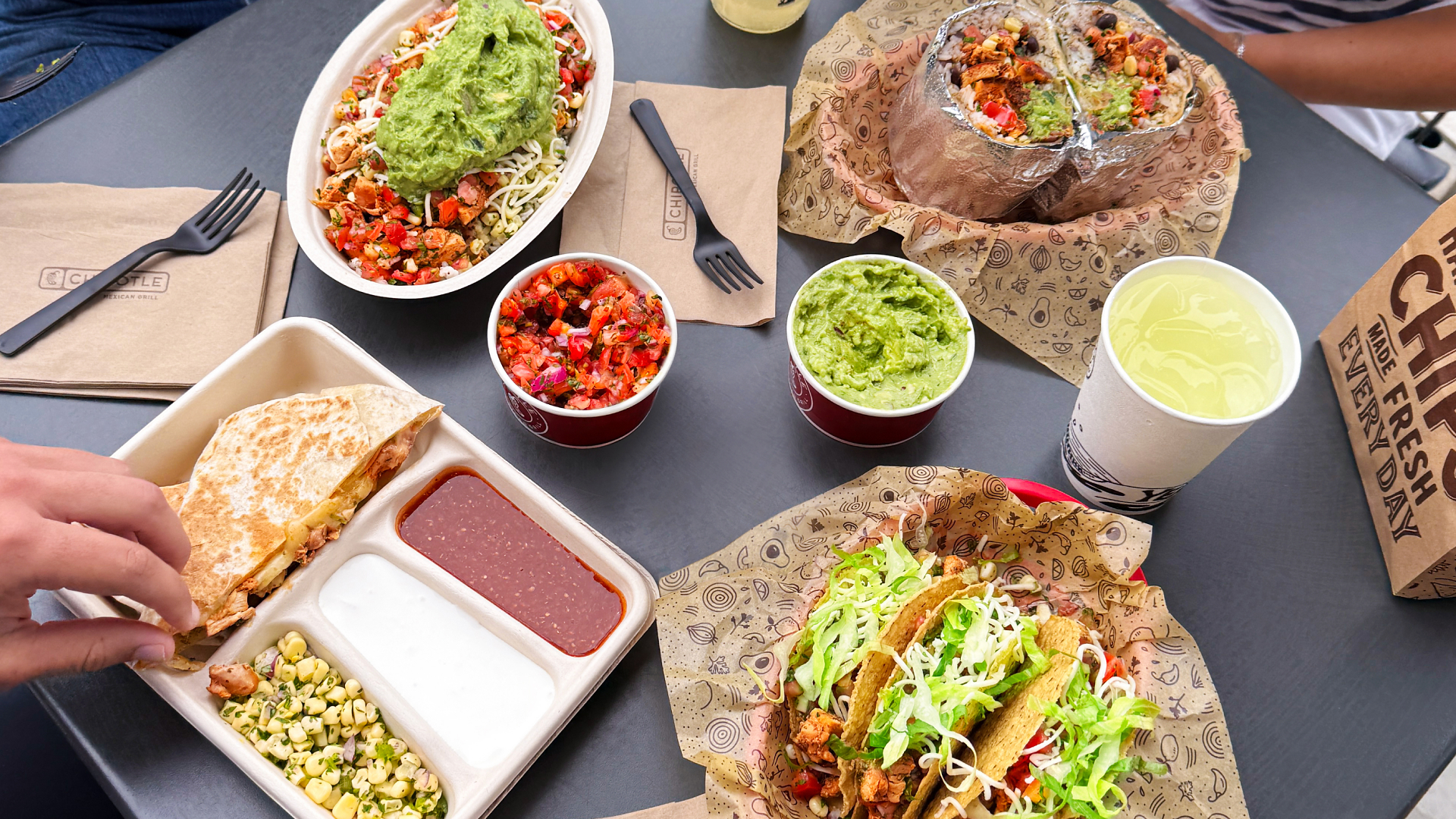
Chipotle Mexican Grill is converting a grassroots TikTok trend into a structured promotional calendar this back-to-school season, pairing an in-store School Spirit BOGO event with three consecutive weeks of app-only dinner offers. The move illustrates a playbook other full-service and fast-casual operators should be watching closely: identify organic consumer behavior on social platforms, then build a formal offer around it before a competitor does.
The Two-Track Offer
On August 20, guests wearing any school apparel—from a middle school jersey to a college sweatshirt—can purchase an entrée at participating Chipotle locations in the U.S. after 3 p.m. and receive a second entrée free, redeemable in-restaurant only. The BOGO is capped at five free entrées per check, requires the apparel-wearing guest to be present, and cannot be stacked with other promotions. It is a high-visibility, low-friction activation: no app required, no code needed, just show up in school gear.
The Sunday digital play is structurally different and operationally more valuable to the brand. On August 23, August 30, and September 6, guests who order two or more entrées after 3 p.m. through the Chipotle app or Chipotle.com using code SUNDAYS receive a third entrée free. The offer runs in both the U.S. and Canada, pushes traffic into the brand's own digital channels, and generates first-party data on late-afternoon ordering behavior—a daypart Chipotle has been working to build.
What Operators Should Clock
The "Chipotle Sundays" framing is the more instructive signal for operators and brand marketers. The term had already accumulated organic traction on TikTok as fans documented a quiet end-of-weekend ritual of ordering Chipotle at home. Rather than simply licensing the moment with a hashtag campaign, Chipotle's marketing team—led by Stephanie Perdue, Senior Vice President of Brand Marketing—structured it into a recurring, code-gated digital event. That converts passive brand affinity into trackable, app-driven transactions and loyalty-point accumulation.
This approach aligns with a broader QSR pattern: brands are increasingly scanning social platforms for unprompted consumption rituals, then formalizing them into limited-time digital offers that funnel customers into owned channels. For operators without Chipotle's scale, the lesson is the same—monitor what your regulars are already doing organically, and build the infrastructure to reward it before the moment dissipates.
The back-to-school window also reinforces Chipotle's student loyalty investment. The brand's Chipotle U Rewards program, introduced last back-to-school season, gives college students 1,000 bonus points at sign-up and 20.0% more points per purchase, verified through ID.me. Layering a student loyalty tier on top of a seasonal promotional push is a defensible acquisition strategy in a competitive daypart: it creates habitual ordering patterns at a life stage when dining preferences are still being established.
Procurement and Vendor Read-Through
For foodservice suppliers and packaging vendors, the structure of these promotions matters. App-gated, digital-only offers generate cleaner demand signals than in-store coupon redemptions, giving a brand like Chipotle sharper short-term volume forecasting for ingredient procurement. Operators running similar digital promotions should be communicating those windows to their primary distributors at least two weeks in advance to avoid fulfillment gaps on high-redemption SKUs.
For agencies and media buyers advising QSR clients, Chipotle's dual-channel approach—one in-store event, three digital events—is worth benchmarking against your own clients' promotional calendars. The in-store BOGO drives foot traffic and brand visibility; the digital Sunday series drives app downloads, repeat sessions, and loyalty enrollment. Neither tactic is new, but running them in coordinated sequence during a single seasonal window is an efficient use of promotional budget. Operators looking to build similar frameworks can find tactical context in our coverage of digital loyalty program structures and QSR seasonal campaign strategy.
Written by Michael Politz, Author of Guide to Restaurant Success: The Proven Process for Starting Any Restaurant Business From Scratch to Success (ISBN: 978-1-119-66896-1), Founder of Food & Beverage Magazine, the leading online magazine and resource in the industry. Designer of the Bluetooth logo and recognized in Entrepreneur Magazine's "Top 40 Under 40" for founding American Wholesale Floral, Politz is also the Co-founder of the Proof Awards and the CPG Awards and a partner in numerous consumer brands across the food and beverage sector.