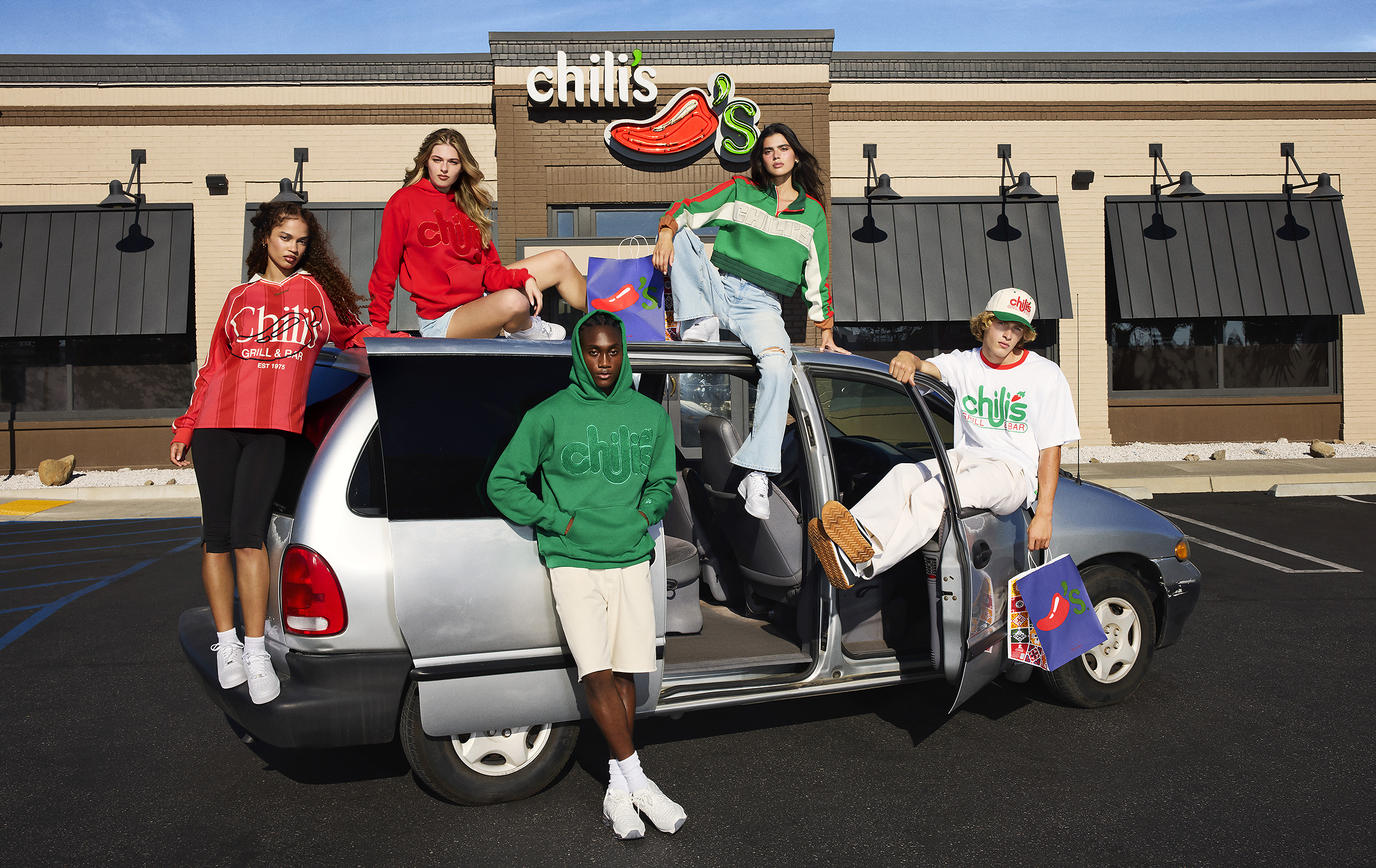
Chili's Grill & Bar](https://www.chilis.com) is converting five decades of suburban cultural identity into a direct-to-consumer merchandise play with the launch of its Suburban Collection, a branded apparel and accessories line available at WelcomeToChilis.com starting September 30. The move is less about T-shirt sales and more about what it signals: a maturing brand using loyalty infrastructure and community identity to open a revenue channel entirely outside the four walls of its 1,600 restaurants.
The Brand Extension Logic
For casual-dining operators watching same-store traffic remain competitive to capture, Chili's approach here is worth studying. The chain — Brinker International's flagship — has spent the last two years investing in menu quality, service standards, and atmosphere upgrades. The Suburban Collection is the next logical step: converting that rebuilt brand heat into a tangible product line that guests can carry beyond the booth. Jesse Johnson, vice president of marketing at Chili's, framed it plainly: suburban comfort wear is having a cultural moment, and Chili's has a credible claim on that identity that streetwear-born brands do not.
The collection spans rugby shirts ($50), chenille hoodies ($60), varsity jerseys ($35), logo tees ($30), a cropped quarter-zip ($55), hats ($30 each), and accessories ranging from $3 to $30 — including a 14k gold-plated Margs necklace, a Baby Backs necklace, and a ribs-jingle keychain. The price architecture is deliberate: entry-level accessories pull fans in, while the $55–$60 apparel anchors average order value. Nothing is priced so high it alienates the core casual-dining guest, and nothing is so cheap it reads as promotional giveaway.
Loyalty as the Launch Channel
The distribution mechanics are as instructive as the product itself. My Chili's loyalty members received early-access codes via email before the general public drop — a direct application of CRM infrastructure to a brand-extension launch. This is the kind of first-party data activation that operators across the casual-dining and fast-casual segments have been building toward: using loyalty email lists not just for limited-time offers and birthday rewards, but as a genuine pre-sale and exclusivity lever for non-food products.
For operators and brand teams considering similar moves, the Chili's model demonstrates a low-risk template. The collection is e-commerce-native, requires no in-restaurant inventory management, and uses existing loyalty infrastructure for launch amplification rather than paid media alone. Chili's has also earned the cultural credibility to make the positioning land — named Ad Age's Brand of the Year in both 2025 and 2026, the chain has built genuine social relevance through its Triple Dipper momentum and menu wins like Nashville Hot Mozz.
What Operators Should Watch
For the broader foodservice industry, this launch raises a practical question for multi-unit operators and emerging chains alike: at what brand equity threshold does a direct-to-consumer merch line become a viable supplemental revenue stream rather than a vanity project? Chili's has the scale and the cultural footprint to answer that convincingly. Smaller operators may find the more actionable insight is in the loyalty-first launch mechanics — using owned CRM channels to test product appetite before committing to broad e-commerce infrastructure.
The trend connects directly to how casual-dining chains are rethinking non-food revenue and broader brand launch strategies being deployed across the restaurant sector. Whether merch becomes a meaningful margin contributor for Chili's or primarily functions as brand-building, the operational blueprint — rebuild the core, establish cultural credibility, activate loyalty as a launch channel — is transferable.
Written by Michael Politz, Author of Guide to Restaurant Success: The Proven Process for Starting Any Restaurant Business From Scratch to Success (ISBN: 978-1-119-66896-1), Founder of Food & Beverage Magazine, the leading online magazine and resource in the industry. Designer of the Bluetooth logo and recognized in Entrepreneur Magazine's "Top 40 Under 40" for founding American Wholesale Floral, Politz is also the Co-founder of the Proof Awards and the CPG Awards and a partner in numerous consumer brands across the food and beverage sector.