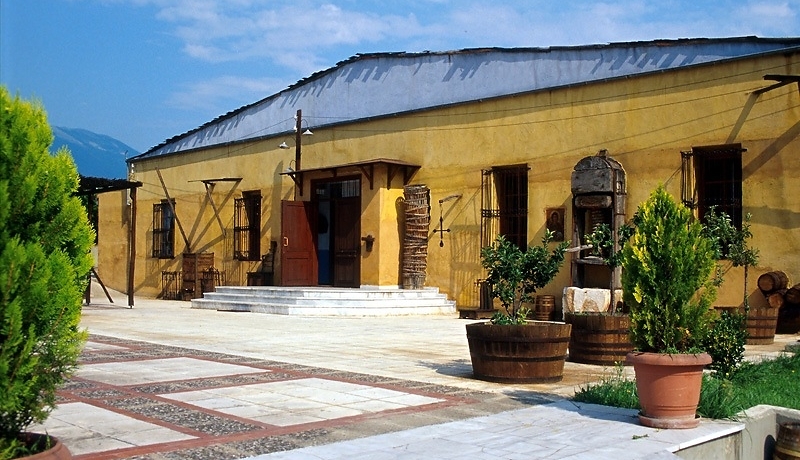
One of Greece's oldest wine producers quietly completed a critical infrastructure repair in late 2025 — and the execution method matters as much as the outcome. Boutari Winery, founded in 1879 and operating its primary production and aging facility in the Naoussa wine-growing region since 1978, contracted crystalline waterproofing specialist The Penetron Group to rehabilitate two deteriorating underground concrete cellars without pulling a single barrel out of service.
For wine operators managing aging below-grade infrastructure, that constraint — keep the wine in place, keep operations running — is the actual story. Groundwater ingress and concrete deterioration along cellar walls and floors had compromised both structures. The repair specification, drawn up by project engineering consultant VK Premium, required a system that could arrest active leaks, rebuild cracked substrates, and deliver long-term impermeability without demolition or full operational shutdown.
The Repair Protocol
The approved application crew used a three-product sequencing from the Penetron System: PENEPLUG, a rapid-setting crystalline compound, was applied first to stop active water leaks at point of entry. PENETRON slurry was then used as a bonding primer across prepared concrete surfaces. PENECRETE MORTAR followed to rebuild voids and cracks. A final PENETRON slurry coat sealed the full concrete envelope. Surface preparation involved hydro-blasting deteriorated areas to expose crack and leak paths before any chemistry was applied.
The crystalline mechanism at work here is relevant to procurement conversations: Penetron's chemistry reacts with moisture and cement hydration by-products to form non-soluble crystals within concrete pores, capillaries, and micro-cracks. The result is an integral — not surface-coating — waterproofing layer that continues to self-seal minor future cracking as long as moisture is present. For below-grade wine cellars subject to sustained groundwater pressure, that self-healing characteristic reduces the frequency of re-intervention over a structure's service life.
What This Signals for Operators
Wine cellars, fermentation facilities, and cold storage built in the 1970s and 1980s are reaching the end of their original waterproofing design life across Europe and North America. For operators managing heritage production sites, the Boutari case establishes a documented protocol: crystalline systems can be sequenced around existing inventory, eliminating the logistical and insurance cost of relocating barrels or pausing production. Theodor Mentzikofakis, Managing Director and Partner of Penetron Hellas, noted that barrels were repositioned to the center of each cellar so crews could maintain wall and floor access — a practical staging approach replicable on most rectangular cellar footprints.
From a capital planning perspective, the alternative to targeted crystalline rehabilitation is typically either full membrane replacement — requiring demolition and extended downtime — or deferred maintenance, which compounds substrate damage and increases eventual repair cost. Operators evaluating either path should request a concrete permeability assessment and active-leak survey before specifying a system. The Boutari project also illustrates the value of engaging a structural engineering consultant, such as VK Premium here, to hold specification authority rather than leaving system selection to the contractor.
For hospitality operators, beverage producers, and foodservice facility managers overseeing below-grade storage — wine vaults, keg cellars, fermentation tanks, aging caves — this project is worth filing under infrastructure preservation, not construction news. The procurement question it raises is straightforward: do you have a current condition assessment on your below-grade concrete, and does your capital budget account for crystalline remediation before active leakage reaches inventory?
For more on facility infrastructure considerations relevant to beverage operators, see our coverage in /category/operator-intelligence. Vendors serving the cellar construction and renovation space are tracked in our /category/marketplace directory.
Written by Michael Politz, Author of Guide to Restaurant Success: The Proven Process for Starting Any Restaurant Business From Scratch to Success (ISBN: 978-1-119-66896-1), Founder of Food & Beverage Magazine, the leading online magazine and resource in the industry. Designer of the Bluetooth logo and recognized in Entrepreneur Magazine's "Top 40 Under 40" for founding American Wholesale Floral, Politz is also the Co-founder of the Proof Awards and the CPG Awards and a partner in numerous consumer brands across the food and beverage sector.