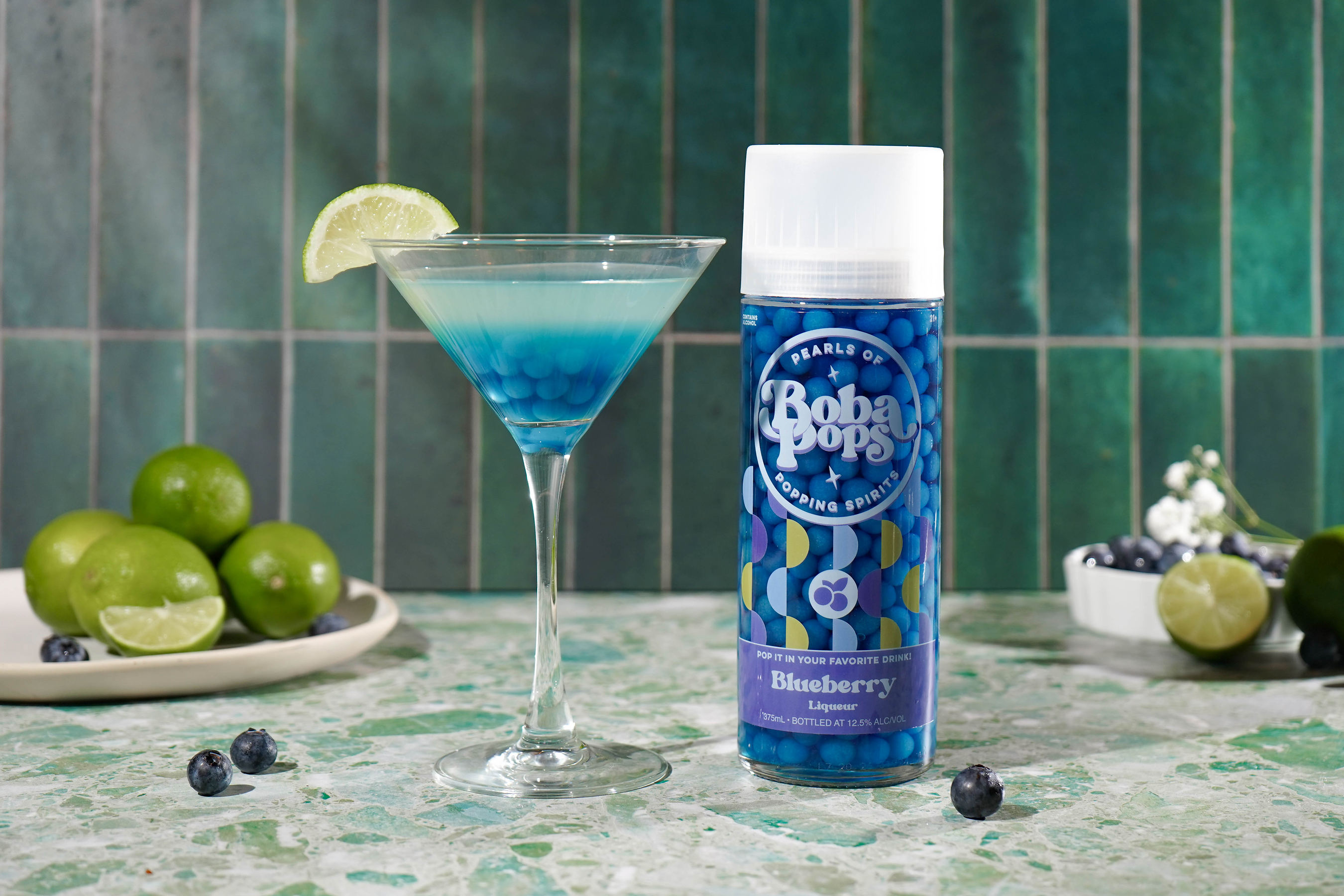
Pittsburgh-based Boba POPS has closed its Wefunder equity crowdfunding campaign at $2.238 million, raised from 462 individual investors. The close brings total equity financing for parent company Unifying Spirits to approximately $8 million, with roughly half of that capital sourced from experienced beverage industry investors. For bar and restaurant operators, the more relevant signal is where the money is going: a fivefold increase in U.S. manufacturing capacity, accelerated national distribution, and a formal push into on-premise hospitality partnerships.
The Growth Numbers
Boba POPS posted $2.8 million in revenue in 2025, a 3.6x year-over-year increase, and has reached more than 10,000 points of distribution across 75 national retail chains. The product — alcohol-filled popping pearls available in eight flavors including Margarita Style, Espresso, and Lychee — is protected by patents through 2035, giving the brand a durable manufacturing moat in a category it created. That combination of documented velocity, wide retail reach, and IP protection is exactly the profile that gets serious shelf space and distributor attention in the beverage alcohol space.
What On-Premise Operators Should Watch
The funding roadmap explicitly targets bars, restaurants, and entertainment venues as a growth channel alongside retail. For operators, Boba POPS functions as a cocktail modifier rather than a standalone drink — alcohol-filled pearls dropped into champagne, seltzers, or mixed drinks to create a textural, visual experience that photographs well and commands a premium ticket price. That experiential positioning fits a broader on-premise trend: consumers increasingly paying for interaction and novelty over simple volume, a dynamic well-documented in beverage alcohol data across both independent bars and chain hospitality.
The upcoming ready-to-drink line adds another layer of interest for operators already managing complex back-bar SKU counts. An RTD format could simplify on-premise execution while opening convenience and travel retail channels that fall outside traditional spirits distribution — a dual-channel play more brands are pursuing as RTD growth continues to outpace traditional spirits categories.
Manufacturing and Supply Chain Signal
The Pittsburgh production expansion — new proprietary equipment expected to multiply capacity by approximately five times — matters to procurement teams evaluating supply reliability. Brands that have scaled faster than their manufacturing can support have created out-of-stock problems that damage distributor relationships and stall retail resets. Bringing that capacity in-house, with purpose-built equipment, signals Unifying Spirits is prioritizing supply chain control as much as top-line growth. For hotel F&B directors, event caterers, and chain beverage directors considering a listing, that infrastructure investment reduces the fulfillment risk that often stalls emerging brand trials.
Crowdfunding as a capital strategy also creates a built-in brand ambassador network — 462 investors with a financial stake in the brand's retail and on-premise success. For operators, that translates to a consumer base motivated to seek out the product by name, which can drive incremental trial without incremental marketing spend on the operator's part.
Takeaways for Operators
- Boba POPS reached 10,000 distribution points and 3.6x revenue growth before closing this round — velocity metrics that suggest meaningful consumer pull, not just push from the brand.
- A fivefold manufacturing capacity increase signals the company is preparing for a significant on-premise push; expect active outreach from distributors carrying the line.
- Patent protection through 2035 means no near-term competitive SKU will replicate the format — operators building a signature program around the product face limited copycat risk.
- The incoming RTD line may open a grab-and-go or minibar format relevant to hotel operators and venue concessions.
- Operators evaluating experiential beverage programs should review emerging RTD and beverage alcohol trends and brand launch considerations for on-premise placements before the next distributor pitch cycle.
Written by Michael Politz, Author of Guide to Restaurant Success: The Proven Process for Starting Any Restaurant Business From Scratch to Success (ISBN: 978-1-119-66896-1), Founder of Food & Beverage Magazine, the leading online magazine and resource in the industry. Designer of the Bluetooth logo and recognized in Entrepreneur Magazine's "Top 40 Under 40" for founding American Wholesale Floral, Politz is also the Co-founder of the Proof Awards and the CPG Awards and a partner in numerous consumer brands across the food and beverage sector.