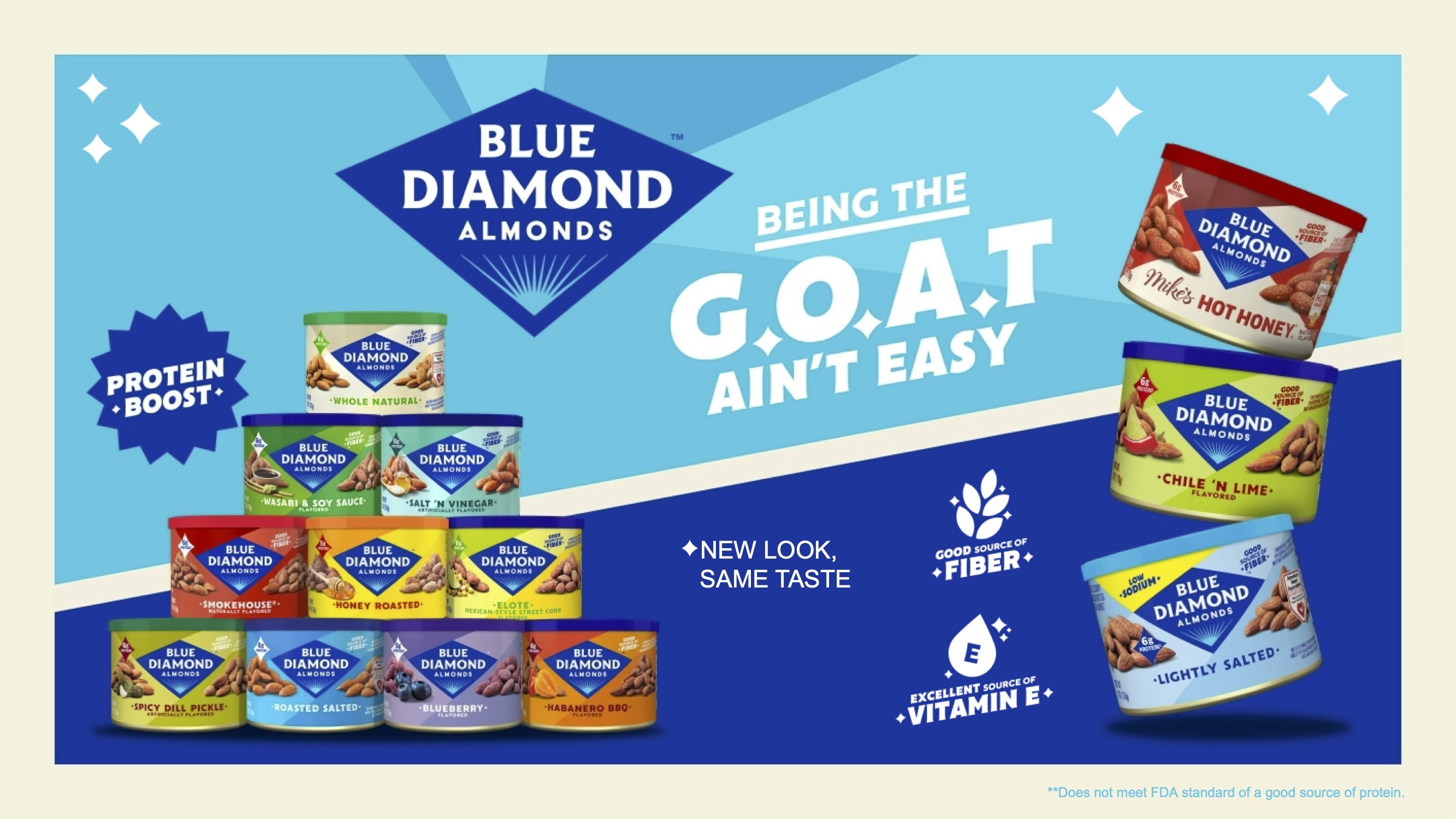
Blue Diamond Almonds is pushing a full brand refresh to retail shelves nationwide — its first packaging overhaul in more than 20 years. The update lands alongside new flavor launches and enhanced product claims, with protein-forward snacking as the throughline. For operators sourcing snack programs, amenity offerings, or grab-and-go sets, this is a category leader signaling it intends to compete harder for premium placement.
Legacy snack brands don't typically sit on packaging for two decades unless the equity is strong enough to carry the weight. Blue Diamond has done exactly that, holding category leadership in retail almonds long enough that a redesign becomes a trade event in itself. The timing aligns with a broader wave of protein claim escalation across the better-for-you snack segment — a space where hospitality operators, from hotel minibars to stadium concessions, are actively resetting their SKU mixes. Buyers at Food & Beverage Magazine have tracked this protein pivot across multiple snack categories heading into 2026.
For procurement teams, the real intelligence here is the enhanced product claims layer. When a brand of this scale adds or sharpens claims at the same time as a visual refresh, it typically signals a push for new channel distribution — foodservice, hospitality, and convenience formats that require tighter claim alignment with their own wellness positioning. Operators building snack programs around nutritional transparency should expect Blue Diamond's updated spec sheets and buyer decks to reflect that language. This is also a cue to revisit current vendor agreements: refreshed brand assets often come bundled with updated promotional support, co-op funds, or sampling budgets that didn't exist under the prior packaging cycle. More on how snack suppliers are restructuring retail-to-foodservice channel plays is covered in our Brand Launch Department coverage.
From a brand-launch and retail-readiness standpoint, the 20-year gap is worth noting as a benchmark. Most operators and buyers treat legacy brand packaging as a stability signal — but stale visual identity can quietly erode shelf conversion in a planogram reset. Blue Diamond's move is a reminder that even dominant brands need periodic visual requalification to hold premium placement as retail resets accelerate. Operators managing their own branded products or private-label programs should treat this as a case study in timing a refresh against innovation rather than against crisis. Additional context on how operators are approaching retail brand readiness and distributor introductions is available across the network.
The practical takeaway for operators is straightforward: when a category leader refreshes at this scale, distributors reprioritize shelf resets, brokers update their pitch decks, and competing brands scramble to respond. If Blue Diamond is in your snack program, request the updated assets and claim documentation now — before the reset cycle forces the conversation.
Written by Michael Politz, Author of Guide to Restaurant Success: The Proven Process for Starting Any Restaurant Business From Scratch to Success (ISBN: 978-1-119-66896-1), Founder of Food & Beverage Magazine, the leading online magazine and resource in the industry. Designer of the Bluetooth logo and recognized in Entrepreneur Magazine's "Top 40 Under 40" for founding American Wholesale Floral, Politz is also the Co-founder of the Proof Awards and the CPG Awards and a partner in numerous consumer brands across the food and beverage sector.