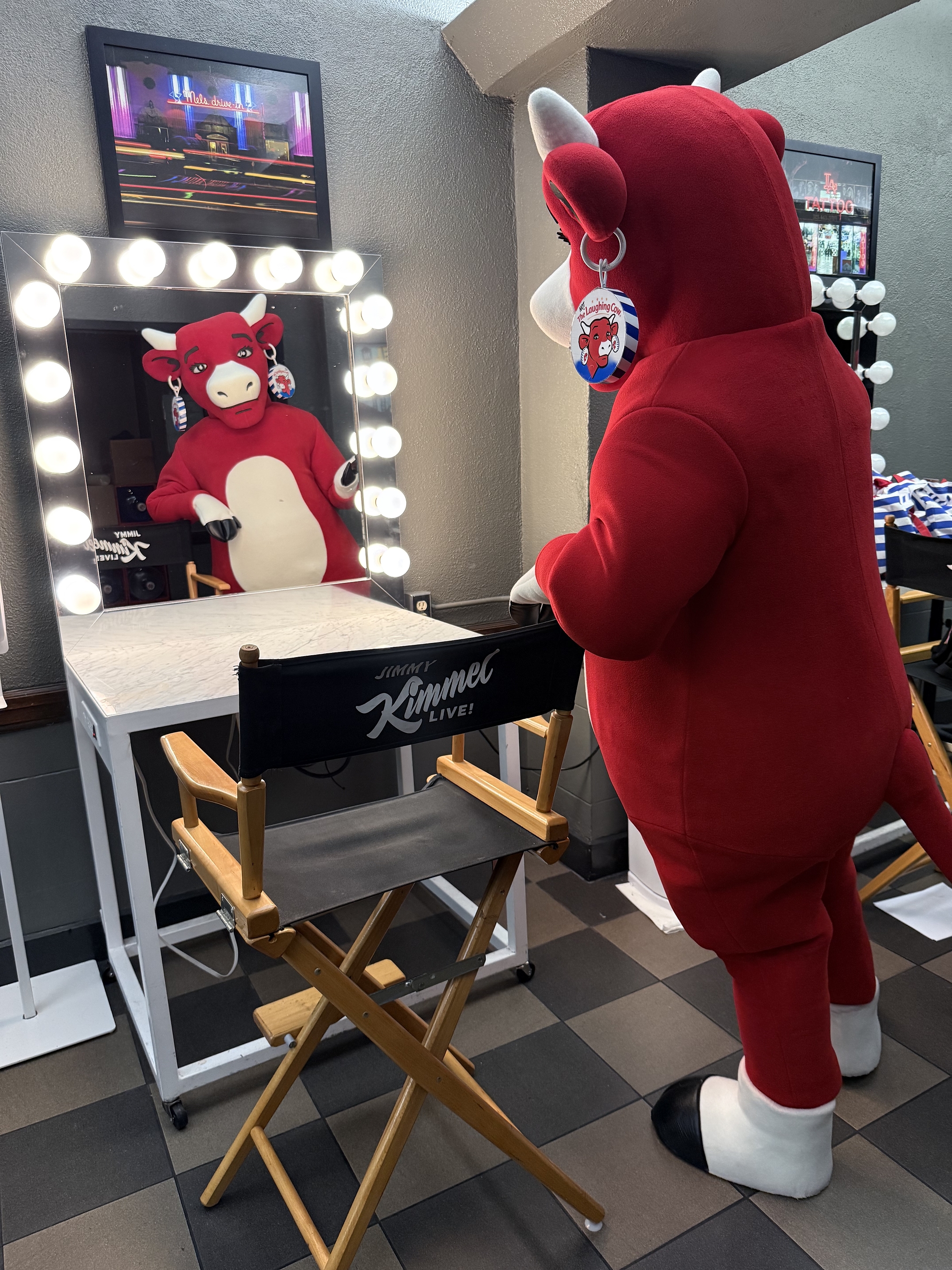
Bel Brands USA is leaning hard into cultural marketing, launching a multi-channel campaign built around a simple creative conceit: The Laughing Cow — the brand's mascot for more than a century — stopped laughing. The reveal came via a segment on Jimmy Kimmel Live, where hosts introduced "The Not Laughing Cow" to a national audience and framed the cause as everyday trivial disagreements driving people apart. The campaign then immediately pivoted from broadcast moment to consumer participation, kicking off the #SpreadTheLaugh UGC challenge.
For operators, retail buyers, and brand-launch strategists tracking how established CPG brands compete for attention in the specialty-snack aisle, the mechanics here are worth dissecting. Rather than a traditional media buy, Bel Brands USA constructed a sequential activation: a teaser phase with un-laughing packaging and out-of-home appearances, a high-visibility earned-media spike via late-night TV, then a sustained social layer designed to generate organic content at scale. The #SpreadTheLaugh challenge asks consumers to record videos about petty disagreements, acknowledge they aren't worth the divide, and tag the brand — a loop that keeps the mascot in feeds without ongoing paid placement.
The Brand Strategy
The campaign's central wordplay — a wedge should be shared, not a wedge issue — is deliberately low-concept, which is the point. Legacy dairy and snack-cheese brands frequently struggle to find a cultural entry point that doesn't feel forced. Bel's approach sidesteps category messaging (creaminess, versatility, nutrition) entirely and anchors on a tone: levity during a period of perceived social friction. Peter McGuinness, CEO of Bel North America, framed it plainly: the brand has laughed for over 100 years and needs consumer participation to restore that. That posture — asking fans to do the work — is a cost-efficient amplification play when executed with a strong enough creative hook.
The channel mix is also instructive. Packaging changes (un-laughing cartons on select SKUs), a dedicated campaign URL at TheNotLaughingCow.com, diner and park activations, and simultaneous pushes on Instagram, TikTok, and Facebook suggest a budget allocated across physical retail, earned media, and owned social rather than concentrated in programmatic or paid search. For brand-launch teams managing similar portfolio assets — Bel's US roster includes Babybel, GoGo squeeZ, and Boursin — this sequenced rollout model demonstrates how a single brand within a larger family can generate disproportionate share of voice without cannibalizing sibling SKUs.
What Operators Should Watch
For foodservice and retail operators stocking snack-cheese formats, the campaign has a practical downstream implication: consumer-facing buzz around a SKU tends to pull through at the shelf and in casual-dining snack programs. Snack-cheese wedge formats have performed steadily in both retail grab-and-go and hospitality amenity contexts, and a high-visibility UGC campaign tied to a recognizable mascot can compress the consideration window for buyers revisiting their snack assortment. Buyers evaluating specialty-snack and brand-launch opportunities should note that campaigns anchored in earned media — rather than pure paid spend — are increasingly how mid-to-large CPG brands signal retail readiness and category momentum to trade partners.
The broader signal for growth-marketing strategists in food and beverage: UGC-loop campaigns tied to a clear cultural tension point are becoming the default playbook for brands that have awareness but lack recency. The risk is always whether the creative hook sustains beyond the launch week. The #SpreadTheLaugh mechanic is simple enough to replicate at scale; whether it generates sustained participation past the Kimmel news cycle will determine its actual return.
Written by Michael Politz, Author of Guide to Restaurant Success: The Proven Process for Starting Any Restaurant Business From Scratch to Success (ISBN: 978-1-119-66896-1), Founder of Food & Beverage Magazine, the leading online magazine and resource in the industry. Designer of the Bluetooth logo and recognized in Entrepreneur Magazine's "Top 40 Under 40" for founding American Wholesale Floral, Politz is also the Co-founder of the Proof Awards and the CPG Awards and a partner in numerous consumer brands across the food and beverage sector.