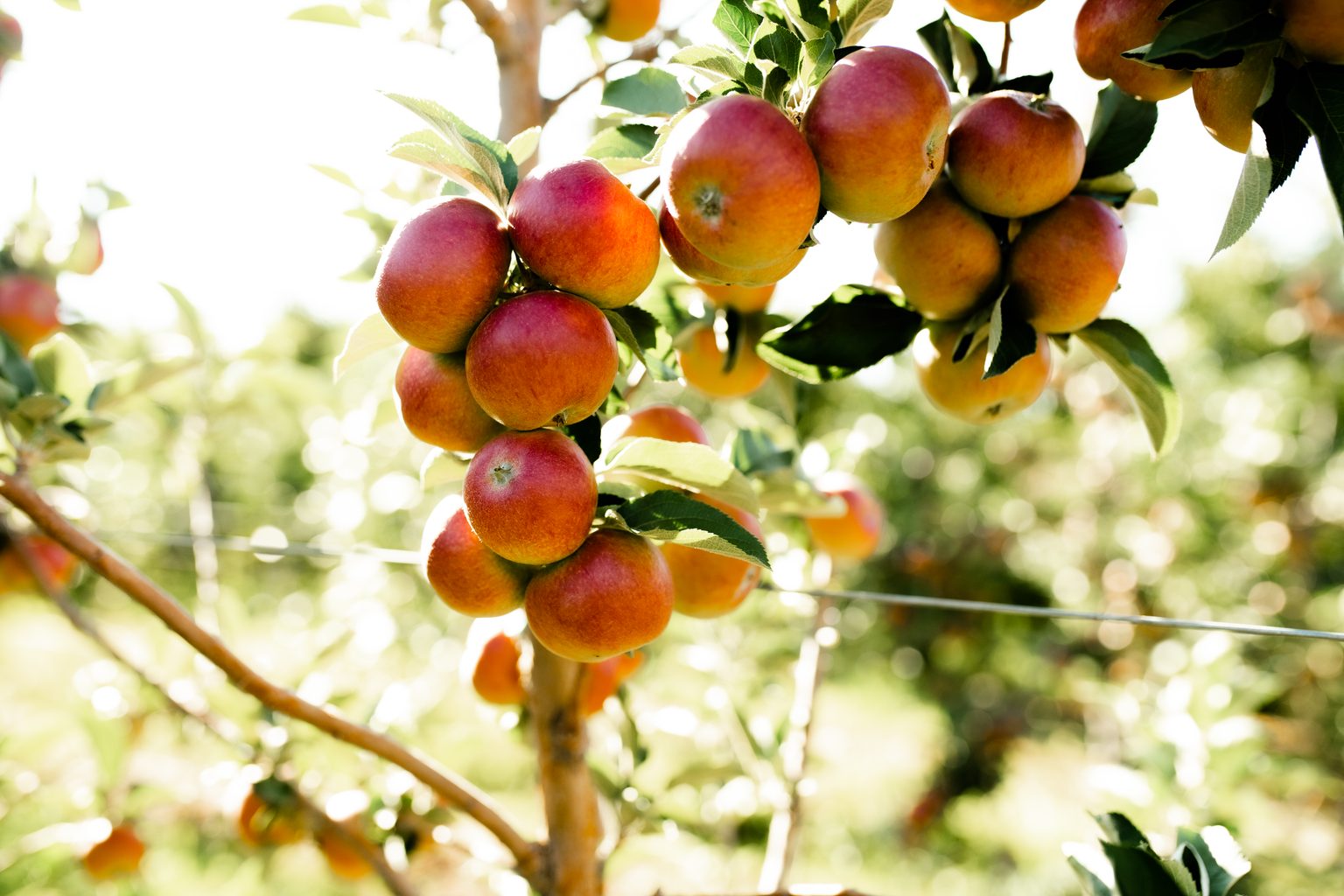
Argentina's wine business has long been synonymous with Mendoza and Patagonia. But the 2022 designation of Balcarce as Buenos Aires' fourth official Geographical Indication signals a fundamental shift in the country's production geography and commercial potential. Balcarce, a cool, windswept prairie in Buenos Aires province, represents an entirely different terroir model for serious wine producers—one framed by the ancient Tandilia mountain system and positioned just 30 to 50 kilometers from the South Atlantic.
At the forefront of this market realignment is Bodega Puerta del Abra, founded in 2013 by businessman and wine lover Jorge Perez Companc and his family. The estate has become the proof case that serious viticulture can thrive far from Argentina's traditional Andean strongholds, challenging conventional industry assumptions about where Argentina's best wines can be produced. The family's approach is grounded in long-term terroir research rather than speculative investment, fundamentally reshaping how other producers view the coastal region.
Soil Science and Production Strategy
From inception, Puerta del Abra invested in understanding its site at the geological level. The family engaged renowned French soil specialists Lydia and Claude Bourguignon—advisors to blue-chip Burgundy domaines—to map and analyze the vineyard. Their studies revealed a mosaic of clay and limestone seams, with traces of granite and marine imprint, all sitting just over 100 meters above sea level. Unlike the high, dry desert profile associated with traditional Argentine production, Balcarce operates at a low-lying elevation with strong maritime influence, abundant rainfall, and cool Winkler II temperatures. This fundamentally different climate requires different varietal strategies and vineyard management protocols. Notably, Puerta del Abra represents a very specific micro-location within the broader Balcarce GI; their positioning within the Tandilia system creates unique wind dynamics and soil composition not necessarily representative of the entire appellation.
This coastal-influenced climate creates significant seasonal variability, with each vintage carrying a completely different profile based on weather conditions. Rather than treating this as a liability, Puerta del Abra has positioned it as a defining production characteristic—one that drives continuous experimentation and site-responsive viticulture. This approach has direct implications for production planning and buyer expectations.
Varietal Selection and Risk Management
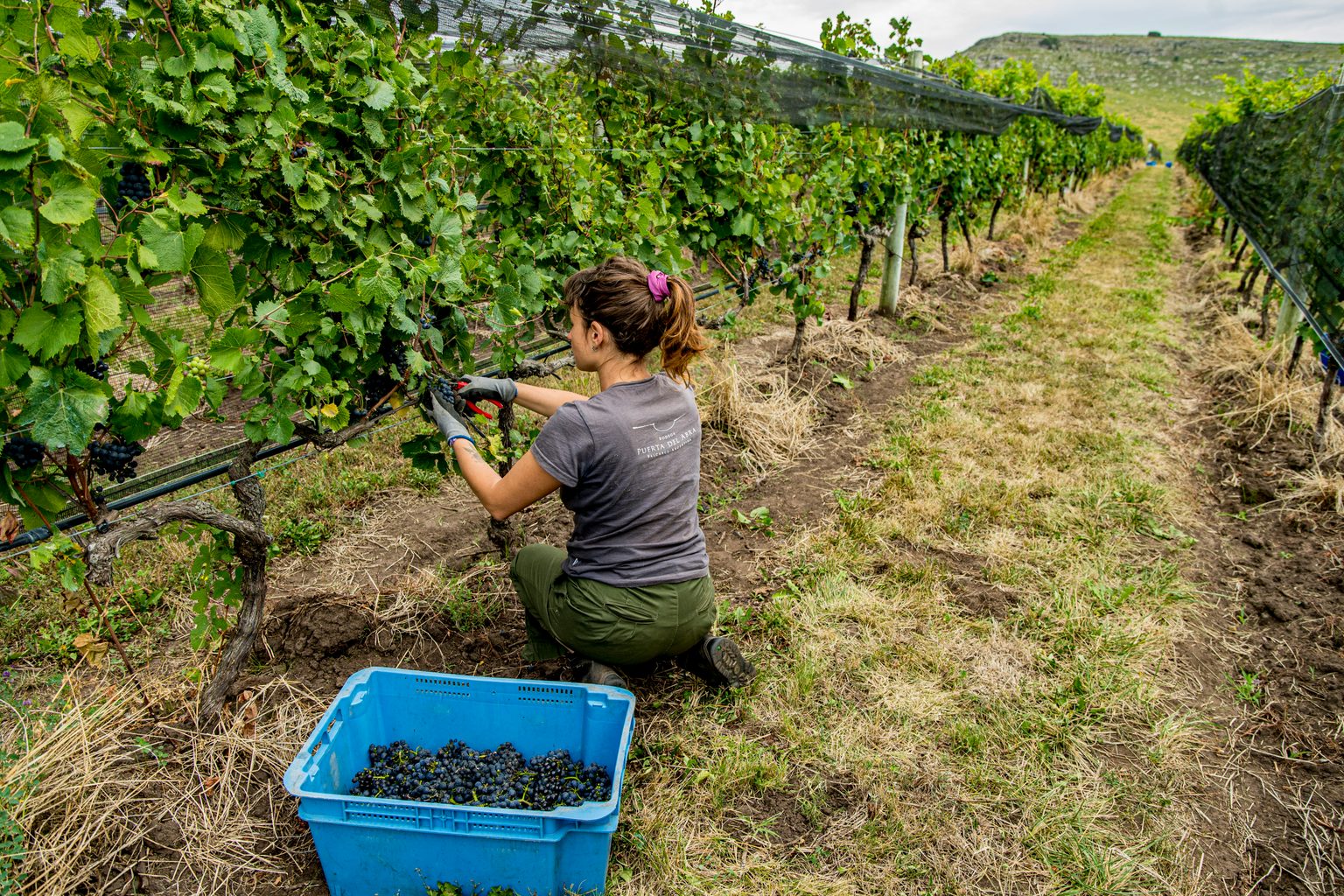
The estate's varietal roster deviates sharply from Argentina's traditional Malbec focus. Puerta del Abra planted Chardonnay, Riesling, and Albariño for whites, and Pinot Noir, Cabernet Franc, Bonarda, Tannat, and Merlot for reds—selections driven entirely by local conditions. Constant Atlantic breezes and moderate summer highs slow ripening and maintain alcohol levels, while cool nights preserve acidity. This climate profile requires distinct operational adjustments: the area receives significant annual rainfall and vines face little natural shelter from wind. The winery responds with mesh protection on exposed rows and carefully managed drip irrigation when local droughts or frost risk demand it. This combination of climate exposure and precision intervention defines the production model.
As a pioneer GI, Puerta del Abra has also invested in building local labor capacity. With no existing wine workforce in Balcarce, the estate hired and trained locally, creating a skilled team while establishing a precedent for regional employment. Inside the winery, the production structure is female-led, with Delfina Pontaroli establishing the production foundation and Mariana Boero currently serving as head winemaker with Deborah as assistant winemaker. This staffing model reflects organizational values while addressing industry-wide talent challenges.
Product Portfolio and Market Positioning
The core Puerta del Abra line represents the purest varietal expression of their El Vallecito estate vineyard, with each wine engineered for the specific terroir conditions. The Albariño channels Old World character through chalky soils and cooler southern light, combining ripe fruit with mineral definition. The Riesling builds aromatic complexity through slow ripening without sacrificing acidity structure. Pinot Noir transitions from its traditional role as a sparkling base in Argentina to function as an elegant, finely structured still red with real aging potential. The Chardonnay, developed under Velo de Flor—a technique closely associated with Jerez—has become one of the estate's most compelling commercial expressions. On the red side, Cabernet Franc offers pronounced pyrazine notes as a 100 percent single varietal, Bonarda emphasizes red fruit and gentle spice over a chalk-etched foundation, and Tannat delivers darker fruit with firm but polished tannins and subtle savory character.
The Itzae line represents an exploratory product strategy. Each vintage, micro-vinifications identify the most compelling expressions available, which are then assembled into red and white blends. This approach creates vintage-specific products that change character year to year, directly reflecting vineyard diversity and climate variation. From a commercial standpoint, it reinforces the estate's positioning as a terroir-driven producer rather than a commodity wine business.
Operational Sustainability and Industry Recognition
Puerta del Abra has built sustainability into its operational framework. In 2023, the estate obtained vegan certification, formalizing its long-standing avoidance of animal-derived fining agents. Additional measures include lighter bottle weights, implementation of Good Agricultural and Manufacturing Practices, and participation in Balcarce's Green Fridays environmental program. These certifications and practices strengthen market positioning with sustainability-conscious buyers and distributors.
Despite recognition from Decanter, James Suckling, and Global Masters competitions, production remains intentionally capped at 40,000 to 50,000 bottles annually—a deliberate business decision that prioritizes quality positioning over volume scaling. Most domestic allocation flows to high-end restaurants in Buenos Aires, while a California-based import arm handles US distribution. Spain and France are already established markets, with the team actively exploring additional European markets where cool-climate styles and emerging origins command premium positioning.
As the estate notes: "We started this winery as a passion project of the family, something to be shared with those closest to us. As the project evolved, it opened new opportunities, but never losing focus of the foundational spirit. Today, we seek to find those in the industry that share that intimate passion for wine, willing to push boundaries and explore something new. For those, Balcarce awaits."
The Balcarce case demonstrates that Argentina's production opportunity extends well beyond traditional Andean regions. For the broader wine trade, it opens a new geographic category with distinct business characteristics: terroir-driven positioning, climate-responsive production, controlled volume strategy, and premium market targeting. For Puerta del Abra, the long-term commitment remains constant: deepen understanding of an ancient landscape, invest continuously in people and capabilities, and refine wines that can only originate from this specific Atlantic-influenced microclimate.