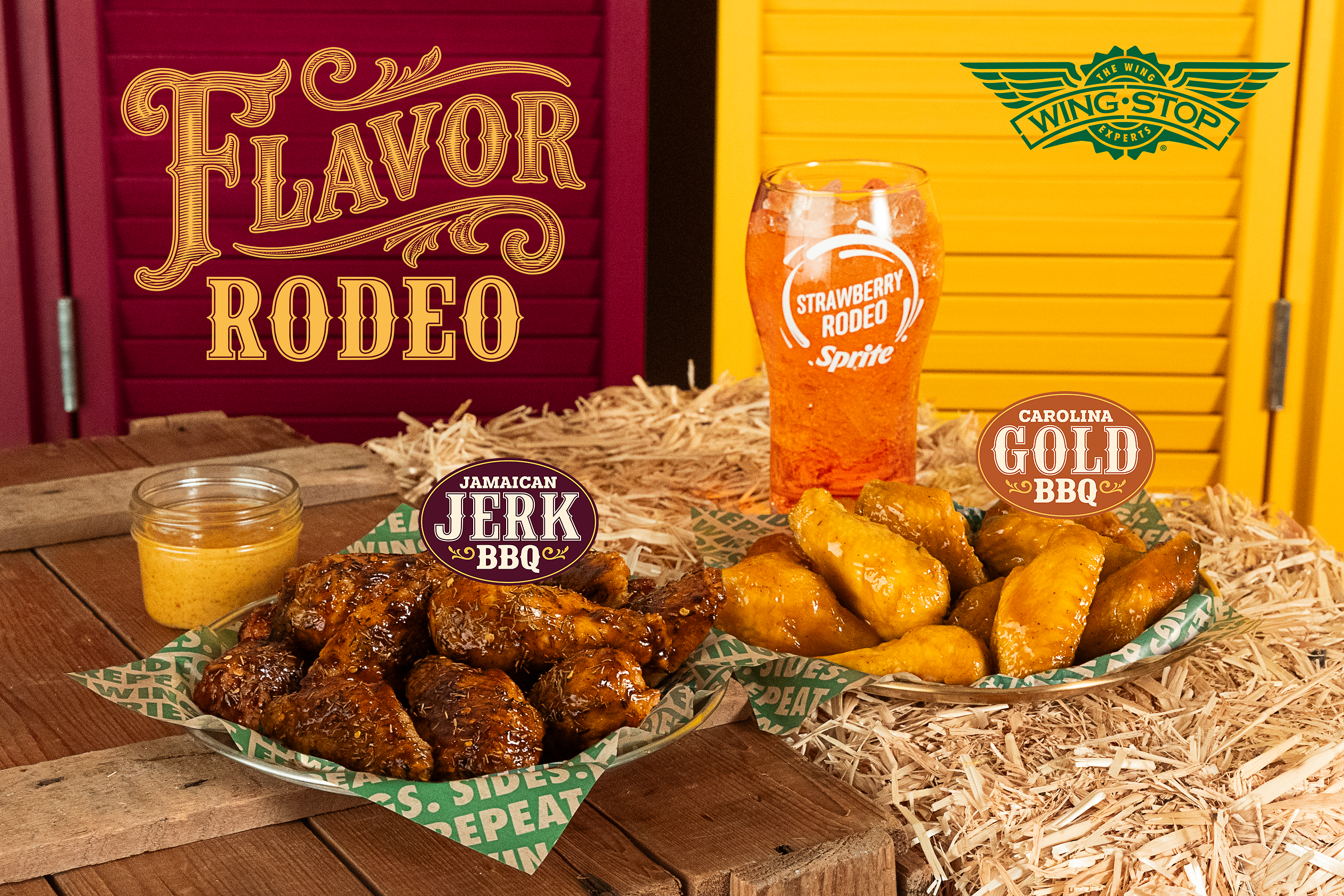
Wingstop is bringing back Carolina Gold and Jamaican Jerk for a limited run starting August 11, but the more instructive story is how the Dallas-based chain has structured the rollout: Club Wingstop members get exclusive access four days early, turning a standard flavor drop into a loyalty acquisition funnel. For operators and brand marketers tracking how QSR chains are converting menu events into CRM moments, this one is worth studying.
The Loyalty-First Architecture
The sequencing here is deliberate. Members unlock the flavors on August 7 — the same day a horse-delivered sampling stunt runs at the Fort Worth Stockyards — while general availability doesn't open until August 11. That four-day gap is designed to drive app downloads and Club sign-ups ahead of the broader launch, giving Wingstop a measurable lift in its loyalty database tied directly to a menu event. It's a mechanic increasingly common among chains with $5 billion-plus in system-wide sales, where the loyalty program functions less like a rewards card and more like a first-party data engine.
The August 14–16 delivery promotion — $0 delivery with code GIDDYUP at participating U.S. locations — layers a short-window urgency play on top of the loyalty hook. Promo codes tied to delivery windows are a reliable tool for driving order volume during what would otherwise be a mid-week trough, and they generate attribution data that operators can use to evaluate channel performance across third-party versus owned delivery.
What the Menu Mix Signals
The addition of a Hot Honey Mustard Dip and a Sprite Strawberry Rodeo drink — available only at Coca-Cola Freestyle dispenser locations — reflects two broader trends worth tracking. First, dip and sauce add-ons have become a low-cost margin driver across fast-casual and QSR; they extend ticket size without adding kitchen complexity. Second, co-branded beverage exclusives tied to equipment installs (Freestyle dispensers, in this case) are a quiet but effective way for national chains to incentivize franchisee equipment upgrades through consumer demand.
For operators benchmarking their own limited-time offer calendars, Wingstop's approach to "returning" flavors is also notable. Rather than developing entirely new SKUs, reintroducing previously tested flavors reduces supply chain risk, leverages existing ingredient relationships, and lets marketing lean on built-in consumer affinity. As President and CEO Michael Skipworth framed it, the goal is giving fan-favorites "an equally bold entrance" — which is really a way of saying the activation budget is doing the work a new product launch would otherwise require.
With more than 3,000 locations worldwide and approximately 98% franchisee-owned, Wingstop's corporate team functions largely as a brand and marketing infrastructure provider for its franchisee base. Every systemwide promotion is effectively a test of how well that infrastructure converts brand spend into franchisee-level revenue — and how cleanly the loyalty data feeds back into future campaign targeting. Operators at any scale running their own LTO cycles can take something practical from this structure: the flavor is the hook, but the loyalty gate is the point.
Key Takeaways for Operators
For foodservice operators evaluating their own promotional architecture, the Wingstop Flavor Rodeo offers a replicable framework that extends well beyond wing chains.
Written by Michael Politz, Author of Guide to Restaurant Success: The Proven Process for Starting Any Restaurant Business From Scratch to Success (ISBN: 978-1-119-66896-1), Founder of Food & Beverage Magazine, the leading online magazine and resource in the industry. Designer of the Bluetooth logo and recognized in Entrepreneur Magazine's "Top 40 Under 40" for founding American Wholesale Floral, Politz is also the Co-founder of the Proof Awards and the CPG Awards and a partner in numerous consumer brands across the food and beverage sector.