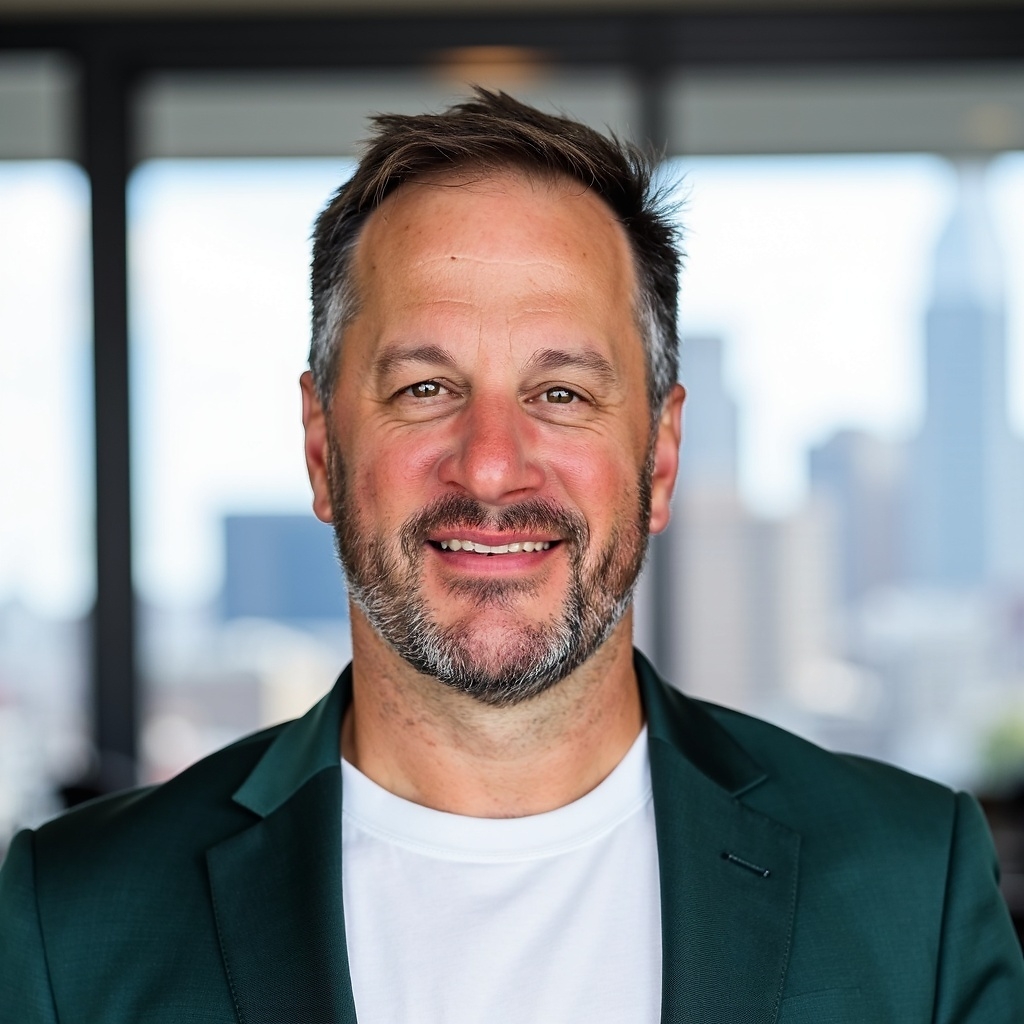
Bad Ass Coffee of Hawaii has promoted Tom Wylie from Chief Operating Officer to President, relocated its corporate headquarters from Denver to Lexington, Kentucky, and opened an East Coast distribution center — all before the close of Q3 2026. The moves signal a deliberate pivot from brand-building to operational discipline, with supply-chain consistency and unit-level economics now driving the growth agenda.
The Operator Calculus
Wylie's background matters here. He is a co-owner of AWA Investments, the multi-unit, multi-brand franchisee group that is also the largest investor in Bad Ass Coffee's parent company, Royal Aloha Coffee Company. He brings more than 20 years of franchise operations experience, including prior leadership stints at Papa John's and Burn Boot Camp. His promotion is a deliberate signal to the brand's franchise base: the executive running the company has personally carried a P&L as a franchisee, not just overseen one from a corporate office.
"Everything we did in the first half of the year was about giving our owners a stronger business to build on," Wylie said. "As a franchisee myself, I know consistency in the supply chain and discipline in how we grow matter more than any single opening."
Alongside Wylie's elevation, the brand updated Iain Douglas to Chief Strategy and Brand Officer and added five new hires across finance, communications, franchise engagement, local-store marketing, brand management, and franchise development — a full back-office build-out that telegraphs a company preparing for scaled franchising, not just continued organic growth.
Supply Chain and Systems Investments
The Lexington distribution center directly addresses a known friction point for franchise coffee concepts expanding eastward: supply-chain lag time from a Rocky Mountain or West Coast HQ. By anchoring distribution in Kentucky, Bad Ass Coffee reduces replenishment windows for its East Coast and destination-market stores — a practical improvement that matters to franchisees managing perishable and specialty SKUs.
The brand is also mid-revamp on its back-office systems, giving franchisees clearer visibility into unit-level economics and performance data. For operators evaluating franchise concepts, this kind of infrastructure investment — tech-enabled reporting, centralized distribution, localized marketing activation — is increasingly a baseline expectation rather than a differentiator. The fact that Bad Ass Coffee is building it now, at 48 locations, suggests the team is trying to solve scale problems before they become acute.
Growth From Within
Bad Ass Coffee currently operates 48 locations with 10 multi-unit owners, four of whom are preparing to open a second location. The brand projects 13 new store openings for full-year 2026, which would push the footprint to 55 units. Critically, much of that growth is coming from existing franchisees rather than net-new recruitment — a metric franchise development teams consider a stronger proof point than signed agreements with first-time owners.
The brand was named to the 2026 Inc. 5000 list of fastest-growing private companies and drew trade attention for its Give a Hoof cause campaign, which moved more than 60 bags of limited-edition Viejo's Blend in a single week. Those marketing wins are useful, but operators watching this brand should focus on the infrastructure story: a franchisee-first leadership team, a supply-chain investment ahead of scale, and a back-office overhaul timed to fuel the next wave of multi-unit expansion.
For coffee franchise operators and hospitality buyers evaluating the specialty coffee segment, Bad Ass Coffee's moves align with a broader franchise growth trend in which mid-size concepts are investing in operational infrastructure earlier in their lifecycle. Brands that skip this step often hit unit-economics ceilings around 50–75 locations — precisely the window Bad Ass Coffee is navigating now. Buyers and brand launch partners in the grocery and hospitality channels should also note the brand's stated intention to expand into grocery, hospitality, and specialty retail distribution.
Written by Michael Politz, Author of Guide to Restaurant Success: The Proven Process for Starting Any Restaurant Business From Scratch to Success (ISBN: 978-1-119-66896-1), Founder of Food & Beverage Magazine, the leading online magazine and resource in the industry. Designer of the Bluetooth logo and recognized in Entrepreneur Magazine's "Top 40 Under 40" for founding American Wholesale Floral, Politz is also the Co-founder of the Proof Awards and the CPG Awards and a partner in numerous consumer brands across the food and beverage sector.