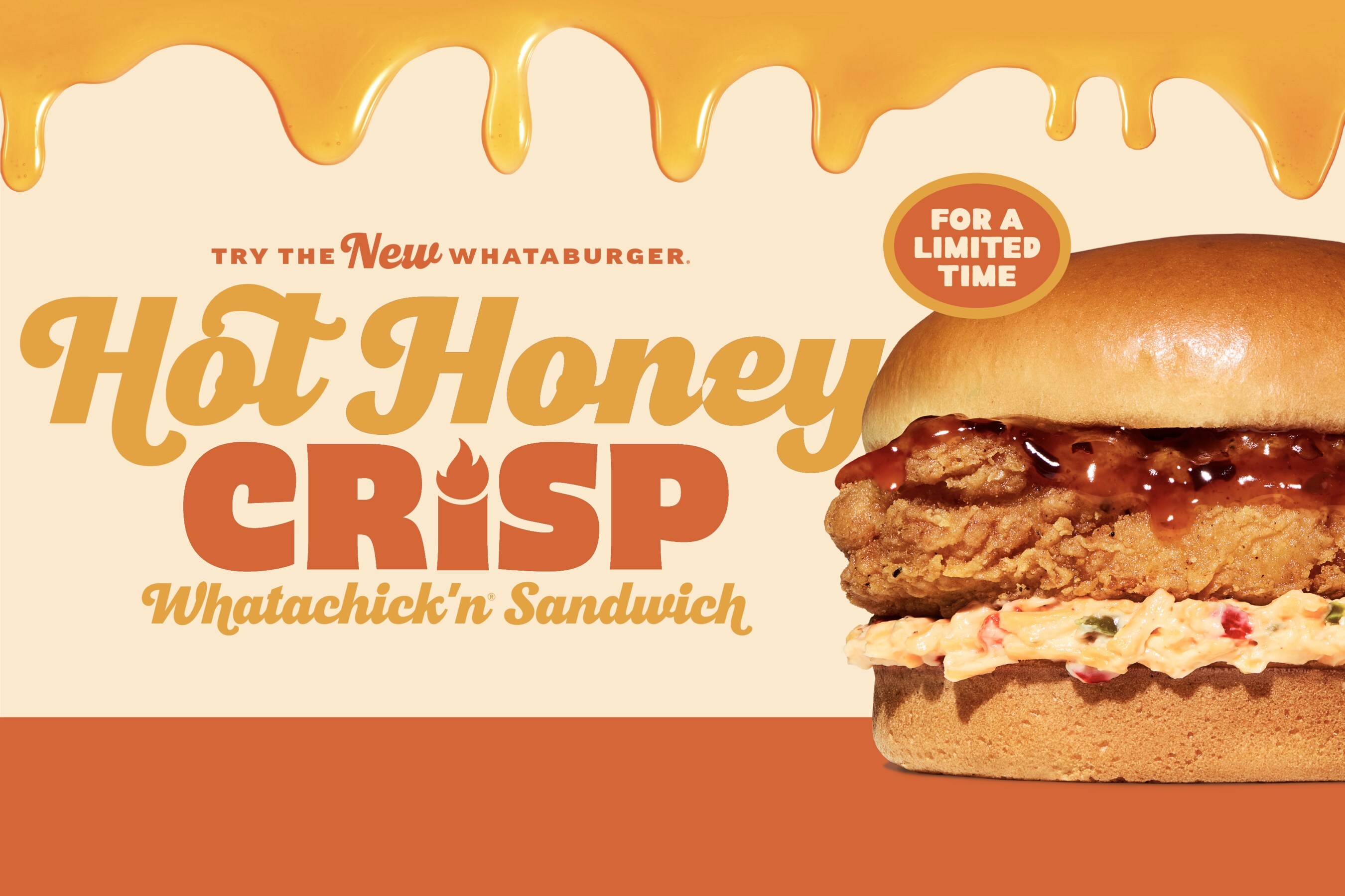
Whataburger is adding a Hot Honey Crisp Whatachick'n Sandwich to its menu starting June 2, positioning the limited-time offer squarely in the sweet-heat corridor that has dominated QSR innovation cycles for the past two years. The sandwich layers chili crisp hot honey sauce and creamy cheddar over a crispy chicken base — a flavor architecture that is now table stakes for any regional chain trying to hold Gen Z and millennial traffic through summer dayparts.
The timing is deliberate. Summer LTOs in the QSR segment are traffic-conversion tools as much as product launches. Operators who have tracked the category know that sweet-heat SKUs — hot honey, gochujang glaze, calabrian chili applications — consistently outperform standard spicy launches on social shareability and repeat trial metrics. Whataburger, which operates primarily across the South and Southwest, is leaning into a flavor profile that travels well on short-form video and drives the kind of earned media that would otherwise require paid amplification.
For operators and brand teams watching this space, the signal here is procurement and menu velocity. Chili crisp as an ingredient has moved from specialty import shelves into broadline distribution, and hot honey has effectively become a condiment staple at the operator level. Brands that have not yet built a sweet-heat entry point into their menu architecture are now two cycles behind the category leaders. The Whataburger move reinforces that this flavor lane has cleared the "emerging" threshold and entered the "defend your position" phase — meaning menu boards without a credible answer are leaving trial occasions on the table. Menu trend cycles and how operators should sequence LTO development are worth revisiting if your pipeline is still in ideation.
From a brand launch and marketing execution standpoint, LTOs like this one work hardest when they are backed by geo-targeted digital spend in the weeks surrounding launch. A June 2 drop with no paid amplification in home markets is a missed conversion window. Operators running their own limited-time programs should be coordinating geo-fenced campaign activation with LTO calendar timing at least three weeks out — not after the product is already in the window. Whataburger's scale gives it earned media leverage most regional operators will need to replace with smarter programmatic targeting.
Written by Michael Politz, Author of Guide to Restaurant Success: The Proven Process for Starting Any Restaurant Business From Scratch to Success (ISBN: 978-1-119-66896-1), Founder of Food & Beverage Magazine, the leading online magazine and resource in the industry. Designer of the Bluetooth logo and recognized in Entrepreneur Magazine's "Top 40 Under 40" for founding American Wholesale Floral, Politz is also the Co-founder of the Proof Awards and the CPG Awards and a partner in numerous consumer brands across the food and beverage sector.