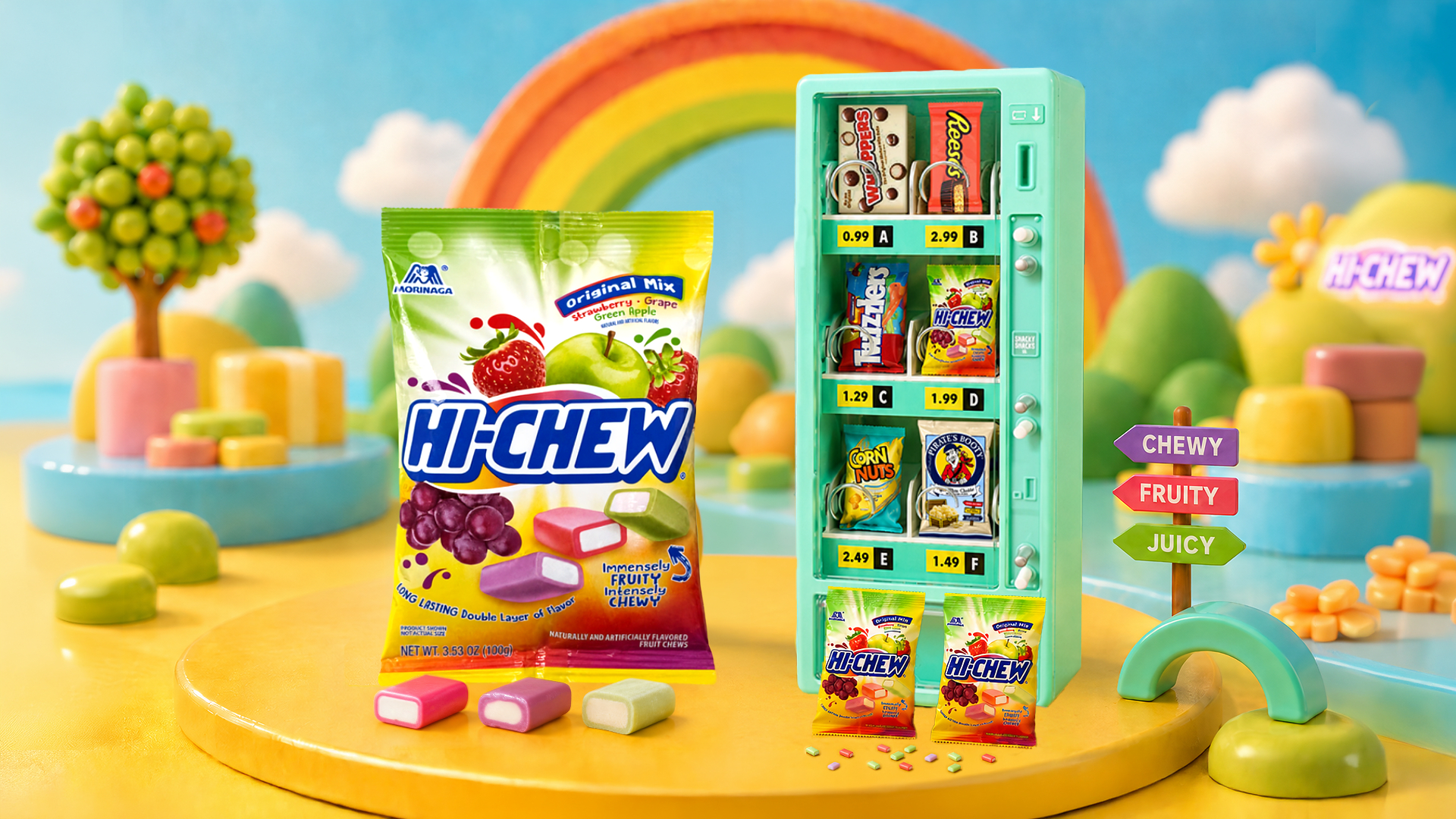
HI-CHEW, the Morinaga America soft candy brand, has entered its first licensing collaboration — a limited-edition miniature collectible with MGA's Miniverse Real Brands Vending Machine, retailing at $19.99 at Walmart, Target, and Amazon. The move takes the brand off the candy shelf and into a category that functions more like merchandise than confectionery, opening a distribution and awareness channel that traditional snack marketing cannot replicate.
Why This Matters
For brand and retail operators watching how food and beverage labels extend cultural relevance, the HI-CHEW play is instructive. The miniature collectibles market has grown steadily on the back of unboxing content, social display culture, and nostalgia-driven fandoms — demographics that overlap heavily with HI-CHEW's core Gen Z consumer base. The Miniverse platform already carries Real Brands partnerships with other recognizable consumer packaged goods names, making it a proven licensing vehicle rather than an experimental one. By embedding a hyper-realistic miniature of its Original Mix peg bag — complete with tiny replica "chewlets" — into the Miniverse vending machine format, HI-CHEW gains shelf presence in toy aisles and unboxing content pipelines without a traditional media buy.
Teruhiro Kawabe, Chief Representative for the USA and President and CEO of Morinaga America, Inc., framed the deal as a brand-experience extension: the goal is engagement that "sparks discovery, creativity, and connection" beyond taste. That language matters for operators and brand managers because it signals a deliberate shift toward lifestyle positioning — the product becomes a display object and a conversation piece, not just a consumable.
Signals for Brand Launch
The mechanics of this deal offer a repeatable model for food and beverage brands targeting younger consumers who engage with brands through collecting, customization, and social sharing rather than traditional advertising. The Miniverse vending machine is compatible with all Real Brands minis sold separately, which creates an ongoing ecosystem dynamic: HI-CHEW's miniature remains discoverable long after the initial launch window closes, surfacing repeatedly as collectors expand their displays. That kind of persistent, low-cost brand visibility is difficult to manufacture through paid media alone.
For suppliers and packaging partners, the level of detail required — a lifelike replica bag with individual candy pieces — points to where premium licensed food collectibles are heading. The execution demands close collaboration between the food brand's design team and the toy manufacturer's tooling and production process, a complexity that raises the bar for category entry but also raises the perceived value of the final product.
Distribution through mass retail alongside the existing Miniverse lineup means HI-CHEW avoids the DTC launch overhead while still reaching specialty and hobby collectors through Amazon. Brands considering similar moves should assess whether their primary packaging is visually distinctive enough to translate into miniature format — recognizability at reduced scale is a prerequisite for this category to work. See related coverage on how confectionery brands are approaching retail-readiness and buyer decks and licensing as a brand-launch amplifier in food and beverage.
Written by Michael Politz, Author of Guide to Restaurant Success: The Proven Process for Starting Any Restaurant Business From Scratch to Success (ISBN: 978-1-119-66896-1), Founder of Food & Beverage Magazine, the leading online magazine and resource in the industry. Designer of the Bluetooth logo and recognized in Entrepreneur Magazine's "Top 40 Under 40" for founding American Wholesale Floral, Politz is also the Co-founder of the Proof Awards and the CPG Awards and a partner in numerous consumer brands across the food and beverage sector.