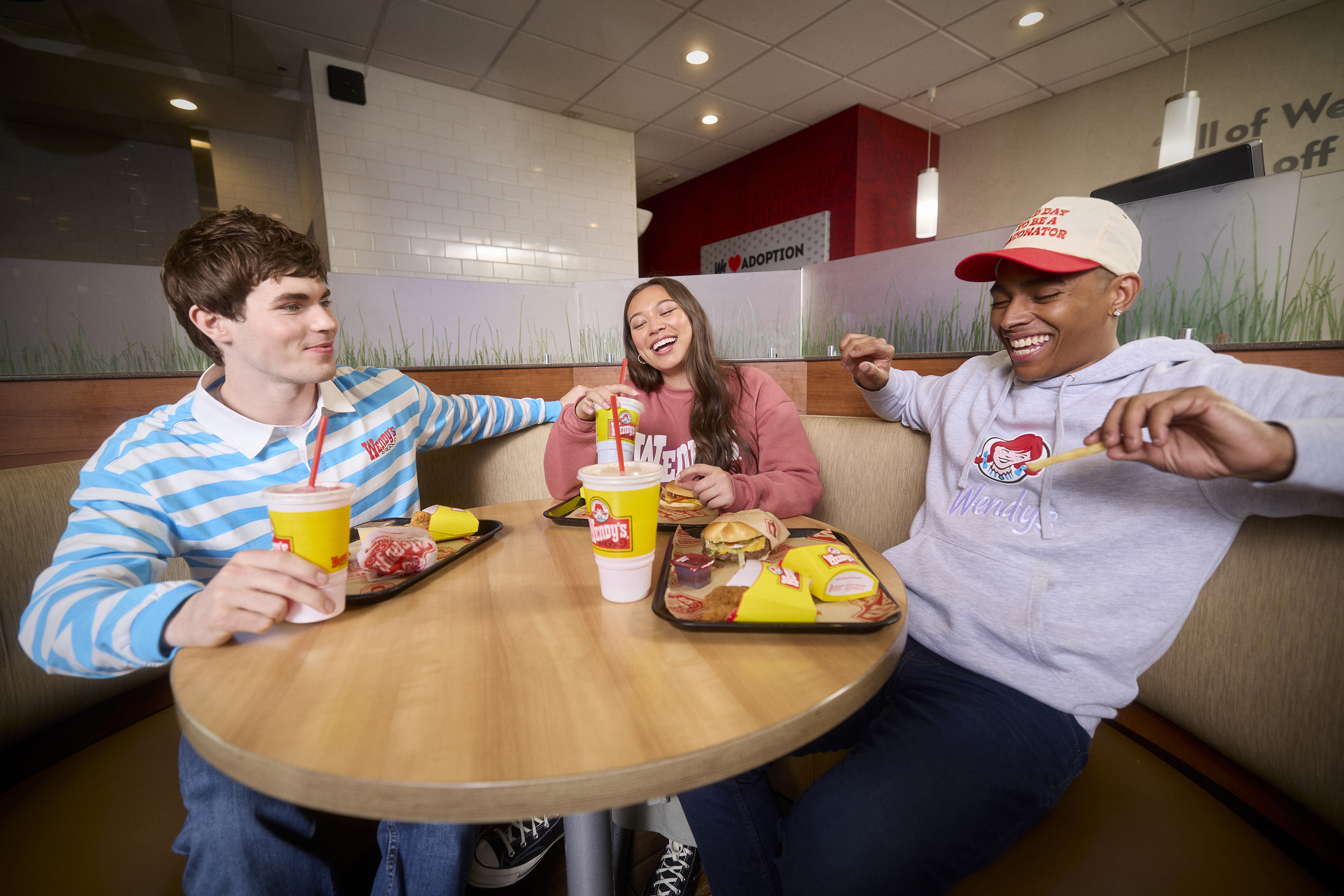
Wendy's has opened shop.wendys.com, its first branded merchandise store, offering two curated collections timed to the holiday gift season. The move puts the 7,000-unit chain in the company of a small but growing number of QSR and fast-casual brands treating consumer fandom as a direct revenue opportunity — not just a social media metric.
The shop launches with two distinct product lines. The Vintage Collection leans into archival brand equity, drawing on past uniform designs, legacy packaging, and historical graphic details — a strategy that mirrors the chain's recent return of its yellow packaging. The Core Collection takes a more contemporary approach, anchoring around menu icons including the Frosty and Hot n' Crispy Fries. Beyond apparel, the shop includes holiday-specific items: a Frosty-themed ornament and retro stocking stuffers, extending the brand touchpoint into the home.
Why Operators Should Track This
For restaurant operators and brand strategists, Wendy's merch launch is worth reading as more than a holiday activation. It signals that mature QSR brands are actively monetizing brand affinity accumulated over decades — in Wendy's case, 57 years of consumer familiarity. The vintage angle is deliberate: nostalgia-driven merchandise consistently outperforms generic branded goods in limited-edition retail contexts, and tying the collection to a concurrent packaging revival reinforces the narrative coherence that drives purchase intent.
The category precedent here matters. Several fast-food chains have experimented with limited merch drops, but most have treated them as one-off PR plays. A dedicated, always-on storefront suggests Wendy's is building infrastructure for an ongoing direct-to-consumer channel — one that generates margin outside the food cost and labor cost pressures of the core restaurant business. For multi-unit operators and emerging brands watching this space, the model is replicable at smaller scale: a branded e-commerce presence tied to signature menu items or origin stories can function as both a revenue stream and an always-on brand awareness channel.
What This Signals for Brand Launch Strategy
For foodservice brands considering their own brand-extension plays, the Wendy's store offers a practical framework: anchor merchandise to two or three iconic SKUs or brand moments rather than producing a broad, undifferentiated catalog. The Frosty, for instance, is one of the most recognized menu items in American fast food — building merchandise around it transfers that recognition directly to product desirability. Operators and emerging brands without that name equity can apply the same logic by anchoring merch to a signature dish, a founding story, or a regional identity.
From a growth marketing standpoint, a branded e-commerce property also gives Wendy's a first-party data asset: every transaction generates customer email addresses, purchase behavior data, and geographic signals that can feed back into digital campaigns, geo-fenced advertising, and loyalty retargeting — channels covered in depth in our growth marketing coverage. Brands building out their own DTC layers should factor that data upside into the business case. For more on how QSR and fast-casual brands are building direct consumer channels, see our brand launch intelligence.
Written by Michael Politz, Author of Guide to Restaurant Success: The Proven Process for Starting Any Restaurant Business From Scratch to Success (ISBN: 978-1-119-66896-1), Founder of Food & Beverage Magazine, the leading online magazine and resource in the industry. Designer of the Bluetooth logo and recognized in Entrepreneur Magazine's "Top 40 Under 40" for founding American Wholesale Floral, Politz is also the Co-founder of the Proof Awards and the CPG Awards and a partner in numerous consumer brands across the food and beverage sector.