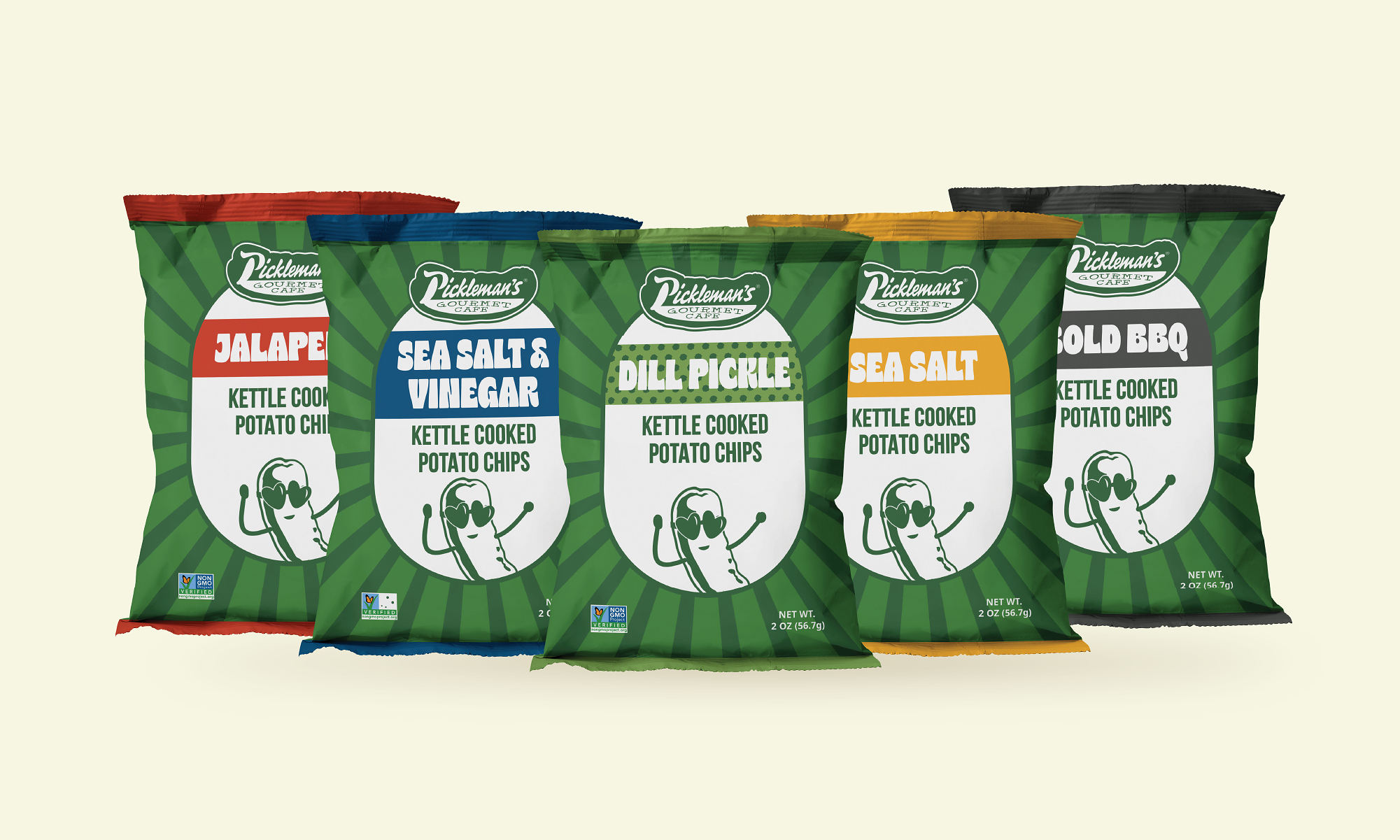
Fast-casual sandwich chain Pickleman's Gourmet Cafe has launched a proprietary potato chip line made with non-GMO ingredients and clean-sourced sunflower oil — converting one of foodservice's most ignored side items into a branded product with margin potential and cause-marketing upside. Leading the rollout is a Dill Pickle flavor, a natural fit for a brand whose identity leans hard into the pickle as a signature. A portion of proceeds from every bag sold supports Brave Like McKenna, a nonprofit founded by Pickleman's franchisees Keith and Janell Royer after the loss of their daughter to pediatric cancer.
The Brand Logic
For fast-casual operators, proprietary packaged goods represent a relatively low-risk path to incremental revenue, deeper brand differentiation, and guest loyalty reinforcement. Chips, in particular, carry favorable shelf life, low labor cost, and high perceived value when positioned against clean-label standards. Pickleman's is leveraging all three: the chip line is produced by Community Snacks, which has also committed to donating a portion of its own proceeds to Brave Like McKenna — essentially doubling the cause-marketing signal without additional cost to the operator. The move follows a wider industry pattern in which regional fast-casual chains build out branded CPG lines to extend brand presence beyond the four walls and create retail-ready products that could eventually travel beyond the restaurant itself.
"We've built a brand around making thoughtful decisions about the food we serve, and that commitment shouldn't stop with the entrée," said Doug Stritzel, Founder and CEO of Pickleman's Gourmet Cafe. "Creating our own chip line allowed us to take a fresh look at a classic side item and develop something that better reflects who we are as a brand."
What Operators Should Watch
The Pickleman's chip launch is an illustration of a broader brand launch strategy that multi-unit operators are increasingly exploring: converting high-frequency menu components into proprietary SKUs rather than relying on commodity distributors. Operators who source white-label chips from broadline distributors pay for convenience but surrender brand equity on every tray. A co-manufactured proprietary line, by contrast, creates a visible quality signal, supports a simplified ingredient story, and opens the door to retail distribution down the line.
The cause-marketing component adds another layer. Franchise systems that tie product proceeds to franchisee-led nonprofits create internal alignment that generic marketing cannot replicate. It converts franchisees from operators into stakeholders in the brand's public narrative — a retention and recruitment signal that matters as franchise development competition intensifies across the fast-casual segment.
Pickleman's, founded in 2005, has built its menu around No Antibiotics Ever proteins, fresh-sliced produce, and scratch-made recipes. The chip line extends that ingredient philosophy to a category that most competitors still treat as a commodity pour-and-bag operation. For operators evaluating their own side-item programs, the question this raises is straightforward: what else on the tray is being sourced generically when a branded, margin-positive alternative is achievable?
Written by Michael Politz, Author of Guide to Restaurant Success: The Proven Process for Starting Any Restaurant Business From Scratch to Success (ISBN: 978-1-119-66896-1), Founder of Food & Beverage Magazine, the leading online magazine and resource in the industry. Designer of the Bluetooth logo and recognized in Entrepreneur Magazine's "Top 40 Under 40" for founding American Wholesale Floral, Politz is also the Co-founder of the Proof Awards and the CPG Awards and a partner in numerous consumer brands across the food and beverage sector.