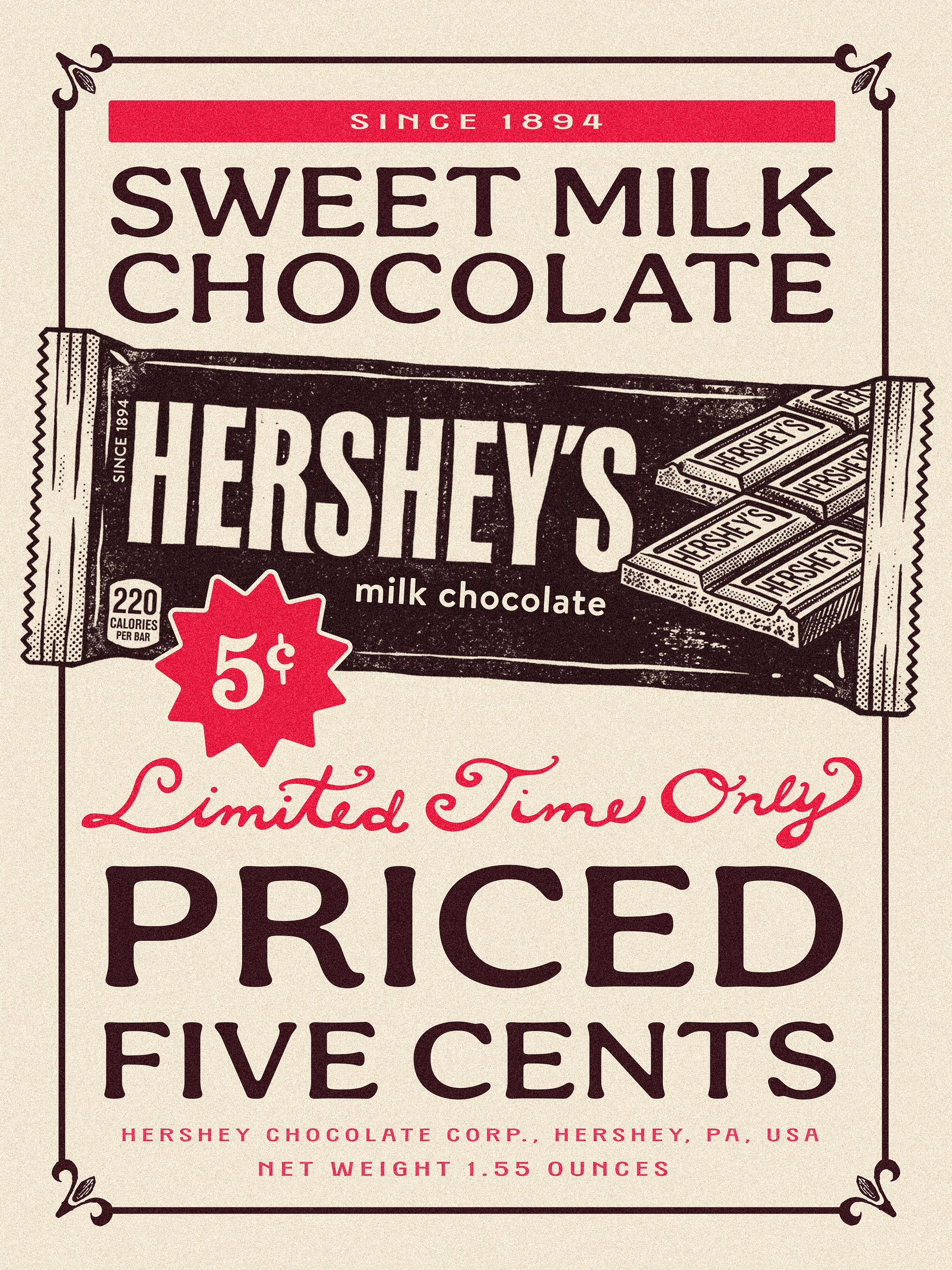
On Nov. 25, 2026, The Hershey Company will sell its classic Milk Chocolate Bar for five cents — the bar's original 1900 price — through a timed, single-day promotion spanning Walmart.com, Amazon Grocery, and its own Chocolate World locations in Hershey, Pa. and Times Square. The move is engineered to place the brand in the cultural conversation on the same day the HERSHEY biopic opens in theaters nationwide. For confectionery and CPG brands watching how legacy players activate around tentpole moments, this activation is a compressed case study in multi-channel coordination.
The Channel Architecture
Each retail channel carries different mechanics. At Walmart, the five-cent price is available online for pickup with a Walmart account, while in-store buyers access the offer through the Ibotta app via receipt upload and cash-back — a tactic that generates first-party purchase data for both the retailer and the CPG. Amazon is deploying same-day delivery in select metro markets including Philadelphia and Chicago, with a promo code distributed through Hershey's own social channels to drive cross-platform traffic. Hershey's Chocolate World locations set purchase limits of ten bars per person; Walmart caps at five; Amazon at two. The tiered limits serve a dual purpose: they create artificial scarcity to sustain social-media energy throughout the day while preventing bulk arbitrage.
Vintage Packaging as a Retail Signal
Separate from the five-cent event, Hershey's has rolled out a limited-edition vintage-inspired packaging collection now available at participating retailers nationwide and at shop.hersheys.com. The line covers Milk Chocolate Bars in Standard, King Size, XL, Giant, and 10.35-ounce snack-size formats, plus Kisses in 9.5-ounce and 30-ounce pouches. The packaging restores archival design elements — Milton Hershey's signature, a historic wordmark, period typography — and includes an on-pack QR code directing consumers to HersheyLegacy.org for brand history content. That QR placement is a low-cost owned-media move that extends dwell time with the brand beyond the point of sale.
For operators and brand managers in food and beverage, the mechanics here are worth unpacking on two levels. First, the entertainment tie-in gives the activation a hard news peg with a defined end date, which is precisely the kind of urgency structure that drives impulse purchase and earned media coverage without requiring paid placements at every touchpoint. Second, the vintage packaging extends the shelf life of the campaign well past opening weekend — buyers at retail see a differentiated SKU, and the limited-edition framing signals scarcity without requiring a price change. Samantha Siegal, Senior Marketing Director at The Hershey Company, framed it plainly: the five-cent offer gives consumers a tangible way to engage with the brand's origin story on the day that story reaches its widest audience.
For brands considering a similar heritage-activation framework, the key variables to replicate are channel-specific redemption mechanics (not a single blanket coupon), a physical experience anchor that generates social content, and a packaging layer that keeps the narrative alive at retail after the event day has passed. That combination — digital, experiential, and packaging in one coordinated window — is harder to execute than it looks, and brands without Hershey's distribution scale should plan the retail packaging component at least a full quarter ahead of the activation date. See how other brand-launch campaigns have approached limited-edition packaging for comparable timelines and retailer lead requirements, and review recent confectionery and snack trends shaping buyer expectations at the category level.
Written by Michael Politz, Author of Guide to Restaurant Success: The Proven Process for Starting Any Restaurant Business From Scratch to Success (ISBN: 978-1-119-66896-1), Founder of Food & Beverage Magazine, the leading online magazine and resource in the industry. Designer of the Bluetooth logo and recognized in Entrepreneur Magazine's "Top 40 Under 40" for founding American Wholesale Floral, Politz is also the Co-founder of the Proof Awards and the CPG Awards and a partner in numerous consumer brands across the food and beverage sector.