The Move
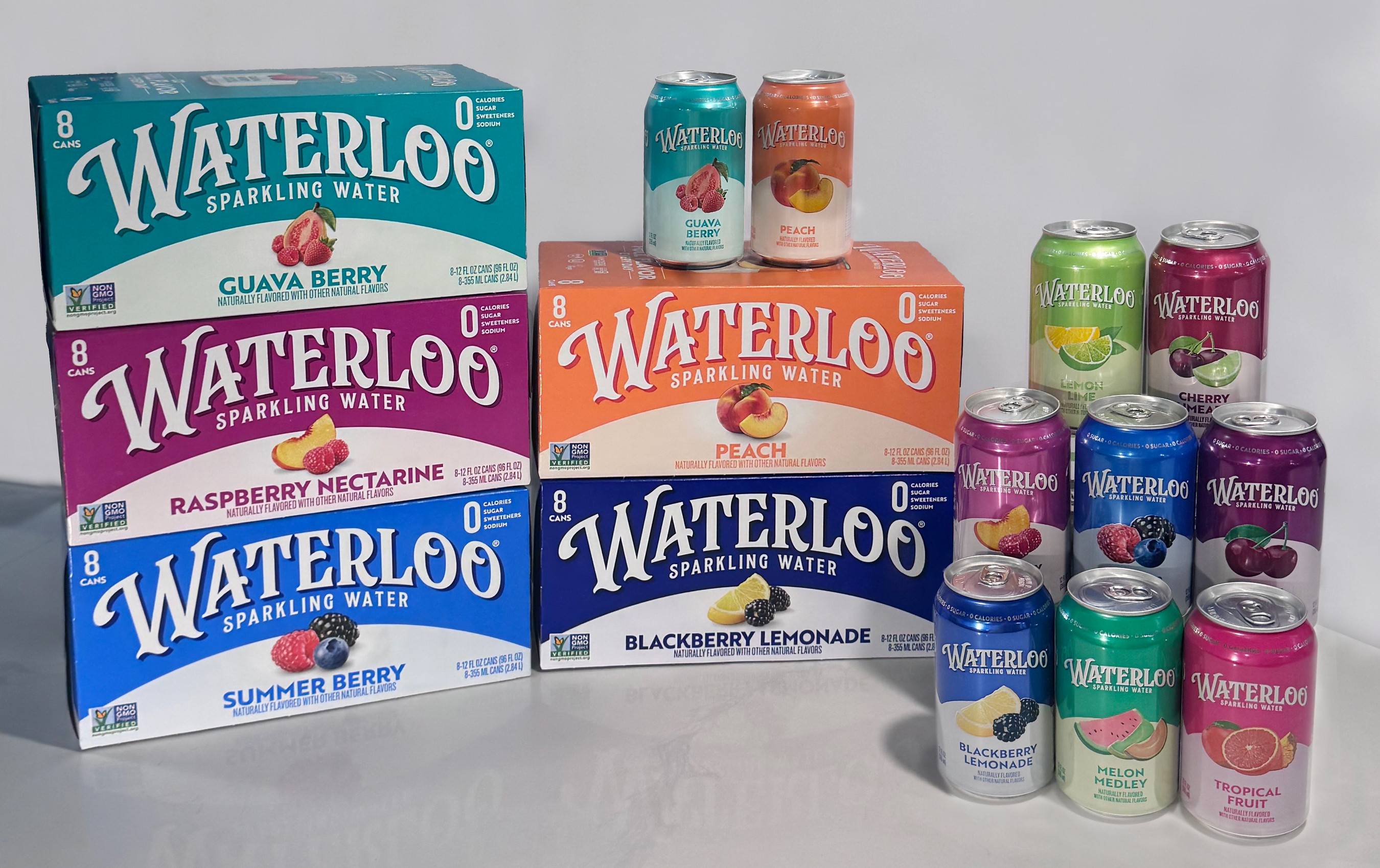
Waterloo Sparkling Water is rolling out a full packaging overhaul across its entire portfolio — cans and cartons, all pack sizes — marking the brand's first design change since its 2017 launch. Developed with brand agency CBX, the refresh features more saturated colors, stronger flavor cues, and a modernized brand mark aimed squarely at improving stopping power on an increasingly crowded retail shelf. For buyers and retail partners, the timing is deliberate: Waterloo reports 3X category growth and 17.0% household penetration growth in H1 2026.
Why Retail Buyers Should Care
The sparkling water set has become one of the most visually homogenous segments in the ambient beverage aisle. Brands that once stood out through clean, minimal design are now blending together as the category has scaled. Waterloo's decision to lean into vibrancy and explicit flavor cues — validated through multiple rounds of eye-tracking studies and consumer concept testing — is a direct response to that shelf dynamic. Mark Christou, Principal and Chief Creative Officer at CBX, noted that "most brands are starting to blur together on shelf," and framed the redesign as a way to sharpen Waterloo's identity rather than chase category convention.
For foodservice and retail operators sourcing independent beverage brands, this kind of packaging investment signals commercial seriousness. Buyers evaluating emerging brands in the better-for-you beverage space increasingly weigh shelf performance data — eye-tracking, planogram fit, flavor findability — alongside distribution reach. Waterloo's documented research process gives category managers a cleaner procurement rationale.
Brand Launch Signals
The packaging rollout is paired with a redesigned website at drinkwaterloo.com, updated for enhanced shoppability and DTC functionality. That dual move — physical packaging and digital storefront simultaneously — is consistent with how independent brands are now approaching retail readiness and brand launch execution. Updating only one touchpoint leaves gaps in brand coherence that retail partners and digital buyers notice.
Waterloo remains independently owned and Non-GMO Project Verified, with no sugar, sweeteners, or sodium — positioning that resonates in on-premise beverage programs at health-forward restaurants, hotel F&B outlets, and club-channel buyers. The brand's continued independence also means procurement decisions move faster than with private-equity-backed portfolio brands, which matters when a buyer needs to act on a seasonal planogram reset.
For operators and distributors already carrying sparkling water SKUs, Waterloo's documented penetration growth makes a straightforward case for category incrementality rather than brand substitution. Whether this redesign converts shelf curiosity into trial at scale will be visible in H2 2026 velocity data.
Written by Michael Politz, Author of Guide to Restaurant Success: The Proven Process for Starting Any Restaurant Business From Scratch to Success (ISBN: 978-1-119-66896-1), Founder of Food & Beverage Magazine, the leading online magazine and resource in the industry. Designer of the Bluetooth logo and recognized in Entrepreneur Magazine's "Top 40 Under 40" for founding American Wholesale Floral, Politz is also the Co-founder of the Proof Awards and the CPG Awards and a partner in numerous consumer brands across the food and beverage sector.