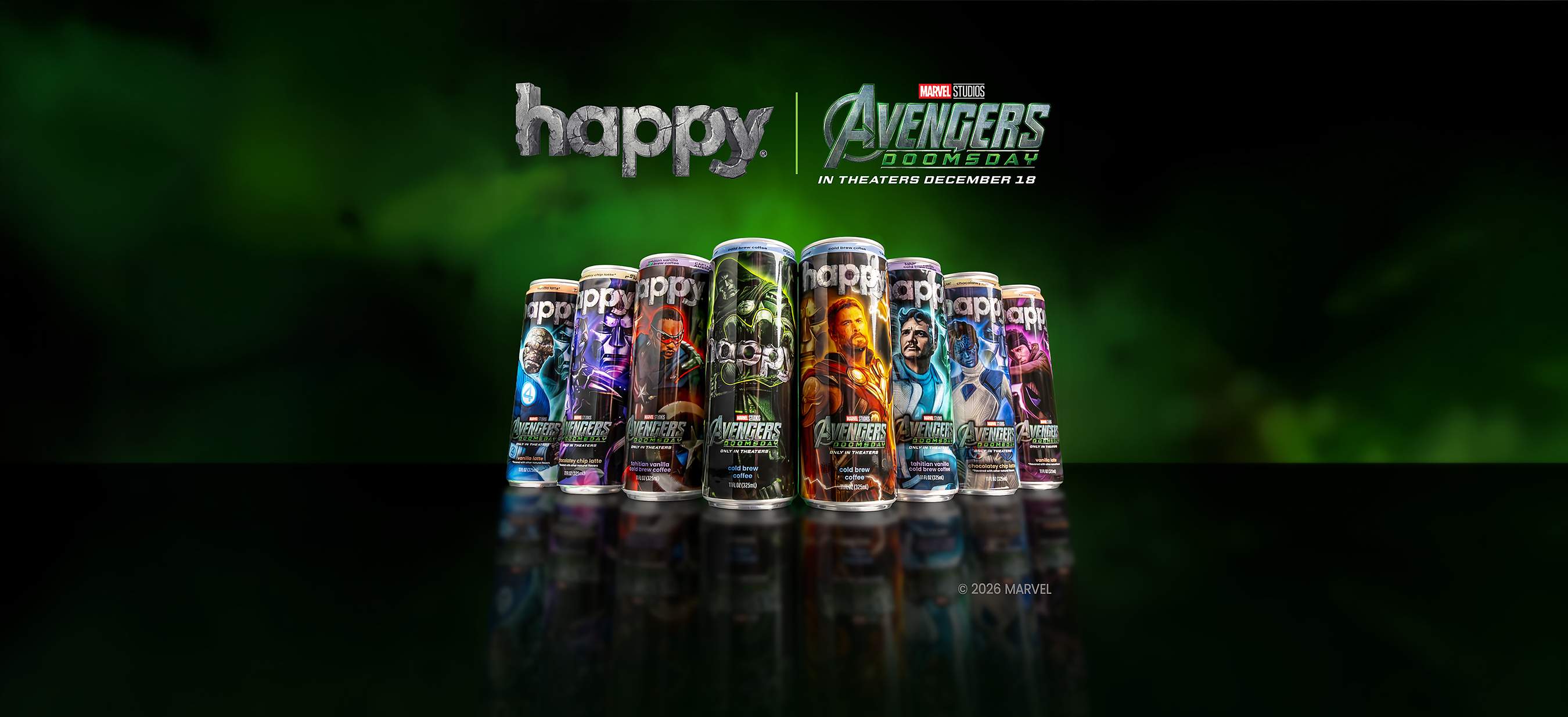
Robert Downey Jr. and Craig Dubitsky's happy® Products is bringing a Marvel Studios co-brand to grocery and mass retail shelves, launching eight collector's-edition ready-to-drink coffee cans tied to "Avengers: Doomsday," in theaters December 18, 2026. The release marks one of the more visible entertainment-licensed plays in the RTD coffee segment this year and puts the brand in front of shoppers at Kroger, HEB, Albertsons banners, Target, Amazon, pOpshelf, Raley's, Schnucks, Sheetz, and select CVS locations.
The Product Slate
The eight cans feature high-resolution, tactile-printed graphics representing Marvel Cinematic Universe characters — Black Panther, Captain America, Gambit, Mister Fantastic, Mystique, The Thing, Thor, and Doctor Doom — across four existing SKUs: classic cold brew, Tahitian vanilla cold brew, vanilla latte, and chocolatey chip latte, all in 11-ounce cans. For buyers and category managers, the collector's mechanic is a proven driver of repeat purchase and trade-up behavior in the beverage aisle; limited can designs create urgency that standard promotional pricing cannot replicate.
Retail Velocity Signal
The breadth of the retail footprint — spanning conventional grocery, drug, convenience, and e-commerce simultaneously — signals that happy® is using the Marvel partnership as a velocity event rather than a prestige placement. Holly Frank, VP of Global Marketing Partnerships & Promotions at Disney, framed it directly: the collaboration gives fans "a fun way to get charged up" ahead of the theatrical release. That's Disney's language for a promotional window with a hard end date, which means the retail push is designed to create a concentrated sales spike between now and mid-December. Operators and buyers sourcing RTD coffee for hotel markets, convenience formats, or corporate accounts should note that entertainment co-brands of this scale tend to compress the procurement window — allocation often tightens faster than category reorder cycles can accommodate.
What This Signals for RTD Coffee Buyers
The RTD coffee category has grown increasingly competitive at retail, with heritage coffee brands, energy hybrids, and celebrity-backed launches all competing for the same cooler door real estate. Happy®'s choice to anchor a limited-edition program to a theatrical IP event — rather than a seasonal flavor or a wellness claim — reflects a broader shift toward cultural moment marketing in the segment. For foodservice and hospitality operators evaluating RTD coffee vendors, this type of brand investment in consumer awareness can reduce the selling cycle; a brand already in a shopper's consideration set requires less menu or grab-and-go merchandising support than an unknown label. Dubitsky noted the company views coffee as "our first delivery system," suggesting category extensions are planned — relevant context for buyers building multi-year supplier relationships.
For brands evaluating similar co-branding and launch strategies, brand launch and retail readiness execution and operator-facing distributor intelligence both inform how programs like this translate from press release to shelf velocity.
Written by Michael Politz, Author of Guide to Restaurant Success: The Proven Process for Starting Any Restaurant Business From Scratch to Success (ISBN: 978-1-119-66896-1), Founder of Food & Beverage Magazine, the leading online magazine and resource in the industry. Designer of the Bluetooth logo and recognized in Entrepreneur Magazine's "Top 40 Under 40" for founding American Wholesale Floral, Politz is also the Co-founder of the Proof Awards and the CPG Awards and a partner in numerous consumer brands across the food and beverage sector.