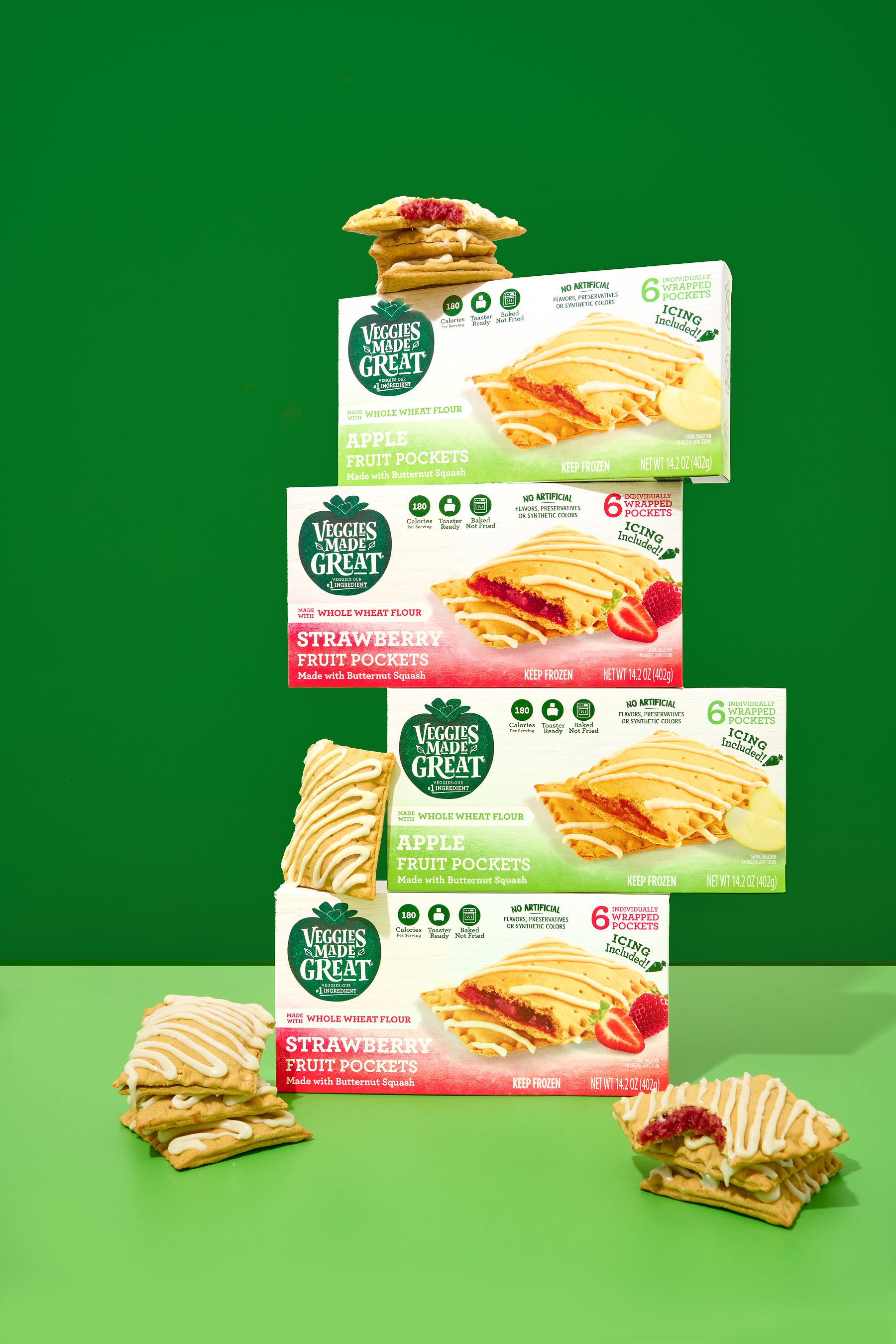
Veggies Made Great, the New Jersey-based brand best known for putting vegetables into comfort-food formats, announced the launch of Fruit Pockets on June 10, 2026 — its first entry into the frozen pastry segment. The line debuts in Strawberry and Apple varieties, with a crust listing butternut squash as the primary ingredient and a separate icing packet built on a cauliflower base. For retail operators and foodservice buyers tracking the better-for-you frozen breakfast set, this is not a line extension. It is a category entry, and the distinction matters.
The frozen breakfast aisle has been one of the more competitive shelves in grocery over the past two years. Legacy pastry brands hold strong velocity, but shelf-space reviews increasingly reward SKUs that can carry a functional or clean-label claim without sacrificing the visual cues shoppers expect — a handheld format, a glaze, recognizable fruit filling. Veggies Made Great is threading that needle directly, which is why retail buyers at natural, conventional, and club formats should expect an aggressive pitch cycle around this launch. The brand has demonstrated distribution credibility across those channels with its muffin and egg bite lines, so the infrastructure for a broader rollout is already in place.
From a brand-launch intelligence standpoint, the Fruit Pockets rollout is a useful case study in how challenger brands build category credibility. The vegetable-forward positioning is not new for Veggies Made Great — it is the brand's entire identity — but applying it to a pastry format expands the addressable buyer conversation from health-food buyers to mainstream breakfast buyers. That crossover pitch is harder to execute than it looks, and brands attempting similar moves should note that Veggies Made Great is leaning on ingredient transparency (named first ingredients, real fruit) rather than macro claims to anchor the story. That approach tends to land better with retail-ready brand audits and buyer deck preparation than a pure nutrition-panel play.
For operators sourcing frozen breakfast items for hospitality, corporate dining, or grab-and-go programs, the practical question is velocity and consumer pull. A format this familiar — a filled pastry with icing — carries low trial friction. The differentiator is whether the veggie-crust positioning is a draw or a distraction for your specific guest. In lodging and campus foodservice environments where wellness programming influences purchasing decisions, this SKU earns a legitimate look. Operators evaluating emerging frozen breakfast vendors for Q3 and Q4 2026 resets should track distribution announcements from this brand over the next 60 days. For more on how to evaluate emerging CPG brands before they hit your distributor rep's pitch sheet, see operator intelligence on procurement shifts.
The broader signal here is that better-for-you brands are no longer ceding the indulgent-format aisle to legacy players. When a brand can put cauliflower in a glaze and make that a marketing asset rather than a liability, the positioning landscape for the entire frozen breakfast set has shifted. Buyers, brokers, and category managers should update their competitive maps accordingly.
Written by Michael Politz, Author of Guide to Restaurant Success: The Proven Process for Starting Any Restaurant Business From Scratch to Success (ISBN: 978-1-119-66896-1), Founder of Food & Beverage Magazine, the leading online magazine and resource in the industry. Designer of the Bluetooth logo and recognized in Entrepreneur Magazine's "Top 40 Under 40" for founding American Wholesale Floral, Politz is also the Co-founder of the Proof Awards and the CPG Awards and a partner in numerous consumer brands across the food and beverage sector.