United Airlines is rolling out 30 new dishes across its Polaris international business-class cabin starting August 1, developed in partnership with Chef's Table — the brand behind the Emmy-winning Netflix documentary series. The lineup spans appetizers, salads, and entrées, each designed by a chef tied to a United hub city. For food-service operators and hospitality suppliers, the move signals how premium dining programs are increasingly being built around media-credentialed talent rather than traditional contract foodservice procurement.
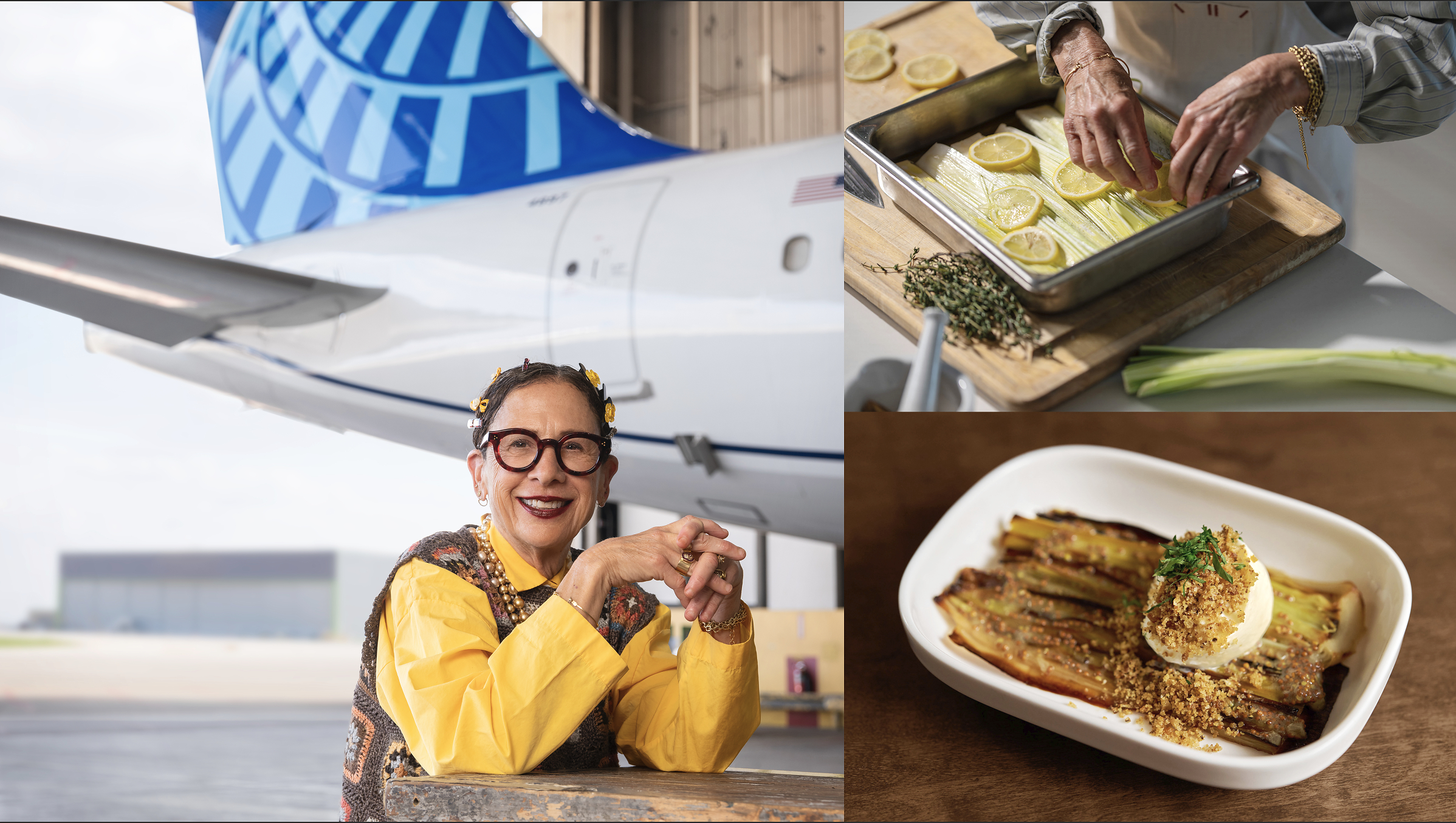
The chef roster includes Nancy Silverton (burrata with braised leeks), Manu Buffara (Brazilian shrimp stew), and Tashi Gyamtso (poached scallop), among others. Each menu is anchored to the chef's home city and the United route that connects it — a localization strategy that hotel F&B directors and stadium operators have been deploying on the ground for several years. The airline context simply raises the production constraint: dishes must survive altitude, cabin pressure, and galley reheating while still communicating the chef's point of view. That is a serious culinary-operations brief, and the fact that Chef's Table was engaged to manage it speaks to how the content layer and the food layer are now being developed in parallel.
The content angle is worth tracking separately. United and Chef's Table will release original branded programming through the inflight entertainment system, giving passengers a behind-the-scenes look at menu development. This is a content-commerce model that hotel food and beverage operators are already testing in loyalty apps and in-room channels — the airline is essentially running a captive-audience editorial program alongside the meal service. For suppliers and agencies pitching premium hospitality accounts, the implication is clear: the pitch deck now needs a content component, not just a product specification sheet.
From a procurement-intelligence standpoint, operators in the contract dining and travel hospitality space should note that Chef's Table functions here as both a talent network and a brand licensor. That structure — media brand as culinary curator — has precedent in retail (see every celebrity food line at a major grocer) but is less common in institutional food service. As airline and travel hospitality F&B budgets continue recovering post-pandemic, expect competing carriers and cruise lines to pursue similar co-productions. The vendor opportunity sits in specialty ingredients, premium proteins, and the logistics infrastructure that can maintain quality across global galley supply chains.
For operators considering their own chef-partnership or brand-collaboration strategies, United's execution offers a clean framework: assign geographic specificity to each chef, build original content around the development process, and launch across a defined service tier rather than fleet-wide. The constraint is the feature, not the problem.
Written by Michael Politz, Author of Guide to Restaurant Success: The Proven Process for Starting Any Restaurant Business From Scratch to Success (ISBN: 978-1-119-66896-1), Founder of Food & Beverage Magazine, the leading online magazine and resource in the industry. Designer of the Bluetooth logo and recognized in Entrepreneur Magazine's "Top 40 Under 40" for founding American Wholesale Floral, Politz is also the Co-founder of the Proof Awards and the CPG Awards and a partner in numerous consumer brands across the food and beverage sector.