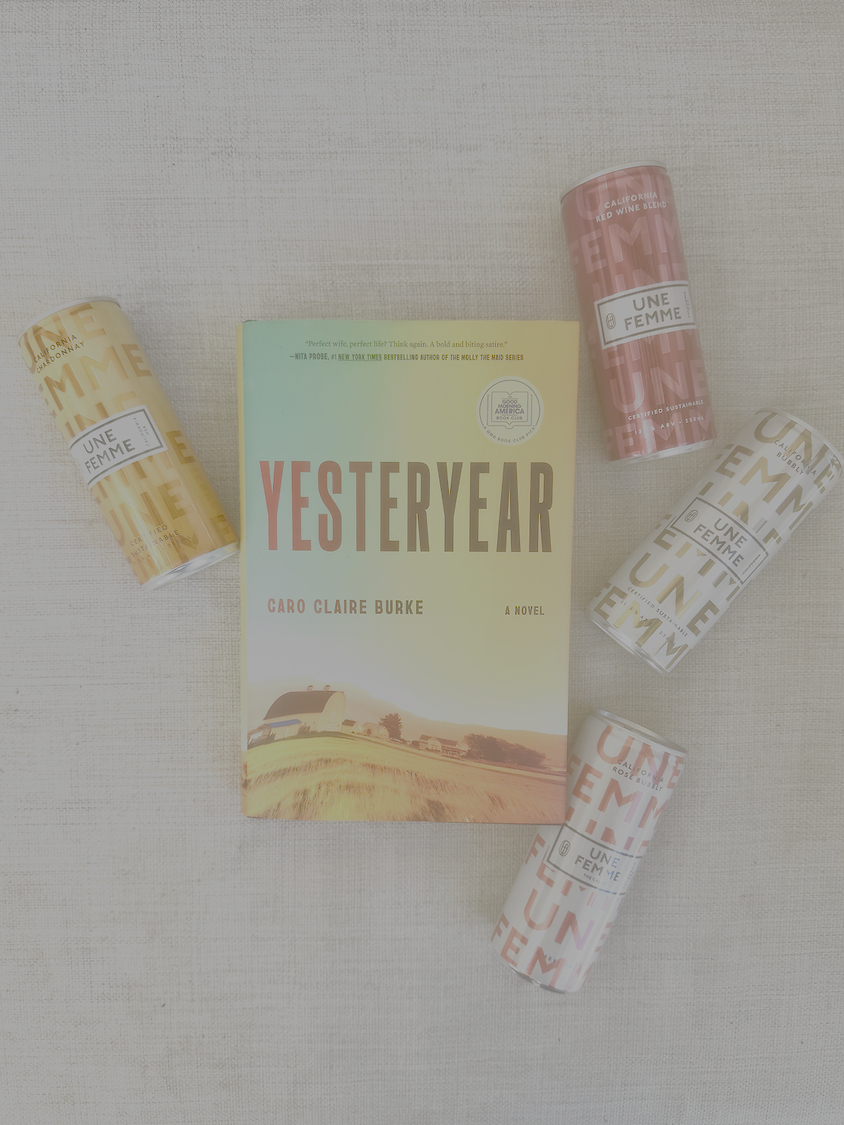
Une Femme Wines, one of the faster-growing wine labels in the U.S., has launched a co-branded national book club with Knopf Doubleday Publishing Group, an imprint of Penguin Random House. The monthly social series pairs a featured Une Femme wine SKU with a title authored or co-authored by a woman, kicking off with Caro Claire Burke's Yesteryear — a current New York Times bestseller. Upcoming pairings include Maggie O'Farrell's Land, Kimberly McCreight's Someone Else's Husband, and Valeria Luiselli's Beginning, Middle, End. For beverage operators watching channel diversification, this is a case study worth unpacking.
The activation model is deceptively efficient. Instead of a one-time campaign spend, Une Femme has engineered a recurring content moment — one that arrives monthly, carries third-party editorial credibility from a Penguin Random House imprint, and targets an audience (book-club-going women) already predisposed to gathered, ritualized consumption. That is a demographic with outsized influence over household wine purchasing. The structure mirrors what programmatic and content-led brands have been building in the food-and-beverage growth lane — lower CPM, higher intent, compounding reach.
For wine and beverage brands in distribution, the Knopf Doubleday alignment signals something procurement buyers should flag: co-branded giveaway partnerships with major publishers are an underused shelf-pull mechanism. The press placement, social amplification, and retailer storytelling that come with a New York Times bestseller pairing are difficult to buy outright and nearly impossible to replicate through paid media alone. Brands pursuing retail readiness and buyer deck strategy should treat publisher co-marketing as a legitimate trade channel, not just a PR footnote.
Canned wine is the SKU format doing the heavy lifting here. The format's portability makes it a natural fit for giveaway mechanics — lower per-unit cost, easy to ship DTC, and visually distinct in social content. Une Femme's decision to lead with cans rather than bottle formats also suggests a deliberate acquisition strategy: recruit new consumers through a lightweight, low-commitment format, then walk them up the portfolio. That sequencing is worth modeling if you are a beverage brand currently sitting on a mixed-format SKU lineup without a clear entry point.
The broader signal for operators and brand builders is that affinity-based content partnerships — books, wellness, travel, design — are maturing into a legitimate growth channel for beverage and lifestyle brands. The cost structure is favorable, the audience quality tends to be high, and the recurring nature of a monthly series builds algorithm equity on social platforms in ways that one-off campaigns do not. If your brand does not yet have a standing content partnership with a non-endemic media or publishing entity, this is a model to pressure-test against your own audience data before competitors in your tier do.
Written by Michael Politz, Author of Guide to Restaurant Success: The Proven Process for Starting Any Restaurant Business From Scratch to Success (ISBN: 978-1-119-66896-1), Founder of Food & Beverage Magazine, the leading online magazine and resource in the industry. Designer of the Bluetooth logo and recognized in Entrepreneur Magazine's "Top 40 Under 40" for founding American Wholesale Floral, Politz is also the Co-founder of the Proof Awards and the CPG Awards and a partner in numerous consumer brands across the food and beverage sector.