
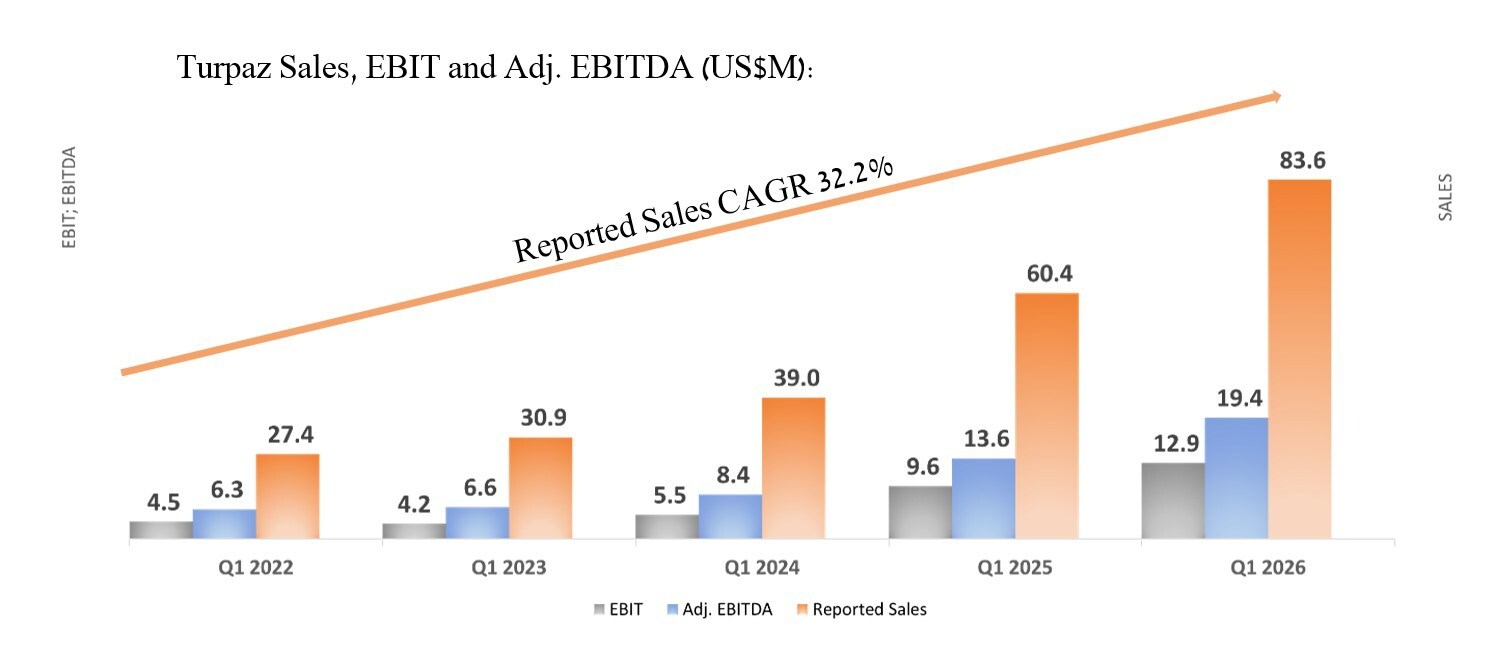
Turpaz Industries Ltd. (TASE: TRPZ), the Israel-based flavor and fragrance manufacturer, reported record first-quarter 2026 results for the period ended March 31, with double-digit growth across every key financial metric. The Caesarea-headquartered company sells into more than 95 countries, supplying flavor extracts, fragrance intermediates, and specialty fine ingredients to food, beverage, personal care, and household product manufacturers. For operators and product developers sourcing at scale, a supplier posting this kind of broad-based acceleration is not background noise — it reflects real demand momentum in the ingredient tier.
The flavor and fragrance input market has been through a volatile stretch. Supply chain disruptions from 2021 through 2024 forced many food and beverage brands to dual-source or regionalize their ingredient procurement strategies. Companies like Givaudan, IFF, and Symrise have each flagged volume recovery in their recent earnings, but Turpaz's reported double-digit growth across all metrics suggests smaller and mid-tier specialty ingredient suppliers are now capturing share as buyers diversify away from the top four global houses. For operators building private label or contract-manufactured products, this competitive dynamic in the supplier tier can translate directly into negotiating leverage.
From a procurement-intelligence standpoint, broad-based revenue acceleration at a specialty flavor house typically precedes one of two things: capacity expansion or pricing power. If Turpaz is running at elevated utilization, buyers locking in annual supply agreements now may be better positioned than those renegotiating mid-year. The company's 95-country distribution footprint also signals that its ingredient portfolio is already validated across multiple regulatory environments — relevant for brands pursuing international retail or foodservice distribution. Operators sourcing for reformulation projects, clean-label pivots, or new beverage lines should have conversations with their flavor suppliers about forward availability before Q3 purchasing cycles open.
The broader takeaway for the operator community is structural: specialty ingredient suppliers with global reach and a diversified category mix — food, fragrance, personal care — are proving more resilient than single-category houses. That resilience matters when you are building a supply chain around a product launch or a menu overhaul. Turpaz's Q1 print is a data point that procurement teams and brand developers should log, even if Turpaz is not currently in your approved vendor list. When suppliers at this tier accelerate, it usually means their customers are ordering ahead — and that tells you something about where product development pipelines are headed across the industry.
The company is hosting an English-language conference call at 10am Eastern Time for analysts and institutional stakeholders. Operators and buyers interested in tracking ingredient market conditions can use earnings call transcripts from suppliers like Turpaz as low-cost procurement intelligence, alongside coverage from the Food & Beverage Magazine network.
Written by Michael Politz, Author of Guide to Restaurant Success: The Proven Process for Starting Any Restaurant Business From Scratch to Success (ISBN: 978-1-119-66896-1), Founder of Food & Beverage Magazine, the leading online magazine and resource in the industry. Designer of the Bluetooth logo and recognized in Entrepreneur Magazine's "Top 40 Under 40" for founding American Wholesale Floral, Politz is also the Co-founder of the Proof Awards and the CPG Awards and a partner in numerous consumer brands across the food and beverage sector.

