Tim Hortons is rolling out a Harry Potter-licensed limited-time offering across its U.S. restaurants beginning Aug. 12, anchoring the promotion to the annual "Back to Hogwarts" cultural moment and the 25th anniversary of the film franchise. The program spans new menu SKUs, temperature-activated beverage packaging, collectible merchandise, and co-branded limited-edition boxes — a full-funnel brand activation that operators in the QSR segment increasingly use to drive traffic spikes between seasonal menu cycles.
The Menu Build
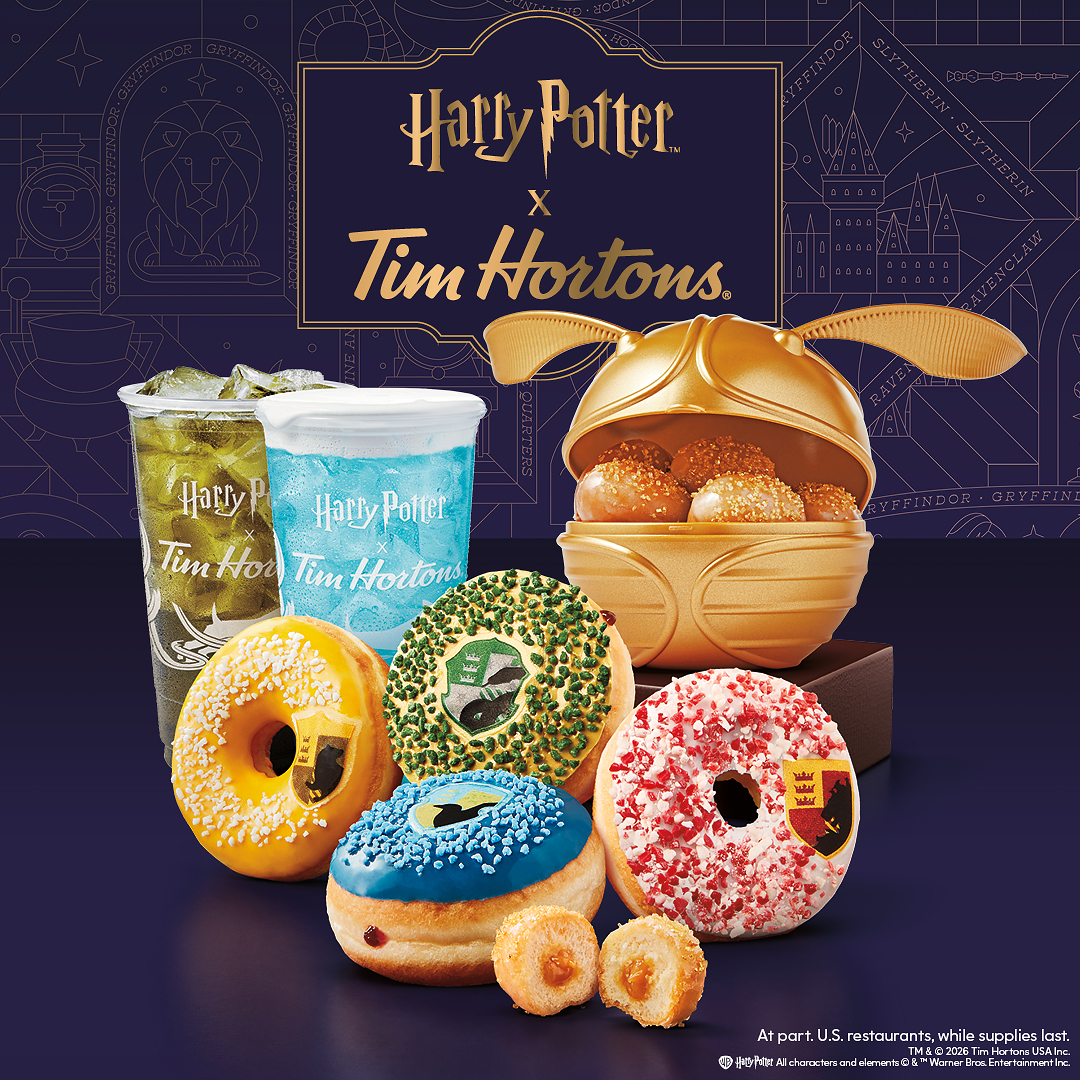
Four Hogwarts House-themed donuts form the core of the SKU lineup: a Gryffindor Strawberry Cheesecake, a Slytherin Chocolate Pistachio, a Ravenclaw Blueberry, and a Hufflepuff Lemon Meringue. A "Mystery Box" single-donut format — which obscures the house until opened — adds a low-cost collectibility mechanic that encourages repeat visits. Golden Snitch Caramel Timbits serve as a limited-edition bite-size tie-in, sold in a co-branded Golden Snitch Timbits holder. On the beverage side, a Patronus Sparkling drink and a Forbidden Forest Iced Tea are served in color-changing cups that reveal Patronus imagery when filled — a format increasingly common in IP-driven QSR promotions as operators look for packaging that generates organic social sharing.
What Operators Should Watch
For franchise operators and QSR brand teams, this activation is a case study in layered IP licensing. Tim Hortons is not simply affixing a logo to existing menu items; the program integrates IP imagery across four distinct food SKUs, two beverage SKUs, at least five packaging formats, and collectible merchandise — all with supply capped by availability. That scarcity mechanic, combined with a cultural calendar hook, is a repeatable framework operators and brand managers can adapt for regional or category-specific IP partnerships.
The Warner Bros. Discovery Global Consumer Products licensing machine behind Harry Potter has placed the franchise in food and beverage retail extensively — from grocery shelf sets to theme park F&B — making this Tims activation part of a broader brand-launch and retail-readiness pattern worth tracking. QSR chains that have executed comparable full-program IP activations — spanning menu, packaging, and merchandise simultaneously — consistently report measurable same-store traffic lifts during the promotional window, though results depend heavily on crew execution and supply chain reliability at the unit level.
Katerina Glyptis, President of Tim Hortons U.S., framed the launch as an expression of the brand's core equities: "We're bringing the magic of Harry Potter to life in true Tims fashion — from donuts inspired by each Hogwarts House, to a Golden Snitch Timbit and Timbit holder, spellbinding Patronus and Forbidden Forest inspired drinks, and limited-edition merch that guests will want to collect and share."
For operators evaluating their own LTO and growth-marketing calendar, the Tim Hortons model here illustrates how a licensing partnership, when executed with SKU discipline and packaging investment, can compress a promotional window into a high-urgency visit driver rather than a passive menu addition. The "while supplies last" framing at participating locations further reinforces scarcity without requiring system-wide inventory commitments.
Written by Michael Politz, Author of Guide to Restaurant Success: The Proven Process for Starting Any Restaurant Business From Scratch to Success (ISBN: 978-1-119-66896-1), Founder of Food & Beverage Magazine, the leading online magazine and resource in the industry. Designer of the Bluetooth logo and recognized in Entrepreneur Magazine's "Top 40 Under 40" for founding American Wholesale Floral, Politz is also the Co-founder of the Proof Awards and the CPG Awards and a partner in numerous consumer brands across the food and beverage sector.