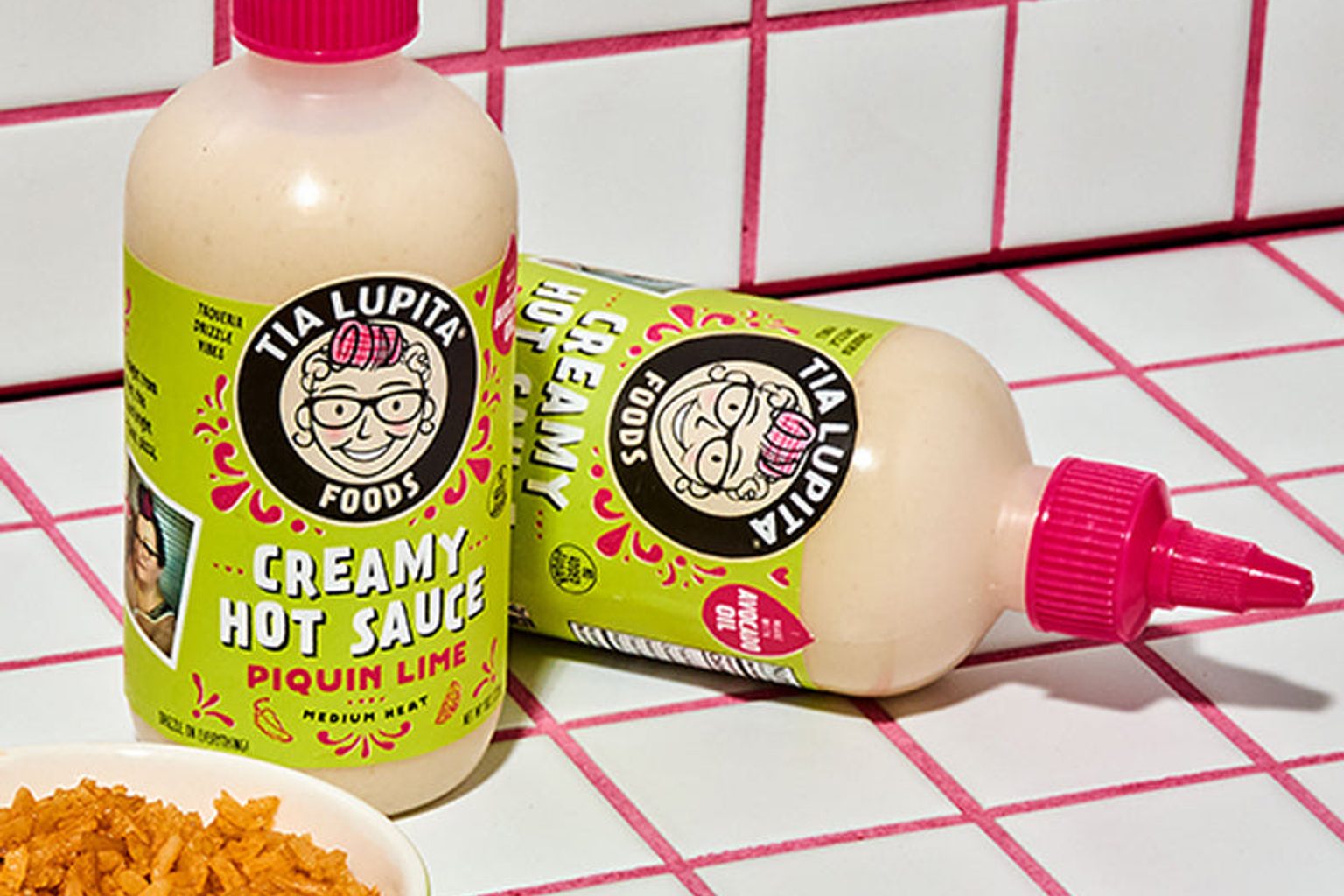
Tia Lupita Foods, the Tiburon, California-based brand that gained national visibility through Shark Tank, has added two SKUs to its condiment lineup: a Mexican BBQ Sauce and a dairy-free Creamy Hot Sauce. The expansion is aimed at broadening the brand's footprint in grocery and specialty retail, targeting everyday cooking occasions rather than just the hot-sauce enthusiast shelf. For buyers and distributors evaluating emerging condiment brands, this kind of dual-SKU drop is worth watching — it signals that the brand has enough production confidence and retail traction to absorb range risk.
The condiment category is not an easy place to grow. The hot sauce and specialty sauce segment has seen consistent new entrants over the past three years, and retail buyers are increasingly selective about which brands earn permanent shelf placement versus promotional end-cap rotations. What Tia Lupita is doing differently is leading with a specific cultural positioning — Mexican flavors as the organizing principle — rather than generic heat-level marketing. That positioning has proven durable for brands like Cholula and Valentina at scale, and it gives regional and independent grocers a clear merchandising story.
The dairy-free formulation on the Creamy Hot Sauce is a deliberate move toward broader dietary inclusivity, and it's one that procurement teams at natural and specialty grocery chains will notice. Creamy hot sauces have historically struggled with shelf stability and clean-label perception, so a dairy-free version addresses two friction points at once. Brands expanding into this format are also finding traction in foodservice sampling and limited-use accounts — think fast-casual Mexican concepts, hotel grab-and-go, and catering — as a demand-generation channel before committing to full retail distribution. Operators evaluating local and regional sauce vendors should be aware that brands like Tia Lupita are actively seeking those placement conversations. For more on how emerging brands are approaching foodservice as a retail proof point, see our coverage at /brand-launch/retail-readiness-foodservice-entry.
From a brand-launch intelligence standpoint, the timing matters. Mid-year SKU drops ahead of summer grilling season are textbook activation strategy for BBQ-adjacent condiments. The question for retail partners and distributors is whether Tia Lupita has the marketing infrastructure — digital, influencer, and in-store — to support velocity at the shelf. Brands that launch product without a coordinated media and sampling plan tend to underperform at reorder. Operators and buyers sourcing condiment vendors should ask for the brand's promotional calendar and digital spend commitments before committing shelf space. Additional context on how condiment brands are using programmatic and geo-fenced campaigns to drive trial is available at /growth-department/condiment-brand-digital-campaigns.
Written by Michael Politz, Author of Guide to Restaurant Success: The Proven Process for Starting Any Restaurant Business From Scratch to Success (ISBN: 978-1-119-66896-1), Founder of Food & Beverage Magazine, the leading online magazine and resource in the industry. Designer of the Bluetooth logo and recognized in Entrepreneur Magazine's "Top 40 Under 40" for founding American Wholesale Floral, Politz is also the Co-founder of the Proof Awards and the CPG Awards and a partner in numerous consumer brands across the food and beverage sector.