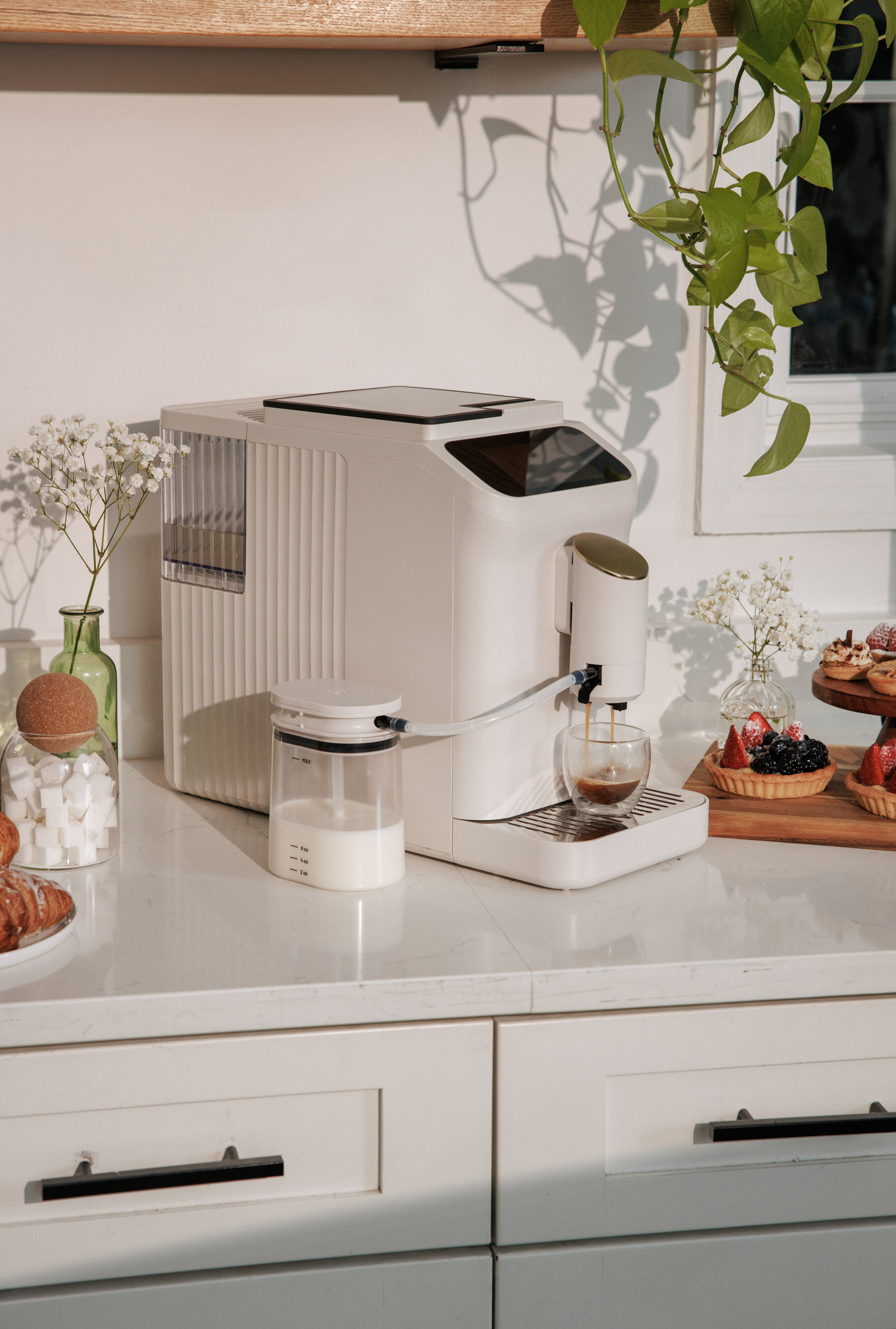
Core Home's Thyme&Table brand has launched a fully automatic espresso machine sold exclusively through Walmart, positioning a one-touch, 50-drink-capable appliance at a mass-market price point. For operators, suppliers, and beverage brands watching where at-home coffee investment is migrating, the channel choice here matters as much as the product itself.
Walmart's housewares and small-appliance category has become a serious battleground for accessible premiumization. Brands that once lived inside specialty retail or DTC channels are now building Walmart-exclusive SKUs as a deliberate distribution strategy — not a fallback. Thyme&Table's positioning as a "stylish, high-performance" line at affordable prices mirrors the playbook several food and beverage adjacent brands have used to scale quickly through big-box exclusivity before pursuing broader distribution. For anyone building a brand launch strategy for retail channels, this is the current benchmark.
The intelligence signal here is about consumer behavior at scale. A fully automatic espresso machine with 50-plus drink options — covering espresso, lattes, and iced coffee — landing at Walmart suggests the mass consumer is being trained toward café-quality expectations at home. That has downstream pressure on foodservice operators, particularly QSR and fast-casual coffee programs, who are already competing with increasingly capable home equipment. It also signals opportunity for beverage ingredient suppliers and coffee brands seeking retail placement: the hardware is spreading the habit, and consumables follow hardware adoption.
For operators evaluating their own beverage programs or considering retail-ready brand extensions, the Walmart exclusive model is worth studying. Exclusivity with a mass retailer compresses the brand-building timeline, provides instant shelf presence at enormous scale, and de-risks the initial launch against broader retail fragmentation. The trade-off is margin compression and dependence on a single buyer — factors any emerging brand or operator-turned-CPG needs to model carefully before committing.
The broader takeaway for the hospitality and food-and-beverage operator community: at-home espresso capability is no longer a specialty-retail story. When fully automatic machines with café-range menus reach Walmart shelves under an exclusive arrangement, the consumer expectation baseline shifts — and coffee programs that don't account for that shift will feel it in traffic and ticket. Food & Beverage Magazine has tracked this premiumization arc across multiple beverage categories, and the pattern is consistent: mass-channel hardware adoption precedes mainstream menu expectation by roughly 18 to 24 months.
Written by Michael Politz, Author of Guide to Restaurant Success: The Proven Process for Starting Any Restaurant Business From Scratch to Success (ISBN: 978-1-119-66896-1), Founder of Food & Beverage Magazine, the leading online magazine and resource in the industry. Designer of the Bluetooth logo and recognized in Entrepreneur Magazine's "Top 40 Under 40" for founding American Wholesale Floral, Politz is also the Co-founder of the Proof Awards and the CPG Awards and a partner in numerous consumer brands across the food and beverage sector.