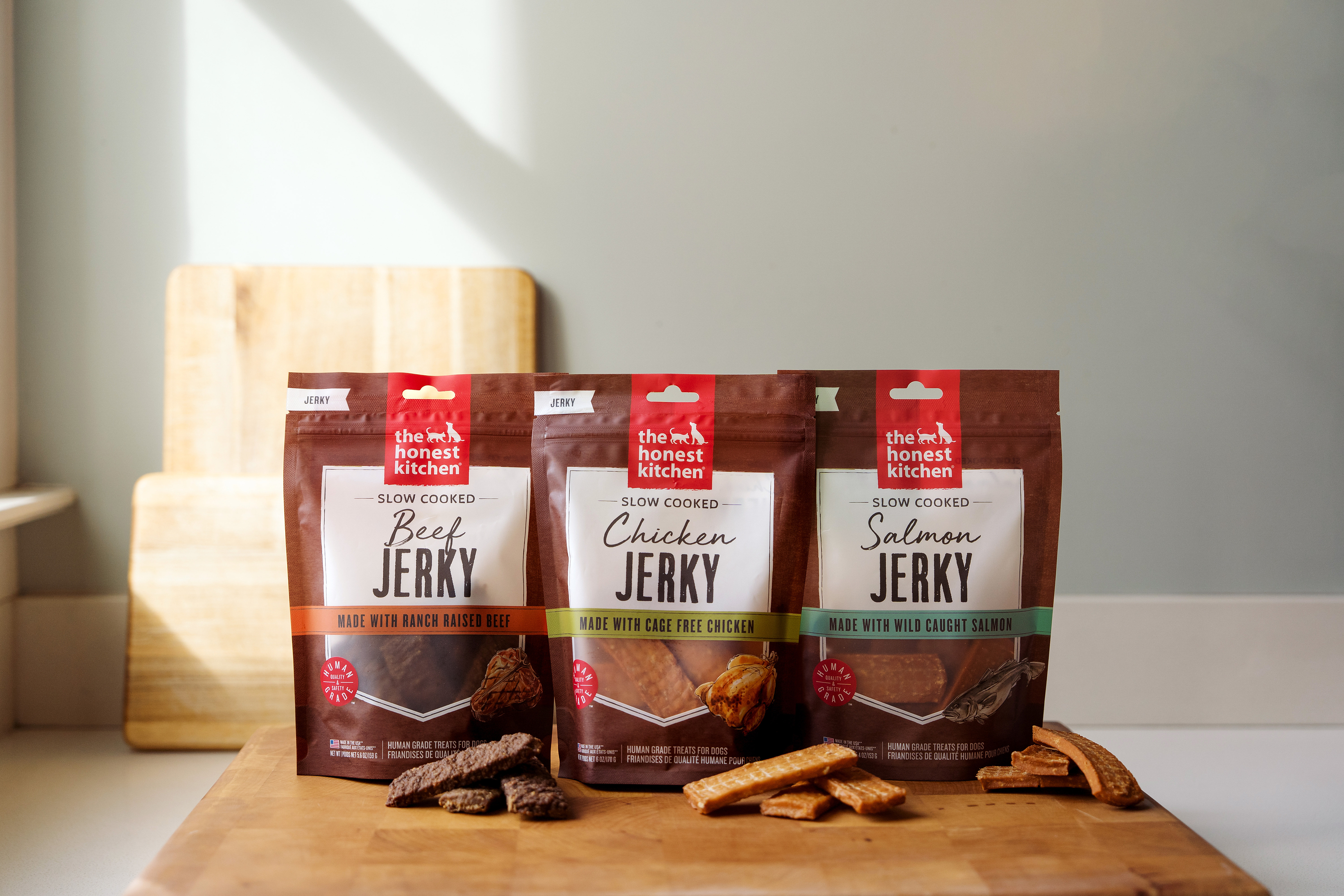
The Honest Kitchen, a San Diego-based pioneer in human-grade pet food, launched its Slow Cooked Jerky Chews for dogs on June 10 — timed deliberately to Jerky Day on June 12. The product enters with a four-ingredient bill of materials, a high-protein positioning, and the brand's established human-grade credential. For operators and buyers paying attention to the premium pet treat aisle, the move is worth tracking: simple-ingredient formats are compressing shelf space for legacy SKUs, and brands that can anchor a clean-label story to an existing trust signal tend to earn faster buyer appointments.
The premium pet treat segment has been one of the more durable growth corridors in specialty food retail over the past three years. Human-grade certification remains a meaningful differentiator because it triggers a separate procurement conversation — buyers at independents, pet specialty, and better grocery chains treat it as a risk-reduction signal, not just a marketing claim. Four-ingredient formats play directly into that logic, shortening ingredient-deck scrutiny during line reviews and reducing the friction that kills emerging SKUs before they hit the floor. Brands watching the brand-launch playbook in action will recognize the Jerky Day timing as a low-cost earned-media anchor — the kind of calendar hook that generates placement in roundup coverage without requiring a significant PR budget.
For distributors and brokers handling better-pet or specialty-food crossover accounts, this launch is a procurement signal. The Honest Kitchen has demonstrated the ability to hold premium price points while keeping ingredient counts low — a combination that typically supports stronger velocity data at shelf, which is the number buyers ask for at the 90-day review. Vendors supplying packaging, co-manufacturing, or sampling infrastructure to this tier of pet brand should expect continued volume in the clean-label jerky format; the category has not peaked, and this launch adds a credible incumbent to a format that has mostly been occupied by smaller direct-to-consumer challengers. Operators building retail-ready brand packages for adjacent categories — human jerky, functional snacks, protein-forward treats — can study this rollout as a format-and-timing case study.
The practical takeaway for brand operators and retail buyers is straightforward: human-grade certification combined with a minimal ingredient deck is functioning as a two-part retail unlock in 2026. Brands that can clear both bars enter line reviews with a stronger proof-of-concept story than those relying on formulation complexity or influencer volume alone. The Honest Kitchen is not a startup testing the format — it is an established player using a hero-product launch to deepen its treat portfolio and defend shelf real estate. That distinction matters when you are assessing competitive pressure on your own SKU mix.
Written by Michael Politz, Author of Guide to Restaurant Success: The Proven Process for Starting Any Restaurant Business From Scratch to Success (ISBN: 978-1-119-66896-1), Founder of Food & Beverage Magazine, the leading online magazine and resource in the industry. Designer of the Bluetooth logo and recognized in Entrepreneur Magazine's "Top 40 Under 40" for founding American Wholesale Floral, Politz is also the Co-founder of the Proof Awards and the CPG Awards and a partner in numerous consumer brands across the food and beverage sector.