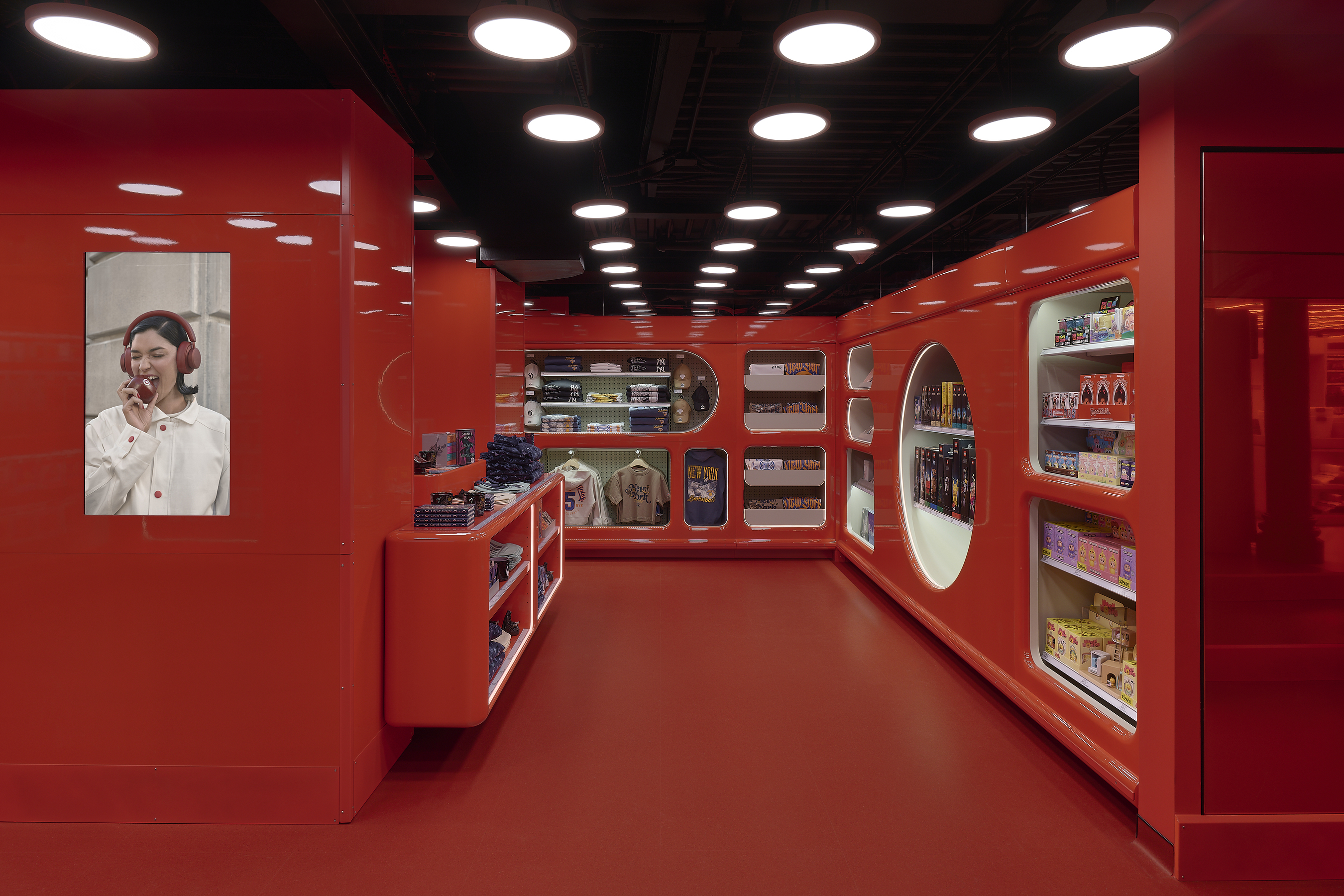
Target Corporation has completed the full transformation of its SoHo flagship, unveiling a redesigned lower level that repositions food and beverage — alongside wellness and home — as an immersive, discovery-led destination rather than a utilitarian aisle. For emerging F&B brands and foodservice-adjacent operators, the format is worth studying closely.
The new food footprint centers on two distinct concepts. The Snack Bar recreates a New York streetscape inside the store, spotlighting grab-and-go products from emerging brands including Wilde and Cadootz in a series of neighborhood-stop vignettes. A Seasonal Shopping Bar rotates sweet and savory items under Target's own Favorite Day banner. The broader Food and Beverage space is described as a modern city market — a deliberate pivot away from the conventional planogram layout most mass retailers still default to.
Why Operators Should Pay Attention
This isn't purely a retail story. The SoHo store functions as Target's live testing environment for experiential formats, and what proves out here tends to inform rollout decisions across the chain's more than 2,000 U.S. locations. Nearly two-thirds of consumers aware of the SoHo store say it makes Target feel more stylish, according to Target's own awareness research — a data point the brand is clearly using to justify continued investment in the format. When a retailer of this scale commits to discovery-led food merchandising in a flagship, it signals a category-level shift in how snack, wellness, and specialty F&B brands should be thinking about retail placement and packaging presentation.
For brands seeking distribution introductions or retail-ready positioning, the SoHo model raises the bar on what a compelling shelf story looks like. Grab-and-go and emerging snack brands are no longer competing on placement alone — they are competing on whether they fit a curated neighborhood narrative. That changes the brief for buyer decks, sell sheets, and in-store activation budgets. Brands appearing in experiential formats like The Snack Bar benefit from the halo of curation, but they also need to deliver the visual identity and brand story to match. See our guidance on building retail-ready brand packages for the current buyer environment.
What the Format Signals for 2027
Target has publicly committed to introducing SoHo-exclusive products, collectibles, and experiences in 2027 — a move that tightens the connection between limited-distribution exclusivity and flagship retail. For F&B suppliers and emerging brands, this is a procurement and pitch signal: exclusivity and storytelling are becoming table-stakes for premium placement, not differentiators. The wellness component — Balance Mart, featuring Korean beauty, men's grooming, and trending wellness brands — also reflects the continued convergence of functional food, beverage, and personal care on the same retail floor, a trend foodservice operators tracking better-for-you beverage and supplement growth will recognize immediately.
The broader competitive context: specialty grocers, food halls, and experiential convenience formats have been pulling younger urban shoppers with exactly this kind of curation-and-discovery mechanic. Target's SoHo investment is a direct response — and a confirmation that mass retail is no longer content to cede that positioning.
Written by Michael Politz, Author of Guide to Restaurant Success: The Proven Process for Starting Any Restaurant Business From Scratch to Success (ISBN: 978-1-119-66896-1), Founder of Food & Beverage Magazine, the leading online magazine and resource in the industry. Designer of the Bluetooth logo and recognized in Entrepreneur Magazine's "Top 40 Under 40" for founding American Wholesale Floral, Politz is also the Co-founder of the Proof Awards and the CPG Awards and a partner in numerous consumer brands across the food and beverage sector.