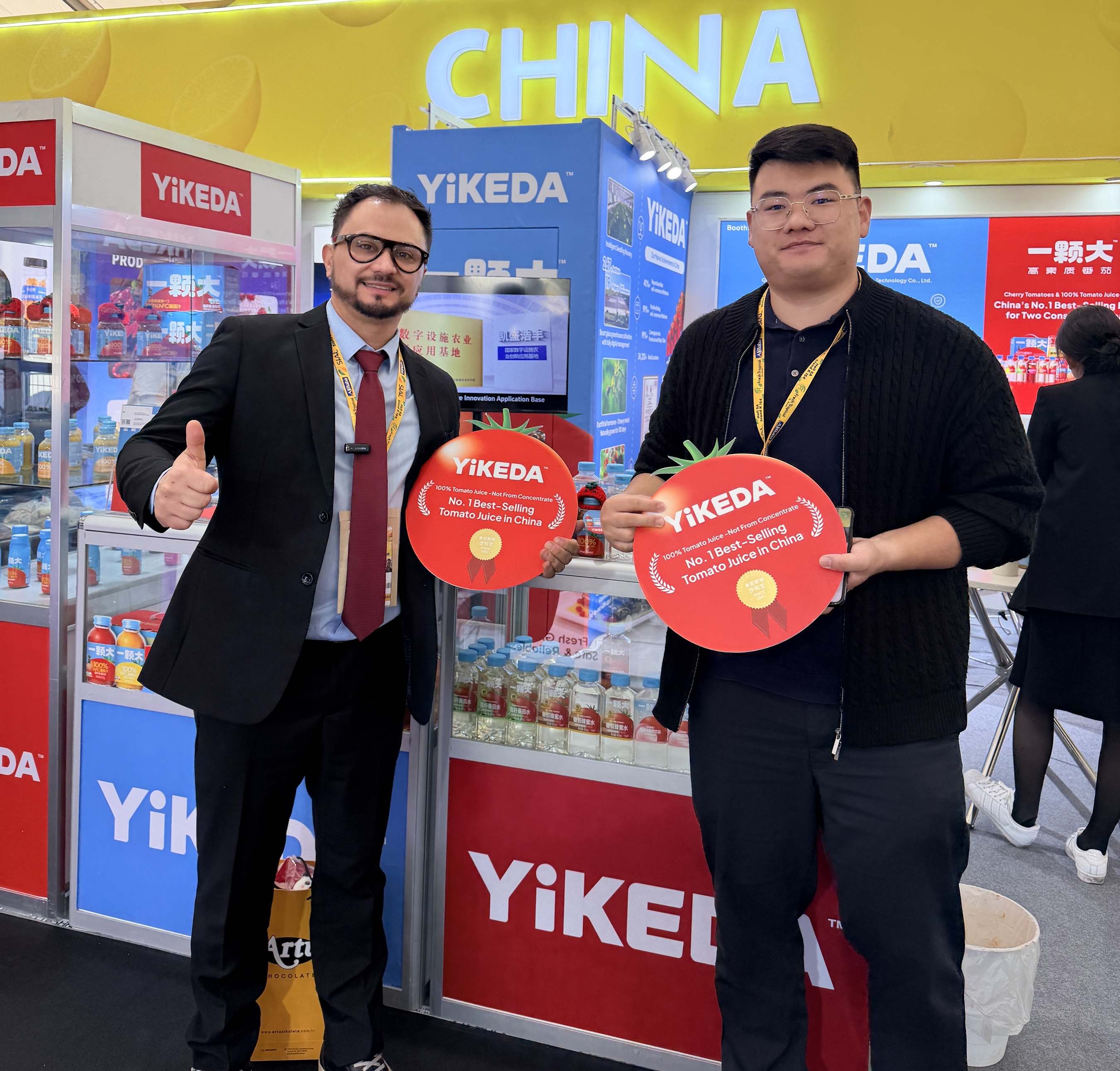
YiKEDA™, a premium tomato beverage brand operating under Qingdao Triumph Haofeng Smart Agriculture Technology Co., Ltd., used its SIAL Paris 2026 debut to position itself in front of global retail buyers and distribution partners — a direct signal that Chinese agricultural-tech companies are moving up the value chain into branded, export-ready consumer beverages.
The brand's two lead SKUs — a 100% not-from-concentrate (NFC) tomato juice and a Tomato Water Flavored Beverage Series — are built around a clean-label positioning: no added sucrose, fat, artificial colors, sodium, or preservatives. The NFC juice carries a low-GI certification, reportedly the first such certification in China's NFC tomato juice category, which adds a functional nutrition angle that resonates with health-focused retail buyers in Western markets.
Supply Chain Advantage
What separates YiKEDA™ from other emerging beverage brands entering global trade shows is the depth of its vertical integration. Parent company Triumph Haofeng operates more than 267 hectares of smart glass greenhouse facilities across China, with a digitalized supply chain management system covering cultivation through processing. That infrastructure matters to procurement teams evaluating supply consistency, food safety traceability, and the ability to scale volume — three criteria that routinely determine whether an import brand earns a second buyer meeting or gets passed over. The company states its tomatoes are grown without artificial hormones, a claim that aligns with clean-label sourcing requirements increasingly written into retailer vendor standards in the U.S., UK, and Australia — all markets where YiKEDA™ says it currently exports.
What Buyers Should Track
According to Frost & Sullivan data cited by the company, YiKEDA™'s cherry tomatoes and NFC tomato juice each ranked No. 1 in nationwide China sales for two consecutive years. That domestic track record, combined with existing export presence across twelve markets including the United States, Canada, and the United Kingdom, means this is not a speculative launch — it is a brand actively building retail and foodservice footholds and using SIAL as an acceleration point.
For operators and beverage buyers, the NFC tomato juice category remains underdeveloped in most Western markets relative to NFC orange and apple juice. A credentialed, vertically integrated entrant with low-GI positioning and clean-label specs is the kind of supplier profile that specialty grocery buyers, health-focused QSR concepts, and hotel F&B directors should be benchmarking now. Distribution conversations started at a trade show of SIAL's caliber typically take 12 to 18 months to convert to shelf placement, which means the window to engage early is open.
For importers and brokers watching the beverage brand launch space, YiKEDA™'s SIAL appearance is worth logging. Brands with this level of agricultural infrastructure and domestic market validation rarely stay in the emerging-brand tier for long once they commit capital to international trade marketing. Operators building out premium beverage procurement strategies should request a product sample and spec sheet before distribution exclusivity conversations begin.
Takeaways for Operators
Written by Michael Politz, Author of Guide to Restaurant Success: The Proven Process for Starting Any Restaurant Business From Scratch to Success (ISBN: 978-1-119-66896-1), Founder of Food & Beverage Magazine, the leading online magazine and resource in the industry. Designer of the Bluetooth logo and recognized in Entrepreneur Magazine's "Top 40 Under 40" for founding American Wholesale Floral, Politz is also the Co-founder of the Proof Awards and the CPG Awards and a partner in numerous consumer brands across the food and beverage sector.