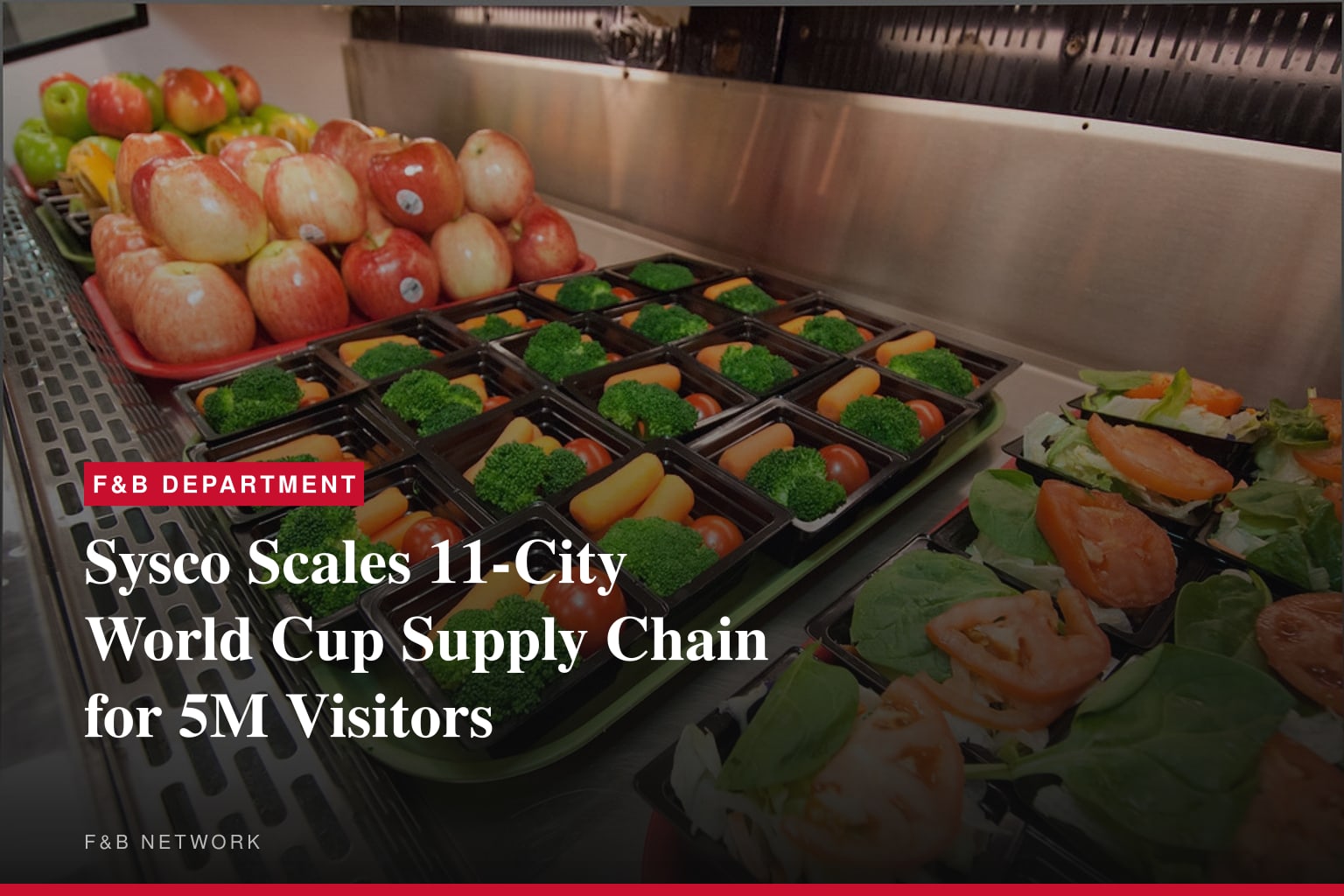
Sysco Corporation has spent months pre-positioning inventory, expanding its U.S. fleet, and adding headcount across all 11 FIFA World Cup host cities ahead of an expected 5 million visitors descending on markets from Houston to New York this summer. The distributor's internal projections — including a figure of 3 million extra pounds of french fries alone — underscore just how differently large-scale sporting events stress a regional supply chain versus typical seasonal peaks. For operators in those host cities, the practical question is not whether demand will surge; it's whether your current distribution agreements, par levels, and staffing plans were written with that surge in mind.
Sysco's move is a reminder that broadline distributors telegraph demand intelligence months before an event arrives. If your primary broadline rep has not already reached out about adjusted lead times, minimum order thresholds, or temporary SKU availability windows in your market, that conversation needs to happen now. Peer operators in Super Bowl and Champions League host cities have historically reported 30-to-45-day windows where certain high-velocity items — proteins, fryer oil, disposable serviceware — go on allocation. Distribution agreements that looked fine in January can create real service gaps in July.
The intelligence layer here is broader than fries. Sysco's fleet and staffing expansion is a visible proxy for where foot traffic, hotel occupancy, and off-premise volume are expected to concentrate. Operators who cross-reference that distributor activity with geo-fenced media data and hotel booking curves can build a cleaner picture of which zip codes, day-parts, and menu categories to lean into. That same data set is increasingly useful for programmatic and geo-fenced campaign targeting, where proximity to stadium corridors and fan zones is a strong signal for ad spend allocation in the six weeks surrounding the tournament.
For suppliers and emerging brands, this event window also represents a compressed but high-visibility retail and foodservice entry point. Distributors actively filling temporary volume gaps are marginally more receptive to trial SKUs and short-run placements during surge periods — particularly in beverage, snack, and condiment categories where velocity data from a World Cup window can anchor a broader brand launch or buyer deck narrative. The key is having distribution introductions and sell sheets ready before the distributor's warehouse is already committed.
The broader takeaway for operators not located in a host city is still relevant: Sysco's planning horizon on an event of this scale started months out. Building procurement intelligence into your calendar — not just your menu calendar — is the operational discipline that separates operators who capture event revenue from those who run out of product on the highest-volume night of the quarter.
Written by Michael Politz, Author of Guide to Restaurant Success: The Proven Process for Starting Any Restaurant Business From Scratch to Success (ISBN: 978-1-119-66896-1), Founder of Food & Beverage Magazine, the leading online magazine and resource in the industry. Designer of the Bluetooth logo and recognized in Entrepreneur Magazine's "Top 40 Under 40" for founding American Wholesale Floral, Politz is also the Co-founder of the Proof Awards and the CPG Awards and a partner in numerous consumer brands across the food and beverage sector.