The Move
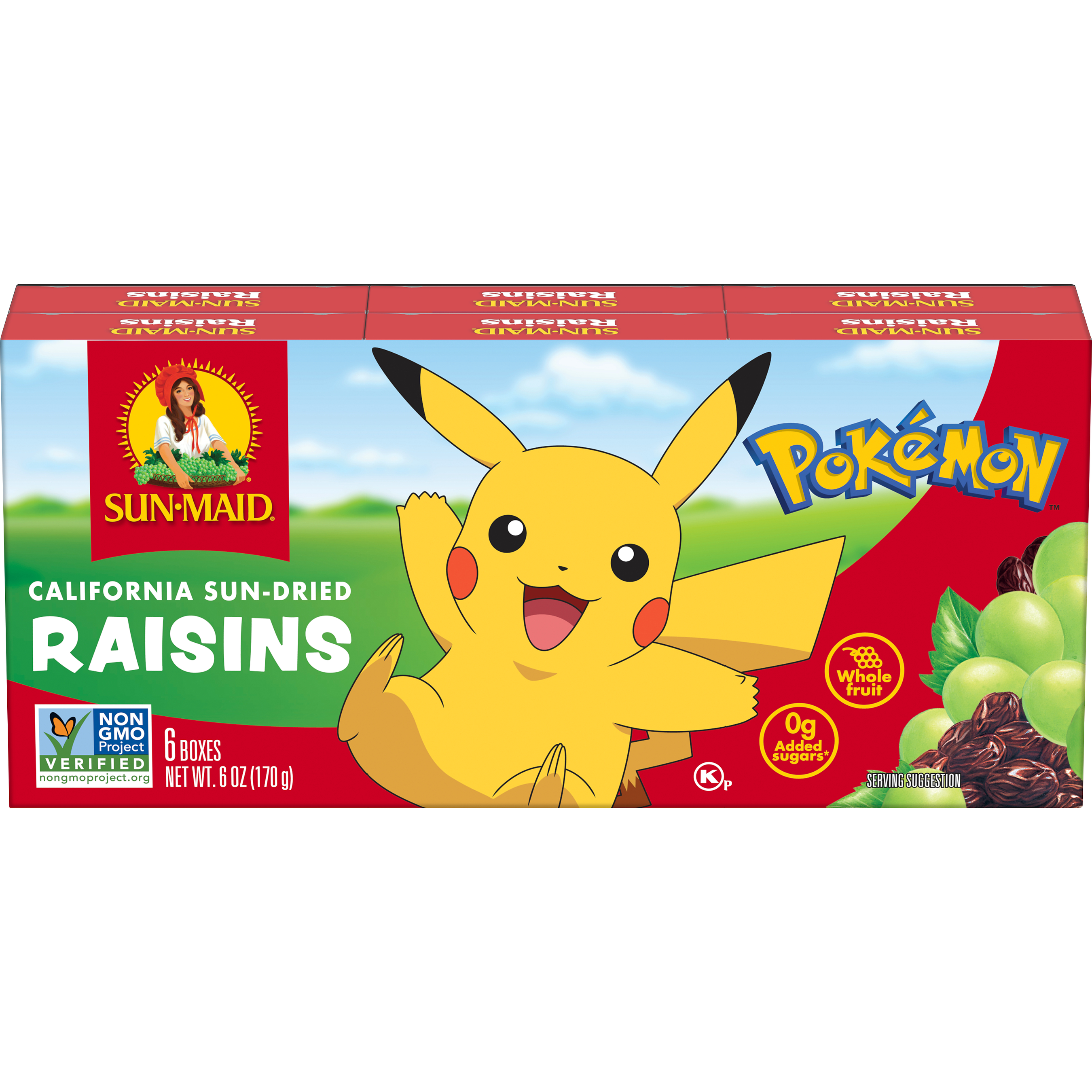
Sun-Maid Growers of California has launched Pokémon-licensed raisin 6-packs featuring Pikachu artwork on its iconic little red box, available now at major retailers while supplies last. The limited packaging is timed to back-to-school season and coincides with Pokémon's 30th anniversary — a calculated double anchor that gives retail buyers a seasonal story and a cultural moment to merchandise around simultaneously.
For operators and retail buyers sourcing better-for-you snack sets, the move is worth watching as a case study in how heritage food brands use entertainment IP to sidestep the attention problem. Sun-Maid raisins carry real nutritional credibility — whole fruit, zero grams of added sugar — but in a crowded snack aisle increasingly dominated by new entrants with louder packaging, legacy positioning alone rarely moves incremental units.
Why IP Licensing Works Here
The Pokémon Company International manages one of the highest-recognition entertainment properties across both Gen Z parents and their children, which gives Sun-Maid access to a dual-audience purchase trigger: nostalgia-driven adults making lunchbox decisions and kids influencing those decisions at shelf. That cross-generational dynamic is exactly what makes the Pokémon IP expensive to license and valuable to activate — and it's why food brands from Campbell's to Heinz have leaned into similar entertainment partnerships over the past several years when organic velocity stalls.
For procurement and category managers, the structure here is also instructive. Sun-Maid is not launching a new product; it is re-packaging an existing SKU with licensed artwork on a limited, supply-while-it-lasts basis. That approach keeps production complexity low, protects core supply chain margins, and allows retailers to run a promotional feature without committing to a permanent planogram change. Buyers at regional and national grocery chains should expect a short promotional window, which argues for front-loading any orders.
Signals for Snack Buyers and Brand Strategists
The broader signal here is that better-for-you snack brands are increasingly treating entertainment IP as a growth-marketing channel rather than a one-off novelty. When Sun-Maid CEO Steve Loftus describes the Pikachu packaging as a way to "keep that legacy relevant," he is articulating a challenge shared by virtually every cooperative and legacy CPG brand in the natural-snack corridor: how do you defend shelf space and household penetration when the category has fragmented into dozens of challenger formats?
For foodservice operators building snack programs — school nutrition, hotel grab-and-go, healthcare retail — limited-edition licensed packs can serve a secondary function as a merchandising driver that generates social content from guests organically. A Pokémon-branded snack in a school café or hotel market has visual equity that a plain carton does not. That is a small but real consideration when operators are looking for low-cost ways to differentiate a commodity snack assortment. See how other brands are approaching licensed and seasonal packaging strategy and what that means for retail readiness and buyer deck positioning.
For brand strategists and agencies advising food cooperatives, Sun-Maid's execution also models a clean launch discipline: anchor to two simultaneous cultural moments (back-to-school calendar, franchise anniversary), keep SKU complexity minimal, and let the IP carry the awareness load while the product's existing nutritional story handles conversion. That template is replicable across other commodity-adjacent food categories where brand differentiation is structurally difficult.
Written by Michael Politz, Author of Guide to Restaurant Success: The Proven Process for Starting Any Restaurant Business From Scratch to Success (ISBN: 978-1-119-66896-1), Founder of Food & Beverage Magazine, the leading online magazine and resource in the industry. Designer of the Bluetooth logo and recognized in Entrepreneur Magazine's "Top 40 Under 40" for founding American Wholesale Floral, Politz is also the Co-founder of the Proof Awards and the CPG Awards and a partner in numerous consumer brands across the food and beverage sector.