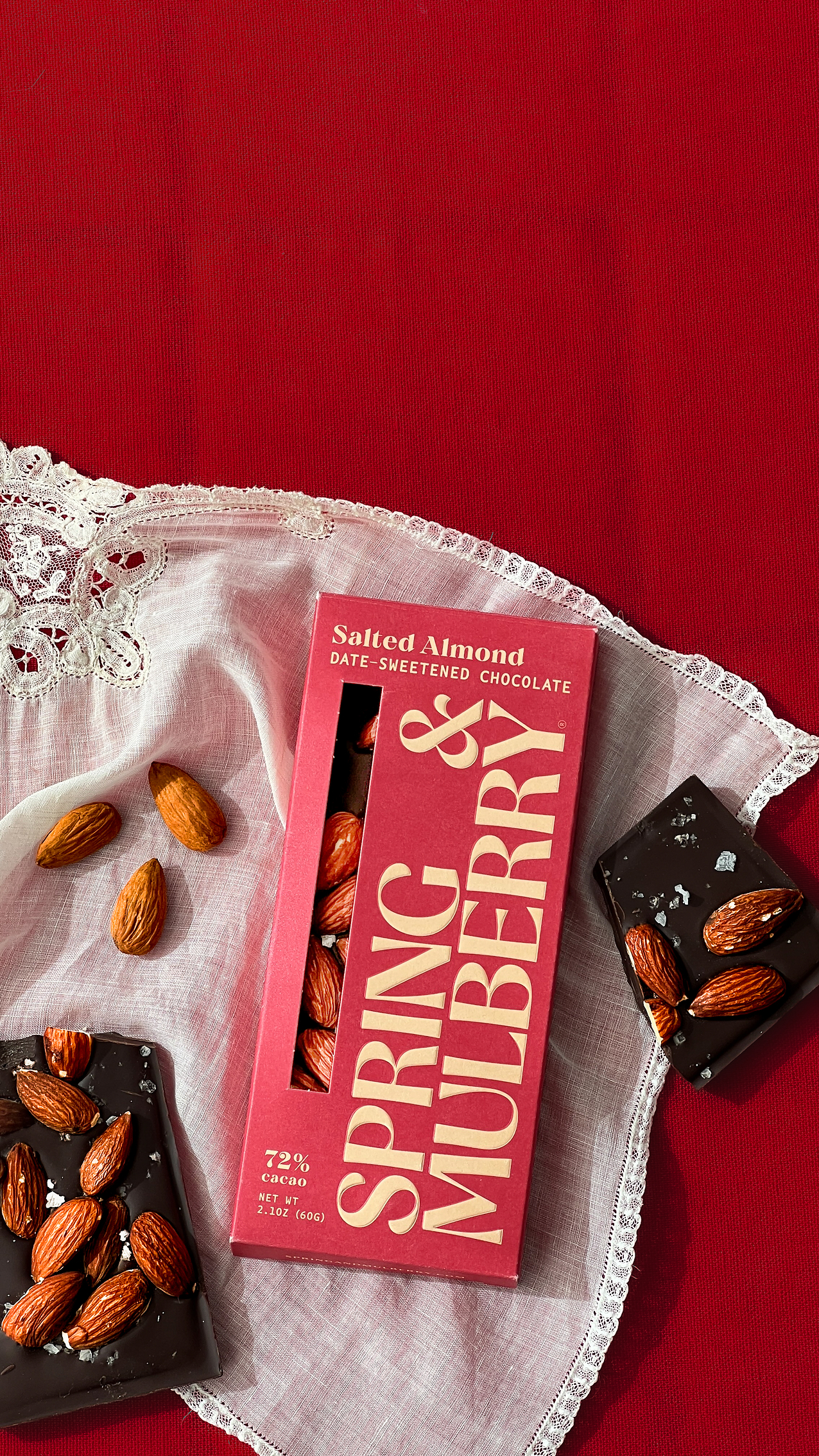
Spring & Mulberry has launched Salted Almond, a 72% cacao dark chocolate bar sweetened exclusively with dates and finished with whole roasted almonds and sea salt — a SKU the Raleigh-based brand is using to anchor a broader retail push it calls "coming soon" to brick-and-mortar.
The $9.99 MSRP bar is live now on the brand's direct-to-consumer site and marks a deliberate move away from novelty flavors. Co-Founder Kathryn Shah describes the formula as an exercise in honoring what already works rather than chasing category trends. That positioning is reflected in the accompanying "Timeless Good Taste" campaign, which frames the bar as a refined execution of a generational flavor pairing rather than an innovation play.
The Retail Readiness Signal
For buyers and category managers, the more consequential detail is where this bar is headed. A $9.99 MSRP sits comfortably in the premium confection set — above mass-market chocolate but within range of the better-for-you segment that has been claiming shelf space from conventional candy in natural, specialty, and select conventional grocery channels. Brands entering that tier with no-refined-sugar, whole-food-sweetened positioning are increasingly drawing interest from buyers who have watched the category outperform standard confection on repeat-purchase metrics.
Spring & Mulberry, founded in 2022 by Shah and Sarah Bell, has built its portfolio on date-sweetened bars layered with fruits, florals, nuts, and spices. The Salted Almond SKU extends into what the brand calls its "nut-forward and everyday" tier — meaning it is designed for trial velocity and broader demographic appeal rather than the higher-turn specialty flavors that often anchor a brand's early DTC identity.
What Operators and Buyers Should Watch
For foodservice operators building retail-facing or gift-channel programs — hotel gift shops, resort pantries, specialty café retail sets — the no-added-sugar, clean-label positioning of bars like this one increasingly satisfies multiple guest segments simultaneously: health-conscious, allergen-aware (date sweetener vs. refined sugar), and premium-experience seekers. The price point also works for bundled amenity or minibar programs without requiring a deep discount from MSRP.
On the brand-launch side, the "Timeless Good Taste" campaign framing is worth noting. Rather than leading with functional claims or trend language, Spring & Mulberry is leaning into emotional resonance and culinary craft — a narrative strategy that tends to translate better in editorial and influencer contexts than in performance digital, but which builds the kind of brand equity that supports sustained retail sell-through over time. Operators evaluating emerging brands for partnership or private-label inspiration should track whether this approach accelerates the brand's retail placement timeline.
For operators exploring brand launch and retail readiness strategy, Spring & Mulberry's trajectory — DTC first, campaign-anchored SKU expansion, retail TBD — is a replicable model worth benchmarking. And for procurement teams tracking better-for-you confection trends in operator intelligence, the date-sweetened segment is accumulating enough velocity to warrant a formal category review.
Written by Michael Politz, Author of Guide to Restaurant Success: The Proven Process for Starting Any Restaurant Business From Scratch to Success (ISBN: 978-1-119-66896-1), Founder of Food & Beverage Magazine, the leading online magazine and resource in the industry. Designer of the Bluetooth logo and recognized in Entrepreneur Magazine's "Top 40 Under 40" for founding American Wholesale Floral, Politz is also the Co-founder of the Proof Awards and the CPG Awards and a partner in numerous consumer brands across the food and beverage sector.