The Retail Move
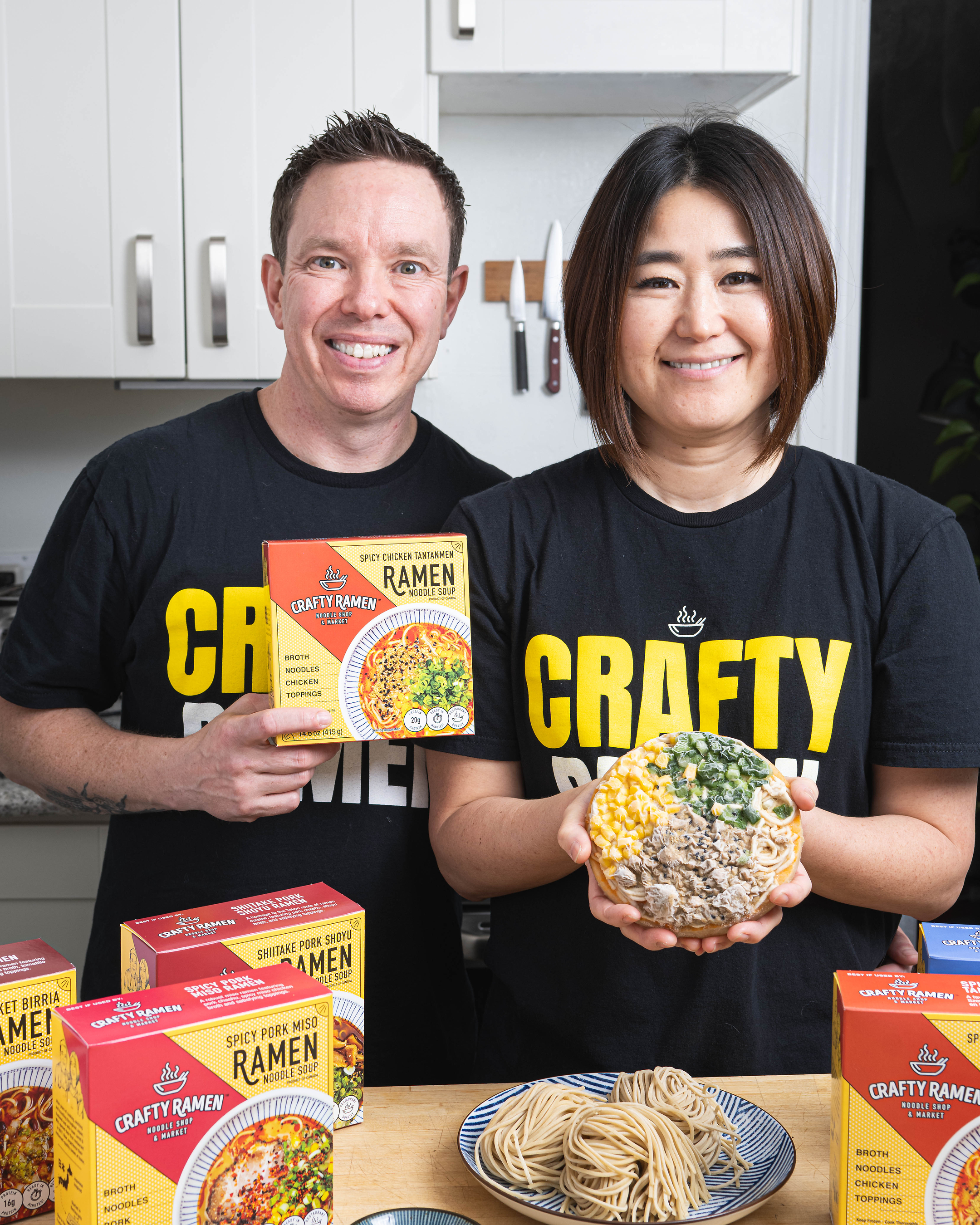
Crafty Ramen is now on shelves at Target and Kroger locations nationwide, pushing the Ontario-founded frozen ramen brand into nearly 6,400 North American retail doors. The launch adds two of the largest U.S. mass and grocery chains to a retail footprint that already included Sprouts Farmers Market, Meijer, Albertsons, Schnucks, and Kings/Balducci's. At $7.99 MSRP per bowl, the brand is firmly positioned in the premium frozen entrée tier — not as an impulse grab, but as a considered alternative to restaurant delivery.
The numbers behind the expansion are worth tracking. CEO Khalil Khamis reports the brand scaled production capacity from 2,500 to more than 55,000 bowls per week over four years, while growing from roughly 150 Canadian retail doors to more than 2,300 before crossing into the U.S. market. More than 2 million bowls have been sold to date. That production ramp — executed from Crafty Ramen's own Ontario facility using Japanese noodle machines — is the kind of vertical manufacturing story that gives retail buyers confidence ahead of a major chain commitment.
Why Buyers Are Paying Attention
The brand's core format is a frozen layered "puck" that combines real bone broth, scratch-made noodles, protein, vegetables, and toppings in a single complete meal — stovetop or microwave ready in minutes. Five SKUs cover the lineup: Spicy Chicken Tantanmen (the top seller), Brisket Birria, Chicken Shoyu, Spicy Pork Miso, and Shiitake Pork Shoyu. The variety mix signals deliberate range planning: two accessible shoyu profiles anchor the set, while Brisket Birria and Tantanmen chase flavor-forward consumers driving growth in the premium frozen aisle.
For operators and brand strategists watching the frozen foodservice-to-retail pipeline, Crafty Ramen's trajectory fits a pattern that has gained momentum since 2022. Restaurant-originated brands — particularly those with authentic sourcing stories and identifiable culinary credentials — are winning placement at chains that once reserved freezer space for legacy CPG names. Co-founders Jared and Miki Ferrall's training at the Yamato School of Ramen in Japan, and the fact that noodles are produced in-house daily using the same process as the original 24-seat restaurant, give retail buyers a differentiated narrative that resonates in buyer decks and on-pack copy alike.
What This Signals for Brand Launch Strategy
The Crafty Ramen playbook is worth studying for any emerging food brand with restaurant roots. The brand built Canadian distribution density first — 2,300-plus doors — before approaching U.S. mass retailers, which likely de-risked the conversation with Target and Kroger category managers. Operators and emerging CPG brands that treat domestic or regional distribution as proof-of-concept rather than end goal are increasingly the profiles landing national chain commitments.
From a brand launch and retail readiness standpoint, the 4-year door-count trajectory also reinforces the value of retailer sequencing: natural and regional chains (Sprouts, Meijer, Albertsons) before mass (Target, Kroger). That staged approach allows velocity data to accumulate in channels where premium frozen shoppers are already self-selecting, providing the scan data that mass buyers want before authorizing a national set. Brands without that data trail often struggle to justify placement at scale, regardless of product quality.
For operator intelligence on frozen and retail-ready food trends, Crafty Ramen's rise also reflects sustained consumer interest in restaurant-quality convenience — a segment that showed durable post-pandemic growth as delivery costs increased and value perception of premium frozen improved. At $7.99, the brand sits well below the average delivery order but above commodity frozen noodle products, a pricing lane that has proven defensible for brands with clear quality differentiation.
Written by Michael Politz, Author of Guide to Restaurant Success: The Proven Process for Starting Any Restaurant Business From Scratch to Success (ISBN: 978-1-119-66896-1), Founder of Food & Beverage Magazine, the leading online magazine and resource in the industry. Designer of the Bluetooth logo and recognized in Entrepreneur Magazine's "Top 40 Under 40" for founding American Wholesale Floral, Politz is also the Co-founder of the Proof Awards and the CPG Awards and a partner in numerous consumer brands across the food and beverage sector.