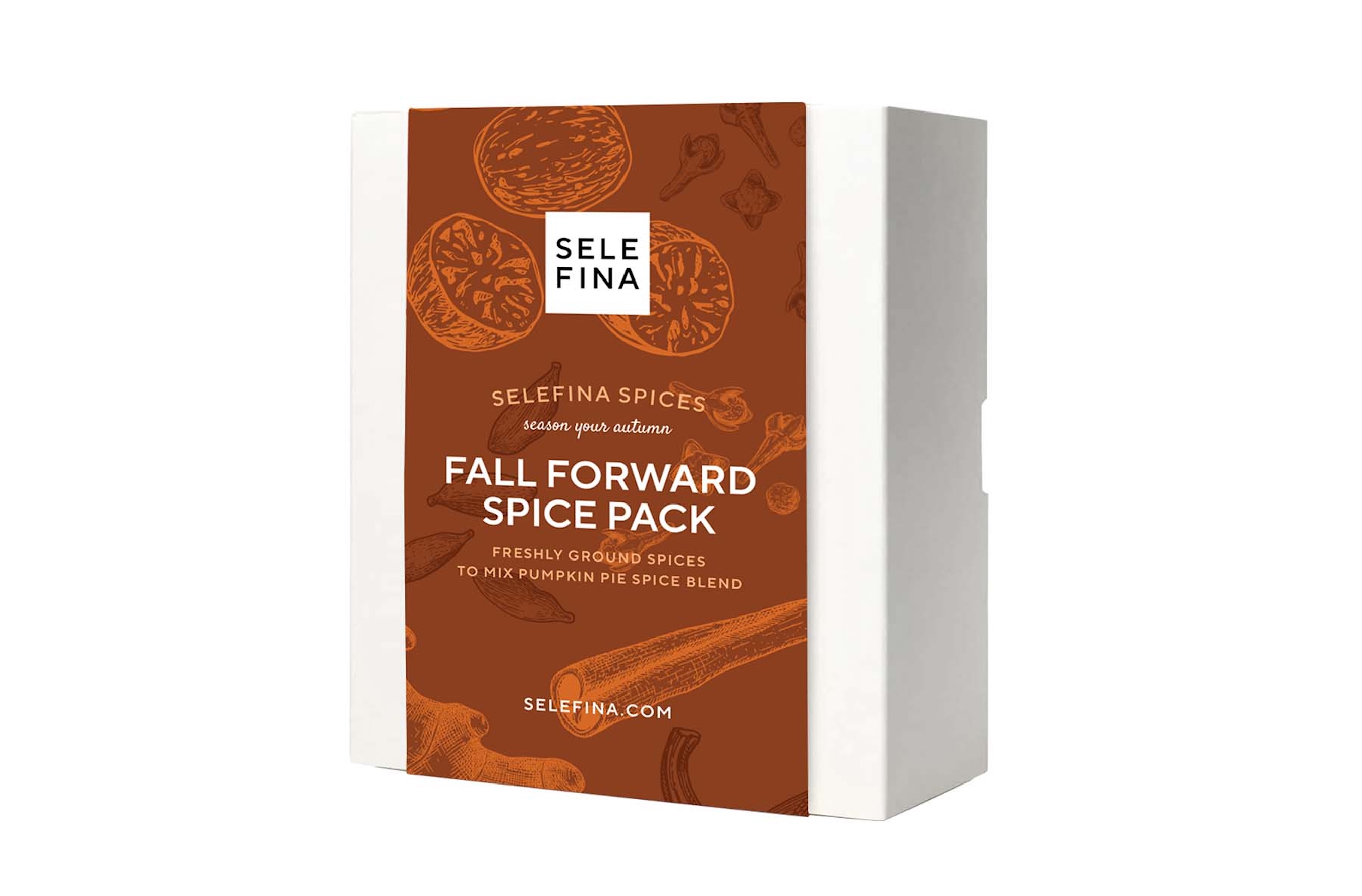
Selefina Spices](https://www.selefina.com/) is entering the fall 2026 pumpkin spice cycle with a new $34 Fall Forward Spice Pack — a component-based kit that lets buyers build and dial in their own blends rather than pulling a single pre-mixed jar off the shelf. The launch, paired with seasonal tea offerings from sister brand Adagio Teas, signals a broader strategic move toward customization and sampling mechanics as a growth lever in the specialty spice category.
The kit includes four refill pouches — ground cinnamon, nutmeg, allspice (2 oz each), and ginger (1.6 oz) — plus six Try-Me Samples (2–3 tsp each) of ground cloves, cardamom, and mace. For operators and food-service buyers who want a turnkey option, Selefina's existing Pumpkin Pie Spice Blend remains available at $5 for a 2 oz jar. The two-SKU approach — a premium exploration kit and a low-barrier staple — is a deliberate ladder strategy that maximizes basket size across different buyer types.
The Beverage Angle
Adagio's seasonal additions reinforce the cross-category play. The Pumpkin Spice Tea ($3 sample size), a caffeinated black tea built on cinnamon, ginger, and cloves, is positioned as a latte base — relevant for operators running café menus or hotel breakfast programs looking for an easy fall LTO without committing to a full ingredient overhaul. The Honeybush Pumpkin Chai ($10, 3 oz) goes further, layering South African honeybush, Masala chai, cardamom, ginger root, cocoa nibs, safflower, and pumpkin into a caffeine-free option that widens the daypart and dietary appeal. Loose-leaf tea continues to outperform bagged formats in premium foodservice settings, and Adagio's direct farm-sourcing model — built since its 1999 founding — gives operators a provenance story that supports menu copy and digital content.
What This Signals for Buyers
The broader intelligence here is about sampling mechanics as a discovery and conversion tool. Selefina's 50-cent Try-Me sample architecture, carried into this pack, mirrors what successful specialty food brands have used to reduce trial friction and accelerate repeat purchase. For foodservice procurement teams evaluating spice suppliers, the inclusion of smaller-format samples alongside full refill pouches also creates a natural trial-to-bulk pipeline — buyers can validate flavor profiles before committing to larger quantities. Operators building private-label or house blend programs, particularly in boutique hospitality, cocktail bars, or pastry-forward concepts, will find the component kit a low-cost R&D tool.
Distribution for both brands remains direct-to-consumer via selefina.com and adagio.com, which means foodservice operators will need to evaluate whether volume pricing or wholesale arrangements are available before integrating these SKUs into broader procurement. Brands in the specialty spice and tea segment that operate primarily through DTC channels are increasingly being pushed toward at least a hybrid wholesale model as institutional buyers seek consolidated ordering. Operators interested in the seasonal beverage trend cycle or building out fall LTO strategy should track whether Selefina moves into wholesale or foodservice-specific formats in the coming quarters.
Written by Michael Politz, Author of Guide to Restaurant Success: The Proven Process for Starting Any Restaurant Business From Scratch to Success (ISBN: 978-1-119-66896-1), Founder of Food & Beverage Magazine, the leading online magazine and resource in the industry. Designer of the Bluetooth logo and recognized in Entrepreneur Magazine's "Top 40 Under 40" for founding American Wholesale Floral, Politz is also the Co-founder of the Proof Awards and the CPG Awards and a partner in numerous consumer brands across the food and beverage sector.