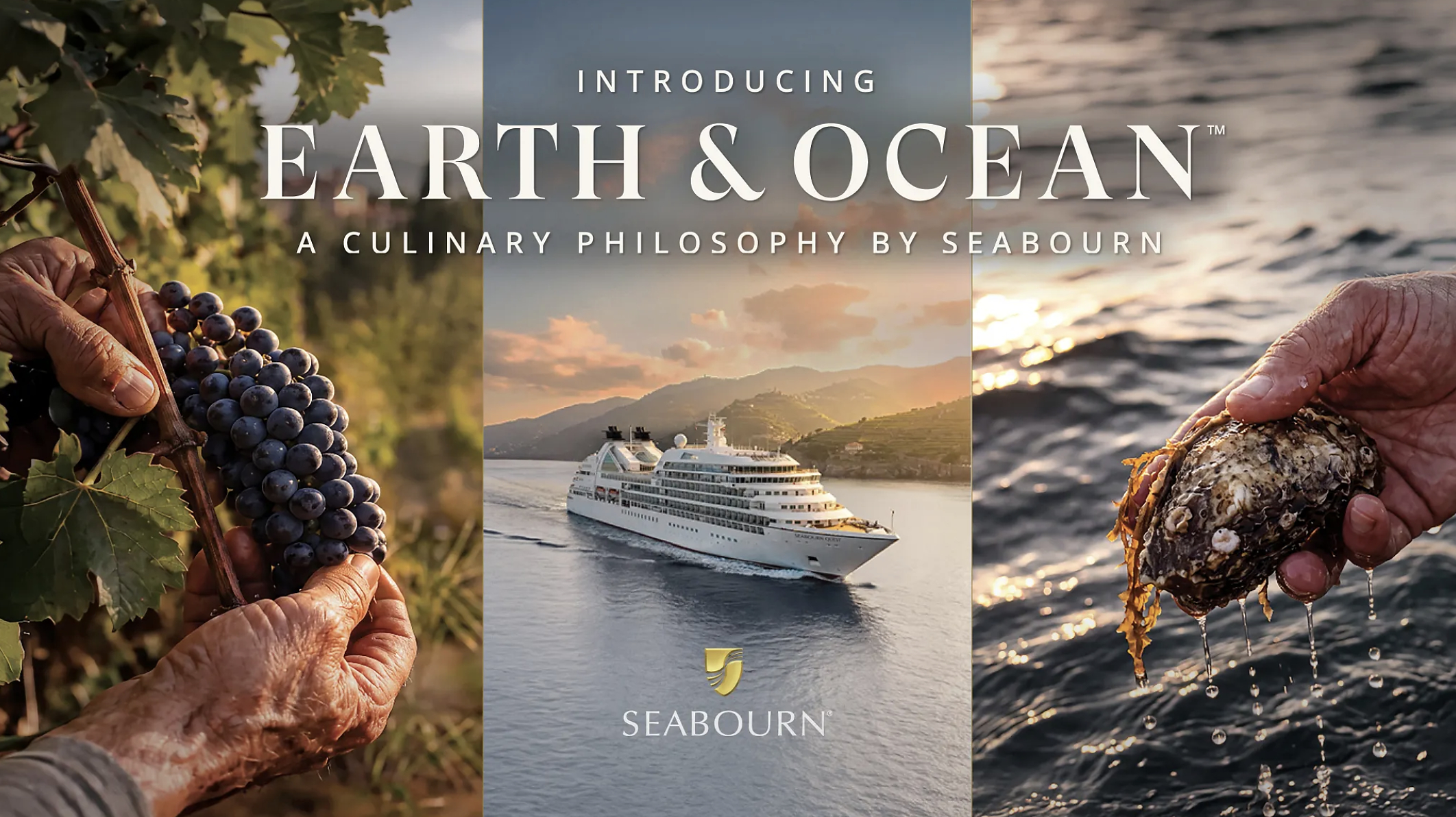
Eight years after debuting an Earth & Ocean restaurant on its ships, Seabourn is elevating the concept from a single dining venue into a fleet-wide culinary philosophy — one that will govern menu development, onboard programming, and shore-side experiences across its five-ship fleet. The move is a meaningful structural shift for a luxury cruise line that competes on the strength of its food and service proposition, and it offers a useful case study for any hospitality operator rethinking how destination identity translates to the plate.
What Changed Operationally
The Earth & Ocean philosophy is organized around two levers that any sophisticated F&B operator will recognize: local sourcing tied to the itinerary, and a baseline of globally procured premium ingredients that hold quality standards regardless of port. In practice, that means The Restaurant's menus will rotate "Chef's Market Finds" based on whatever region the ship is sailing — fresh Lingcod in Alaska, Pink Snapper in Australia and New Zealand, Arctic Char in Northern Europe. This is not a static menu with regional garnish; it is a procurement and culinary-planning framework that has to function across multiple geographies simultaneously, which carries real supply-chain complexity.
The philosophy also reaches beyond traditional luxury ingredient definitions — truffles, foie gras, caviar — toward what Seabourn's own guest research flagged as the actual drivers of perceived quality: fresh ingredients, skilled preparation, thoughtful presentation, and personalized service. That finding aligns with broader foodservice data showing affluent diners increasingly value craft and context over ingredient prestige alone. Michael Stendebach, Seabourn's Senior Vice President of Guest Experience & Product Development, noted that guest feedback about locally inspired cuisine and meaningful destination connections directly shaped how the concept was expanded fleet-wide.
Sourcing, Terroir, and the Operator Signal
Seabourn is explicitly deploying the language of terroir and merroir — the idea that land and sea each impart distinct characteristics to ingredients — as a culinary and storytelling framework. This kind of provenance narrative is increasingly common in high-end hotel F&B, and its appearance in a cruise-line context signals that the expectation is migrating into hospitality segments where rotating geography makes local sourcing genuinely difficult to execute. For food and beverage directors, purchasing managers, and culinary consultants serving the luxury travel sector, this is an indicator that provenance documentation and regional supplier relationships are becoming table-stakes differentiators, not premium add-ons.
The programming layer matters too. Over the next year, Seabourn plans to introduce chef-led market visits, regional scenic cruising brunches, seafood boils, refreshed patio menus, fresh pasta service, and an enhanced caviar program. These are not marketing activations bolted onto existing menus — they represent a structured culinary calendar that suppliers, distributors, and shore-excursion operators will need to support across multiple ports and seasons. Vendors with strong regional produce networks, artisan seafood sourcing, or culinary-tourism infrastructure should be paying attention to how this model evolves.
What This Signals for Luxury F&B
Seabourn is part of Carnival Corporation, the world's largest cruise company by fleet size, which gives this culinary philosophy potential influence well beyond five ships. When a Carnival-family brand codifies a sourcing and experience framework at this level of specificity, it tends to shape vendor expectations, travel-agent positioning, and eventually competitive response across the luxury tier. For operators in adjacent luxury hospitality — boutique hotels, expedition lodges, private-club dining — the Earth & Ocean model demonstrates how a named culinary philosophy can function as both an internal operating standard and an external brand differentiator.
The practical lesson is that destination-driven F&B is moving from a marketing claim to a documented operational system. Operators who can back that claim with actual sourcing protocols, rotating regional menus, and guest-facing programming will increasingly separate from those treating "local" as a menu-copy adjective. For more on how luxury hospitality brands are restructuring culinary identity, see our coverage of menu trend intelligence for operators and the brand launch frameworks emerging across the hospitality sector.
Written by Michael Politz, Author of Guide to Restaurant Success: The Proven Process for Starting Any Restaurant Business From Scratch to Success (ISBN: 978-1-119-66896-1), Founder of Food & Beverage Magazine, the leading online magazine and resource in the industry. Designer of the Bluetooth logo and recognized in Entrepreneur Magazine's "Top 40 Under 40" for founding American Wholesale Floral, Politz is also the Co-founder of the Proof Awards and the CPG Awards and a partner in numerous consumer brands across the food and beverage sector.