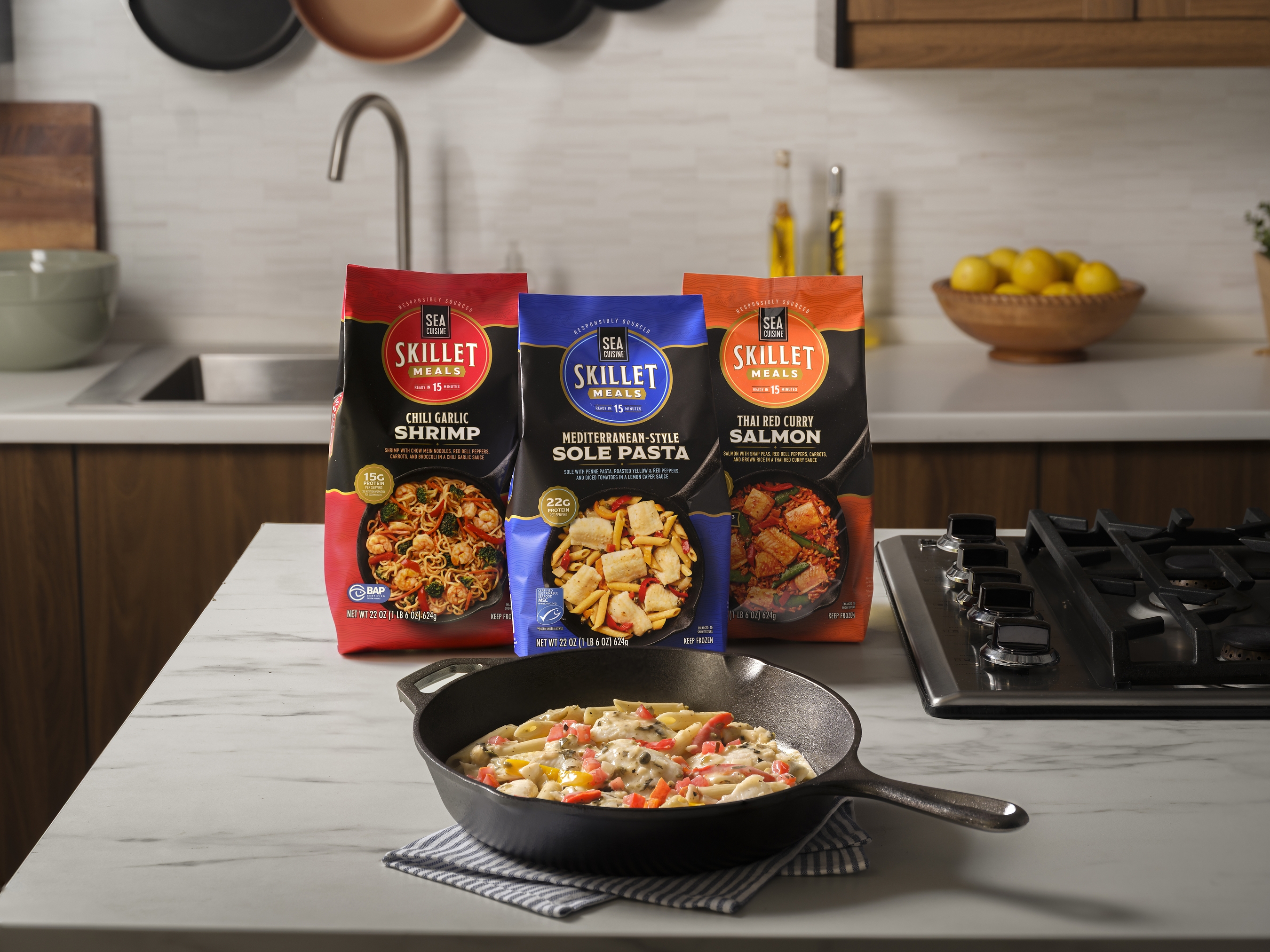
High Liner Foods has moved Sea Cuisine Skillet Meals into select U.S. grocery store frozen aisles, debuting three globally inspired, one-pan seafood dinners that cook in 15 minutes. The launch is a direct play at a structural gap in the frozen multi-serve segment — one that grocery buyers, category managers, and retail-facing foodservice suppliers should track closely.
The Category Gap
The numbers behind this launch are worth flagging for operators and retail buyers alike. According to Circana data cited by High Liner, chicken and beef account for nearly 70% of the top 300 frozen multi-serve SKUs. Seafood's representation in that set is negligible. Separately, a home-use test conducted by Matrix Sciences in January 2026 found that 64% of frozen meal consumers report being only somewhat satisfied with current options — a dissatisfaction score that signals shelf space opportunity for brands willing to invest in the category.
The three SKUs entering the market are Mediterranean-Style Sole Pasta (22 grams of protein per serving), Thai Red Curry Salmon (19 grams), and Chili Garlic Shrimp with chow mein noodles (15 grams). All feature responsibly sourced seafood. The line was first previewed at Seafood Expo North America earlier this year before moving to retail.
What the Data Signals
High Liner is leaning on consumer trend data from Circana's National Eating Trends report to justify the SKU architecture: 75% of consumers want meals ready in 15 minutes or less, 45% want one-dish options requiring no prep, and 41% are actively trying to increase protein intake. The Skillet Meals are engineered against all three vectors simultaneously — which is a useful framework for any operator or CPG brand evaluating how to position a new protein format at retail.
Product testing results are strong on paper: more than 87% of home-use test participants said the meals exceeded expectations, and 91% rated them easy to prepare. Those figures, if they hold at scale, put Sea Cuisine in a favorable position for broader distribution discussions with major grocery chains.
For foodservice operators and food and beverage suppliers watching the retail-to-restaurant pipeline, the Sea Cuisine move illustrates a broader dynamic: frozen seafood innovation is accelerating as processors look to capture protein-conscious consumers who have largely been served only chicken and beef in the convenient-meal format. Brands that can demonstrate clean sourcing credentials alongside convenience and flavor complexity are gaining traction with both retail buyers and the foodservice distributors that parallel-track retail performance as a proxy for consumer demand.
Distribution is currently limited to select U.S. grocery stores, with broader North American expansion described as forthcoming. For retail-ready brand launch strategy and buyer deck considerations, the phased rollout approach — trade show debut, regional retail seeding, then national expansion — is a replicable playbook for suppliers entering competitive frozen categories.
Operator Takeaway
For foodservice operators sourcing frozen seafood or tracking category innovation for menu development, Sea Cuisine's entry validates the consumer appetite for globally flavored, high-protein seafood formats that don't require culinary infrastructure. The same flavor profiles — Thai red curry, chili garlic, Mediterranean lemon caper — that test well at retail are the same profiles driving menu attachment in fast-casual and fast-food seafood concepts.
Written by Michael Politz, Author of Guide to Restaurant Success: The Proven Process for Starting Any Restaurant Business From Scratch to Success (ISBN: 978-1-119-66896-1), Founder of Food & Beverage Magazine, the leading online magazine and resource in the industry. Designer of the Bluetooth logo and recognized in Entrepreneur Magazine's "Top 40 Under 40" for founding American Wholesale Floral, Politz is also the Co-founder of the Proof Awards and the CPG Awards and a partner in numerous consumer brands across the food and beverage sector.