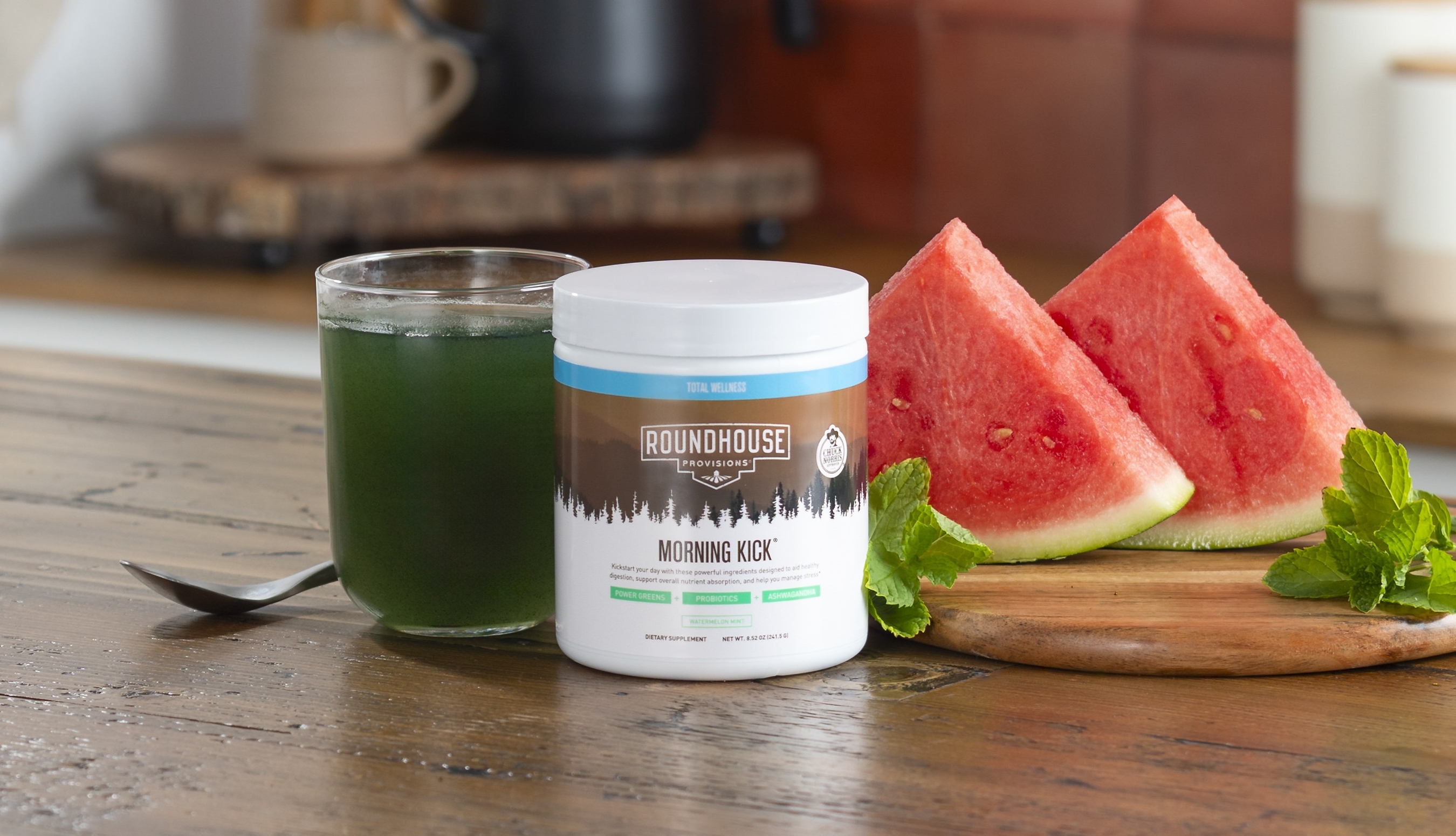
Roundhouse Provisions is reporting accelerating consumer review velocity for its Morning Kick daily wellness drink, a powder-format beverage that combines probiotics, greens, collagen peptides, and adaptogens in a single serving. The Houston-based brand is positioning Morning Kick as a comprehensive alternative to the fragmented supplement stack — energy, gut health, and stress management in one SKU. For operators and buyers watching the functional beverage corridor, the signal here is less about one brand and more about where consumer demand is consolidating.
The functional beverage market has been crowded for several years, but the format is shifting. Single-benefit products — standalone greens powders, standalone collagen, standalone adaptogens — are facing pressure from consumers who want fewer products and more outcomes. Brands like AG1 (formerly Athletic Greens) built substantial direct-to-consumer subscription revenue on exactly this premise. Roundhouse Provisions is drawing from the same playbook: all-in-one positioning, strong customer testimonials as social proof, and a wellness narrative that bridges fitness, aging, and daily energy. For hotel F&B directors, specialty grocery buyers, and gym-adjacent café operators, this category is worth watching as a potential add-to-menu or retail shelf play.
From a brand-launch and distribution standpoint, Morning Kick appears to be in an early retail-readiness phase — leaning on direct-to-consumer and earned review momentum before a broader channel push. That is a deliberate sequencing choice. Brands that establish consumer review density and repeat-purchase signals before approaching retail buyers arrive at the buyer conversation with leverage. Operators evaluating functional beverage additions to their own retail sets or amenity programs should note that products with this profile — multi-benefit, powder format, subscription-friendly — tend to carry strong margin structures and low spoilage risk compared to RTD competitors. For procurement teams, the ingredient stack (collagen peptides, greens, probiotics, adaptogens) also reflects current COGS pressure points given ongoing supply tightness in collagen and adaptogen sourcing.
The broader takeaway for operators is structural: consumers are not just buying energy drinks or wellness shots anymore — they are buying daily routines, and they want those routines simplified. Any brand that can credibly claim multi-system support with clean-label ingredients is positioned well in this cycle. Whether Morning Kick executes on distribution is a separate question, but the category bet is sound. Operators building wellness programming — whether in hotel minibars, fitness-center cafés, or specialty retail adjacencies — should be mapping this segment now rather than reacting to it later. Functional beverage trends and how they are reshaping hotel F&B procurement are already rewriting buyer conversations at the regional and national level. Brands entering this space should also have a clear brand-launch and retail-readiness strategy before approaching channel partners.
Written by Michael Politz, Author of Guide to Restaurant Success: The Proven Process for Starting Any Restaurant Business From Scratch to Success (ISBN: 978-1-119-66896-1), Founder of Food & Beverage Magazine, the leading online magazine and resource in the industry. Designer of the Bluetooth logo and recognized in Entrepreneur Magazine's "Top 40 Under 40" for founding American Wholesale Floral, Politz is also the Co-founder of the Proof Awards and the CPG Awards and a partner in numerous consumer brands across the food and beverage sector.