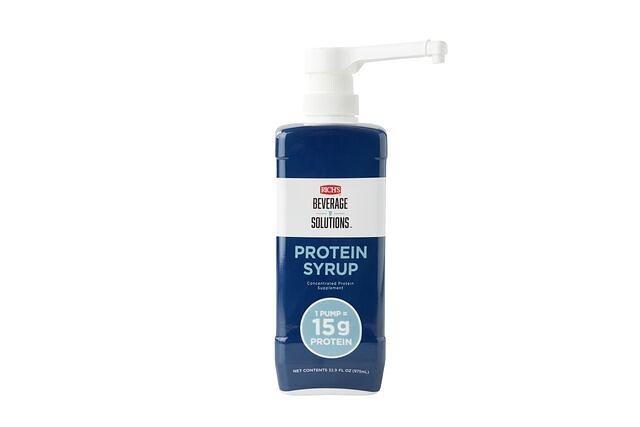
Foodservice operators chasing functional beverage revenue now have a new ingredient option in the mix. Rich Products Corporation is launching Rich's Beverage Solutions Protein Syrup, a shelf-stable, collagen peptide-based syrup that delivers 15 grams of protein per one-fluid-ounce pump — with no refrigeration, no pre-mixing, and no dedicated blending step required.
The timing is deliberate. According to Datassential's 2026 Big Picture report, 64.0% of consumers say they're interested in foods and beverages with added protein. Among younger consumers, the signal is even sharper: 80.0% of Gen Z and Millennial respondents told Datassential they want at least one functional ingredient added to their beverage. For operators already running coffee, smoothie, or specialty drink programs, that's a clear upsell lane — if the product doesn't create operational drag.
What Operators Actually Get
The format is engineered around the reality of busy beverage bars. Each 32.9-ounce bottle ships with a dedicated pump, produces 32 consistent servings, and stores alongside traditional syrups at room temperature. Cases arrive four bottles deep with a 365-day unopened shelf life and a 30-day window after opening. The formula — built on collagen peptides and amino acids — is designed to blend cleanly into hot, iced, blended, and frozen applications without the chalky texture or off-flavors that have historically limited protein add-ins in café and QSR settings.
Alyssa Barrett, senior customer marketing manager at Rich Products, frames the play squarely around ticket size: adding a customizable protein enhancement to an existing menu item creates a new snacking occasion and incremental revenue without requiring operators to develop an entirely new beverage platform.
What This Signals for Procurement
For procurement and menu development teams, the product represents a broader vendor pattern worth tracking: major foodservice suppliers are increasingly designing functional-ingredient solutions that fit inside existing operational footprints rather than asking operators to build around new equipment or storage infrastructure. That approach lowers the barrier to category entry and accelerates adoption across independent operators, regional chains, and non-commercial accounts alike.
The functional beverage segment is crowded at the consumer packaged goods level, but the foodservice-native version of that race is still early. Operators evaluating beverage menu strategy should factor in how protein-forward customization compares to other modifier revenue plays — premium syrups, functional adaptogens, and energy add-ins — when weighing vendor line reviews. Rich's is positioning this syrup as a modifier, not a centerpiece, which gives it flexibility across dayparts and formats.
For context on how suppliers are pitching functional ingredients into operator channels, see related coverage on foodservice ingredient sourcing trends. Rich Products, a Buffalo-based family-owned company with annual sales exceeding $5.8 billion and operations in 100 locations globally, has the distribution infrastructure to place this product broadly — which means competitors and private-label alternatives will need to respond on format and simplicity, not just protein content.
Written by Michael Politz, Author of Guide to Restaurant Success: The Proven Process for Starting Any Restaurant Business From Scratch to Success (ISBN: 978-1-119-66896-1), Founder of Food & Beverage Magazine, the leading online magazine and resource in the industry. Designer of the Bluetooth logo and recognized in Entrepreneur Magazine's "Top 40 Under 40" for founding American Wholesale Floral, Politz is also the Co-founder of the Proof Awards and the CPG Awards and a partner in numerous consumer brands across the food and beverage sector.