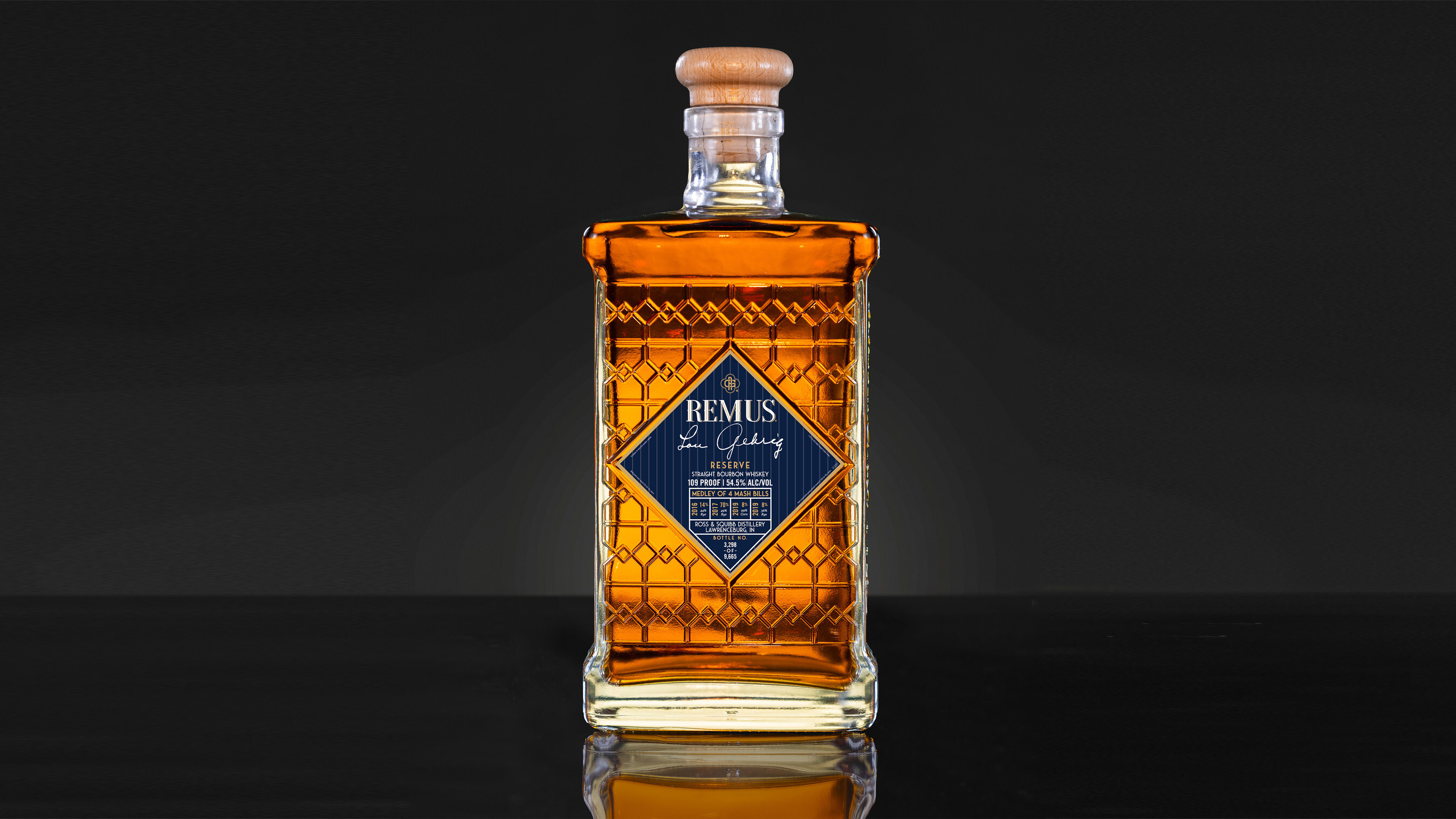
Remus Bourbon, produced at MGP's Ross & Squibb Distillery in Lawrenceburg, Indiana, has announced the Remus Lou Gehrig Reserve Bourbon — an ultra-limited expression honoring the New York Yankees first baseman known as the "Iron Horse." The release follows two consecutive years of Babe Ruth Reserve editions in 2024 and 2025, confirming that sports-IP licensing is no longer a one-off stunt for the brand. It is now a structured annual franchise.
For on-premise buyers and retail spirits buyers, the pattern here is worth tracking. Remus is executing a collectible-release cadence that mirrors what luxury watch and sneaker brands have done for decades — anchor scarcity to a recognizable cultural figure, release annually, build secondary-market buzz, and use that momentum to pull the core SKU into broader distribution. Gehrig's legacy carries particular resonance: a figure associated with dignity, durability, and a speech most Americans can quote. That's not an accident in brand selection. It's deliberate occasion marketing tied to emotional recall.
For spirits suppliers and distributors watching the beverage-brand-launch landscape, this signals a maturing playbook in the premium-bourbon segment. The collectible-expression model has been validated by releases from Pappy Van Winkle to Buffalo Trace's Antique Collection, but those lean on liquid provenance. Remus is layering a sports-licensing narrative on top of an already decorated distillery pedigree — MGP supplies distillate to a significant portion of the American craft-bourbon market — which gives retail buyers a story that sells itself on the floor without heavy staff training. Operators sourcing specialty spirits for hotel bars, steakhouse programs, or private dining menus should note that allocated releases with this kind of cultural hook tend to move faster when paired with a documented backstory card or table-side narrative toolkit.
The intelligence signal for brand-launch teams is straightforward: sequential IP releases create compounding shelf equity. If Remus follows the Babe Ruth cadence into a third or fourth Yankee legend, the sub-brand essentially becomes a collector series with its own purchase intent separate from the base Remus lineup. For beverage brands considering a limited-release strategy, the procurement implication is equally clear — lock licensing agreements for two to three years minimum before announcing the first edition, so the series has structural continuity rather than feeling reactive.
Takeaway for operators: limited sports-IP bourbon releases perform best when the back-bar team can deliver the story in thirty seconds, and when the release is timed to a cultural calendar moment — opening day, Hall of Fame weekend, or a legacy anniversary. Know your allocation window and order early.
Written by Michael Politz, Author of Guide to Restaurant Success: The Proven Process for Starting Any Restaurant Business From Scratch to Success (ISBN: 978-1-119-66896-1), Founder of Food & Beverage Magazine, the leading online magazine and resource in the industry. Designer of the Bluetooth logo and recognized in Entrepreneur Magazine's "Top 40 Under 40" for founding American Wholesale Floral, Politz is also the Co-founder of the Proof Awards and the CPG Awards and a partner in numerous consumer brands across the food and beverage sector.